Feeds:
Posts
Comments
Billy Graham

The body of Rev. Billy Graham, who died February 21 at age 99, lies in the Capitol Rotunda as President Donald Trump, officials and dignitaries pay tribute to America’s most famous evangelist, Wednesday, Feb. 28, 2018, in Washington.  (J. Scott Applewhite / The Associated Press) 

In the second year of Joash the son of Jehoahaz, king of Israel, Amaziah the son of Joash, king of Judah, became king…And he did what was right in the sight of the LORD, yet not like his father David (2 Kings 14:1, 3).

Judge not, lest you be judged! How many times have Christians had that verse flung in their face when discussing some point of doctrine, usually with an unbeliever. This verse, wielded as if some all conquering shut down argument, seems to be the only passage of Scripture that many people know.

Now if Jesus actually meant what these people seem to think he meant – that all judgment of every sort by anyone is always wrong – ironically they also condemn themselves, for by speaking as they do they are judging Christians and telling them they are wrong to find fault with the words or actions of another.

But Jesus did not mean to condemn all judgment. He intended to condemn unrighteous judgment, that is to say, judgment by the wrong standard. This can be seen elsewhere in Scripture where Christ told his followers to “judge with righteous judgment.”

Further, in writing to Timothy the Apostle Paul advised his younger colleague that, “All Scripture is given by inspiration of God, and is profitable for,” among other things, “reproof [and] for correction.” That is to say, Scripture is to be used to judge the actions and the words of men.

Continue Reading »

Parkland_02

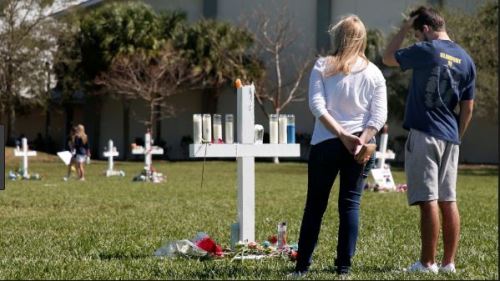
Mourners look at a memorial for the victims of the Marjory Stoneman Douglas High School shooting, in a park in Parkland, Florida on February 16, 2018. A former student, Nikolas Cruz, opened fire at the Florida high school leaving 17 people dead and 15 injured. / AFP PHOTO / RHONA WISE

In light of the well-organized, well-funded, and unprecedented attacks on the Second Amendment and on its supporters in recent days, it seemed good to me to set down a few inconvenient truths relating to the right to bear arms and the causes of mass shootings

First, as the old saying goes, “Guns don’t kill people, people kill people.” An article in the Huffington Post from last fall called this argument tired, logic-deficient, obvious and irrelevant, but it is nothing of the sort.

True, the argument has been around for a while. I remember it being used back in the day when I was a kid, but that doesn’t make it tired. In fact, it may be one of the most important truths to bring up in any discussion about the Second Amendment.

Guns are inanimate objects. They have now will of their own, no moral agency. In themselves, they are neither good nor evil. Guns are tools as are hammers, baseball bats and pickup trucks. And just as hammers, baseball bats and pickup trucks can be used for both good and evil, so too can guns.

Neither good nor evil reside in the gun, they reside in the heart of the person using the gun.

The Huffpo calls this point obvious. But is it? It’s fair to say that it should be obvious, but given the rush to restrict or outright ban gun ownership by certain groups following the school shooting in Parkland, FL, I’m not so sure it is.

If it were obvious, it should be equally obvious that stripping citizens of their right to bear arms is not the proper response to mass shootings. Yet the gun grabbers have never been more shrill in their demands to limit, or completely eliminate, Americans’ Constitutionally guaranteed right to own guns.

“There ought to be a law to banning ‘X’ to ensure that ‘Y’ never happens again,” on the other hand, really is a tired response to tragedy, but that doesn’t stop people from making the argument.

Continue Reading »

Apostle Paul_Citizenship

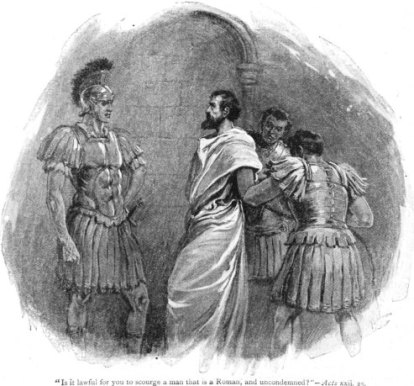
The Apostle Paul declares his Roman citizenship, anon. 2008.

Then the commander came and said to him, “Tell me, are you a Roman?”

He said, “Yes.”

The commander answered, “With a large sum I obtained this citizenship.”

And Paul said, “But I was born a citizen” (Acts 22:27-28).

Hamartano is a Greek verb, which is rendered in English translations of the New Testament as “sin.” But in classical Greek usage it more commonly meant “miss the mark.”

For example, one classical Greek writer gave an account of a hunting party that went out to slay a wild boar. Among the hunters were the king’s son and a rather ambitious courtier. The hunters finally cornered the boar, and the courtier, apparently eager to get credit for the kill, threw his spear and missed, instead striking the king’s son and killing him.

That, as they say, was a bad career move.

Continue Reading »

Devin Nunes

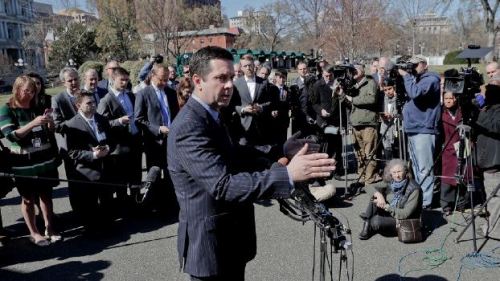
House Intelligence Committee Chairman Rep. Devin Nunes, R-Calif. speaks with reporters outside the White House. (AP Photo/Pablo Martinez Monsivais)

Among the biggest stories in the press so far this year has been the dust up over the FISA memo.

The memo is the work of the House Intelligence Committee and its Chairman Devin Nunes. For several weeks, Americans were treated to the suspense, not just concerning what was in this mysterious memo, but also whether it would be released to the public at all.

After two weeks of wrangling, the go-ahead to make the memo public finally was given by President Trump on Friday, February 2.

The memo, as it turned out, showed that the Department of Justice (DOJ) and the Federal Bureau of Investigation (FBI) were less than forthcoming when they presented the Foreign Intelligence Surveillance Court (FISA Court) with evidence to convince the court to authorize electronic surveillance of one of then-candidate Trump’s volunteer advisors, Carter Page.

The evidence supplied by the DOJ and the FBI to get the FISA warrant – the application was presented to the FISA court on October 21, 2016, just weeks before the presidential election – was a dossier put together by Christopher Steele, a former British spy. The dossier contained allegations about Carter page and Donald Trump. The ones concerning Trump were of a particularly salacious nature.

Continue Reading »

Ruth_and_Naomi_Leave_Moab

Ruth and Naomi Leave Moab, 1860, by Julius Schnorr von Carolsfeld (1794-1872).

When I began writing this series of posts on immigration in September 2016, my original plan was for five to seven posts and to wrap things up by early 2017. Obviously, the series grew well beyond these plans, and I find myself nearly a year and a half later sitting down to bring the work to a close.

At this point, it may be worth asking and answering the questions 1) Why I started this series in the first place, and 2) Why did it grow in length far beyond my original intent?

There are two reasons I chose to write on the topic of immigration. In the first place, it’s important, for the effects of a nation’s immigration policy cannot be reversed easily if at all.

Most other political decisions can be reversed. For example, the US passed the Eighteenth Amendment to the Constitution prohibiting the production, importation, transportation and sale of alcohol. This amendment went into effect in 1920 and was repealed by the Twenty-first Amendment in 1933.

Immigration, on the other hand, is forever. Once immigrants are welcomed into the national family, there’s no going back. Their acceptance permanently alters the makeup of a nation. For this reason alone, it is important for legislators and citizen both to have a clear idea in mind about what constitutes proper immigration policy.

Second, for all the ink that has been spilt on the subject, I have yet to read a fully satisfactory treatment of immigration. In Immigration, Citizenship and the Bible (ICB) I review immigration commentary from across the political and religious spectrum, including secular and religious right and left. I have reviewed the works of proponents of mass, taxpayer subsidized immigration and the works of immigration restrictionists. None of the writers I have read get it right for the simple reason that none of them begin their thinking with the Scriptures.

Some writers do use Scripture when formulating their ideas about immigration, but either apply it inconsistently or misunderstand what the Bible has to say on the topic.

And because I was dissatisfied with the work that has been done up until now that I decided that what is needed is a Scripturalist take on immigration. That is, I wanted to approach immigration systematically as someone who believes the Bible has a monopoly on truth, not as someone who seeks to combine the truths of Scripture on immigration with “truths” discovered elsewhere.

Concerning the second question, Why did this series grow much larger than I had originally intended?, the answer lies in the fact that immigration is a large topic and more space was needed than I thought at first.

Apart from immigration – immigration is the act of someone coming to a new country for the purpose of taking up permanent residence – there are two other major related subject: migration and refugee resettlement.

Migration – more specifically, international migration – is the is simply the temporary movement of people from one country to another. Migrants do not intend to settle permanently, but come for various reasons, for example seasonal economic opportunity.

Refugee resettlement involves the accommodation of people fleeing their native countries. A refugee is defined as someone who, “Demonstrates that they (sic) were (sic) persecuted or fear persecution due to race, religion, nationality, political opinion, or membership in a particular social group” (USCIS).

Both migration and refugee resettlement issues are closely related to, but separate from, immigration proper. And because of the close relationship all three topics have to on another, to discuss one generally involves at some point discussing the others. This was a major reason for the growth of this series beyond the original five to seven posts that I originally thought would be the case.

Continue Reading »

DACA_Demo_Pelosi

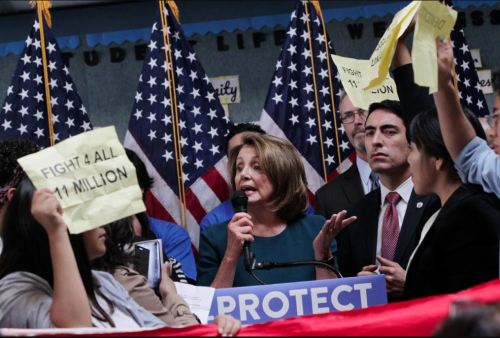
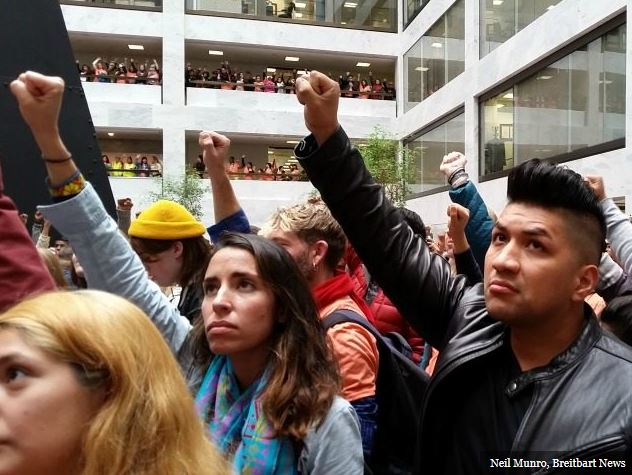
Dreamers interrupt Nancy Pelosi’s press conference, September 19, 2017.

It was my intention to continue a post I began last week outlining various reasons why Americans ought to reject DACA. But due to developments since my last post, I decided to take this week’s article in a similar, but slightly different, direction.

As of last week’s posting, the US federal government was still in shut down mode due to demands by certain members of Congress, who, oddly enough. insisted that funding the government should be made contingent on allowing foreign citizens to remain in the country in violation of US immigration law. The shut down ended when these same certain Congressmen realized that they were getting nowhere and folded.

But their decision to fold did not mark the end of the debate over DACA or over the DREAM Act. It just kicked the can down the road a little bit.

You see, last September President Trump ended the Deferred Action for Childhood Arrivals (DACA) program…sort of. According to Attorney General Jeff Sessions, the Trump administration would stop considering new applications for legal status dated after 9/5/17 and would allow any DACA recipients with a permit set to expire before March 5, 2018 the opportunity to apply for a two-year renewal if they apply before October 5, 2017. This deadline was recently extended by court order to allow individuals currently in the DACA program to apply for renewal up until March 5, 2018.

At the same time, Trump gave Congress a six-month window to come up with an acceptable version of DACA which he promised to sign.

Continue Reading »