“But when you see Jerusalem surrounded by armies, then know that its desolation is near. Then let those who are in Judea flee to the mountains, let those who are in the midst of her depart, and let not those who are in the country enter her.”
– Luke 21:20-21
Last week we looked at the third of three case studies in prepping from the Old Testament, Joseph, Prime Minister of Egypt. The other two case studies were the accounts of Noah and the end of the world as he knew it and Lot’s narrow escape from Sodom. This week, I’d like to turn our attention to the New Testament and in particular to the teaching of Jesus himself that relate to the subject of prepping.
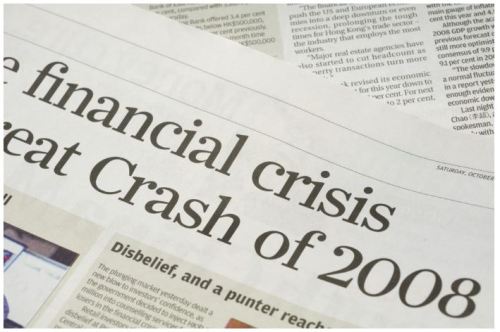
But before turning to Jesus’ teachings on prepping, it’s worth taking a little time to review the events in the financial markets last week. The general title for this series The Ongoing Financial Crisis of 2008, because it is the contention of this author that the crisis which manifested itself that year, sometimes referred to as the Global Financial Crisis (GFC), has never gone away. Rather, the symptoms only were treated by massive money printing by the world’s leading central banks and other financial fakery, a great deal of which probably is still kept under wraps by the powers that shouldn’t be.
The first event from last week I’d like to look at was the New York Fed’s (The Federal Reserve Bank of New York, the most prominent of the Fed’s regional banks) bailing out the overnight Repo market to the tune of $53 billion late Tuesday night, early Wednesday morning, September 17th and 18th. Now you may be asking, “So just what is the overnight Repo and why should I even care?” Good questions.
Investopedia defines a Repurchase Agreement (Repo) as, “a form of short-term borrowing for dealers in government securities. In the case of a repo, a dealer sells government securities to investors, usually on an overnight basis, and buys them back the following day…Repos are typically used to raise short-term capital…Classified as a money-market instrument, a repurchase agreement functions in effect as a short-term, collateral-backed, interest-bearing loan. The buyer acts as a short-term lender, while the seller acts as a short-term borrower. The securities being sold are the collateral.”
For most of us, the repo market is a fairly obscure corner of the financial system, something that runs in the background. But what happened overnight while most of us slept was a sudden spike in the repo interest rate, which the week before had been 2.29%, but shot up to 10% before the Fed stepped in. As CNN reported, this was the first time the fed had to bail out the overnight repo market since late 2008, which just happened to be the height of the financial crisis.
The Fed conducted further bailouts on Wednesday night and Thursday night.
Finally, on Friday the Fed announced that it would conduct daily repurchasing operations through October 10.
One big takeaway from operation repo is that market forces want to take interest rates higher, which is exactly the opposite of what the Fed wants to have happen.
Which brings me to the second event of note in the financial markets last week, the Fed’s announcement that it was lowing interest rates by 0.25%. This is the second such announcement in the past two months, the previous one coming at the end of July.
Many mainstream commentators are confused by the Fed’s decision to lower interest rates. The reason is that lowing interest rates is something central banks do when the economy is struggling, but the official line is that the American economy is doing great and has never been better. Why is this?
Think of interest rates as the price of money. If the economy is doing well, this means businesses are borrowing to expand their facilities to keep up with demand, consumers and taking out car and home loans. And what happens when demand for a thing increases? All other things equal, the price goes up. With respect to demand for loans, this means that interest rates go up.
The opposite is the case when the economy is doing poorly. There is little demand from businesses to expand, so there is little demand for business loans. Consumers don’t have the income to support car an home loans, so they too are unable to take on debt to fund these purchases. When demand for money decreases, its price, that is to say the interest rate, tends to drop.
This is where the confusion comes in. Donald Trump is out there telling the whole world that the American economy is doing great, while at the same time forcefully arguing for lower interest rates. The Fed’s decision to lower rates strongly suggests that the economy is not doing as well as the Trump administration would like you to believe. Taken together with the Fed’s needing to bail out the repo market, lower interest rates are another data point suggesting an oncoming recession.
A third item of note from last week was the return of talk about a not too far off return to Quantitative Easing (QE) from none other than Fed Chairman Jay Powell. In plain English, QE is simply massive money printing (aka counterfeiting) by central banks to buy assets no one else wants to keep interest rates under control. First employed during as an emergency during the 2008 crisis, QE is now being seriously discussed in public. Question: If the economy really is as great as the powers that shouldn’t be want us to believe, why is the Fed talking about bringing back QE?
In the opinion of this writer, the three items mentioned above – the Fed’s bailout of the repo market, it’s decision to lower interest rates, and talk about QE – strongly suggest the Fed is worried about major problems in the financial system, perhaps even a financial crisis, just around the corner and strongly suggest what the Fed will do to combat those problems: print money.
So, what are Christians to make of all this? The most logical conclusion is that we are, in fact, facing a major financial storm and we need to rig for heavy weather. That is to say, we need to get prepared and to stay prepared. All which brings us back to where we started, the teachings of Christ on the subject of prepping.
(more…)
Read Full Post »


 “Many people in relatively orthodox churches are confused about sanctification,” wrote John Robbins in the forward to Gordon Clark’s book Sanctification.
 Lux Lucet
Coronavirus Quarantines, Are They Biblical?
Posted in Politics, Scripturalism, tagged Coronavirus, John Robbins, Scripturalism, Scripture Commentary on March 29, 2020| 1 Comment »
An almost empty street is seen at Times Square in Manhattan on Monday in New York City. On Tuesday, Governor Andrew Cuomo dismissed rumors that a quarantine would be in place for the state after days of rumors of New York City being put on lockdown. JJOHANNES EISELE/AFP/GETTY
All the days wherein the plague shall be in him he shall be defiled; he is unclean: he shall dwell alone; without the camp shall his habitation be.
“We haven’t faced an enemy like we are facing today in 102 years – we are at war. In the time of war, we must make sacrifices, and I thank all of our Ohio citizens for what they are doing and what they aren’t doing. You are making a huge difference, and this difference will save lives,” said Governor DeWine. “Right now, we are in a crucial time in this battle. What we do now will slow this invader so that our healthcare system will have time to treat those who have contracted COVID-19 and also have time to treat those who have other medical problems. Time is of the essence.” Thus reads the announcement on the Ohio.gov website where the state’s Stay At Home Order is also listed.
Clearly, Governor DeWine takes the coronavirus [the Ohio.gov website calls it COVID-19] outbreak very seriously. Note the repeated use of military terminology in the quote above. We are told that “We haven’t faced an enemy like we are facing today in 102 years” [apparently, this is a reference to the 1918 outbreak of the Spanish Flu]…“we are at war”…“In time of war”…”we are in a crucial time in this battle”…”What we do now will slow this invader.”
With all this military terminology, one wonders when the Governor plans to institute a draft. Then on second thought, in a way, he already has. As the website notes, beginning March 23, 2020 at 11:59 p.m. Ohioans are under a Stay At Home Order. This order is effective until 11:59 p.m. on April 6, 2020 “unless the order is rescinded or modified.” This order applies to everyone, and as of this writing on March 29, no recension or modification of this order has been announced. So in a way, all Ohioans already have been drafted into the Governor’s war.
One question that seems not to have been asked in the wake of Governor DeWine’s announcement is, on what authority does he give this order? Reading through the order, one finds that it contains provisions that shutter a not insignificant portion of the businesses within the state. What is the legal basis for the Governor’s order?
One possible answer is that Ohio has adopted some form of “Medical Martial Law” legislation that was propagated in the wake of the Swine Flu pandemic in 2009. Researcher James Corbett produced a video back in 2009 related to the Swine Flu pandemic which he titled Medical Martial Law and which dealt with the legislative response that followed the outbreak of that pandemic. In his video, Corbett states that something called “The Model State Emergency Health Powers Act” was drafted by the Center for Law and the Public’s Health at Georgetown University (Jesuits) and Johns Hopkins University. According to the website of The Centers for Law & the Public’s Health, the Model State Emergency Health Powers Act (MSEHPA) “grants public health powers to state and local public health authorities to ensure a strong, effective, and timely planning, prevention, and response mechanisms to public health emergencies (including bioterrorism) while also respecting individual rights.”
The website boasts that forty-four states have adopted MSEHPA in whole or in part, but, curiously, Ohio is not listed among them. Neither was I able to find anything on other websites linking MSEHPA to Ohio. That being the case, this model legislation, as dangerous as it is, apparently is not the basis for the Governor’s actions.
According to the language in the Order itself, the basis for the Order is R.C. [Revised Code] 3701.13 which allows the Director of the Ohio Department of Health to “make special orders…for preventing the spread of contagious or infectious diseases.”
That said, although he doesn’t come out and say it directly, Governor DeWine and Dr. Amy Acton (Ohio’s Director of Health) seem eager for the public to see the Stay At Home Order as some form of Medical Martial Law. This can be seen from the Governor’s own words, laden as they are with military terminology.
(more…)
Share this:
Read Full Post »