Feeds:
Posts
Comments

Archive for the ‘Economics’ Category

Elisha Prophesies the End of Samaria's Siege

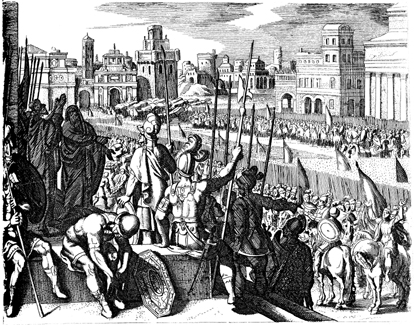
Elisha Prophesies the End of Samaria’s Siege by Nicolas Fontaine, 1625-1709.


Inflation – What it is and what it isn’t (continued)

In the last installment of this series, I mentioned that the big takeaway point was the definition of inflation. As you may recall, we defined inflation a bit differently than is commonly understood. Most people, when they talk about inflation, mean to say that prices – the amount we pay for items such as gas or bread or rent – have gone up.

The most common statistic used to report rising prices is the Consumer Price Index (CPI). The CPI measures the cost of a representative basket of goods and services, comparing the average price of these items in one period with their average price in the following period.

When the CPI shows average prices going up from one reporting period to the next, the rising prices are reported in the news as inflation. Occasionally, average prices fall. When this happens, we are told that deflation has occurred.

But the definition of inflation that was presented in Part 4 of this series did not rely on measuring the average cost of goods. Instead, inflation was defined as the increase in the supply of money. Conversely, deflation was not defined as decreasing prices, but rather the decrease in the supply of money.

But even though inflation and deflation are not the same thing as rising and falling prices, there is a relationship among them. When the money supply increases, assuming the amount of goods and services in the economy remain the same, prices go up. Conversely, when the money supply falls, prices go down. As Peter Schiff puts it, “The money supply expands and contracts. Prices go up and down. Inflation and price increases are not the same thing. One is cause. The other is effect” (Crash Proof, 69).

Now you may be asking yourself why I bother to define inflation as I do. Isn’t the common definition of inflation good enough as long as we all agree that inflation is rising prices? Why confuse things be bringing in the concept of money supply?

The best argument for defining inflation as the increase in the supply of money is that it clearly identifies the cause of rising prices: central banks creating too much money, usually in response to governments spending too much money.

If we are satisfied with the usual definition of inflation, government officials can easily fool us into thinking that prices are going up for reasons that have nothing to do with their own policies. Bad weather, profiteering by greedy speculators and lack of sufficient governmental regulations are common scapegoats for rising prices, even though prodigal politicians and the central bankers that fund their wasteful spending are the real culprits.

(more…)

Read Full Post »

Elisha Prophesies the End of Samaria's Siege

Elisha Prophesies the End of Samaria’s Siege by Nicolas Fontaine, 1625-1709.

In our last installment, we discussed opportunity cost using the example of the four lepers at the gate of Samaria (2 Kings 7:3-5).


The prospects facing of these gentlemen were all seemingly poor. They could remain where they were and die, they could enter the city of Samaria and die, or they could defect to the Syrians and maybe die or maybe live. Choosing any one of the three options meant forgoing the other two opportunities.

Quite rationally, the lepers elected to forgo the opportunity of dying in Samaria, either outside its gates or within the city itself, for the outside chance that they might survive among the Syrians. The two options of dying in Samaria, we concluded, represented the opportunity cost to the lepers of their decision to go over to the Syrians.

The Samaritan Consumer Price Index

At the same time the lepers were reasoning among themselves about their opportunity cost, inside the city walls of Samaria another discussion was taking place.

By this point, King Jehoram of Israel had had quite enough of the whole siege business and was ready to take it out on someone. The most obvious scapegoat in his mind was the prophet Elisha. Such was the king’s anger with Elisha that he had dispatched one of his high ranking officers to take off the prophet’s head.

This came as no surprise to the prophet, who, apparently forewarned by God that a plot had been hatched against him, told those with whom he was sitting, “Do you see this son of a murderer has sent someone to take away my head? Look, when the messenger comes, shut the door, and hold him fast at the door. Is not the sound of his master’s feet behind him?” (2 Kings 6:32).

When the king’s messenger arrived, Elisha had a message for him. Said Elisha, “Hear the word of the LORD. Thus says the LORD: ‘Tomorrow about this time a seah of fine flour shall be sold for a shekel, and two seahs of barley for a shekel, at the gate of Samaria’ ” (7:1).

Incredulous, the officer responded, “Look, if the LORD would make windows in heaven, could this thing be?” To which Elisha answered, “In fact, you shall see it with your eyes, but you shall not eat of it” (7:2).

(more…)

Read Full Post »

Elisha Prophesies the End of Samaria's Siege

Elisha Prophesies the End of Samaria’s Siege by Nicolas Fontaine, 1625-1709.

My goal in this series is to demonstrate that many of key concepts of economics are either explicitly or implicitly taught in Bible’s account of the siege of Samaria as found in 2 Kings 6:24-7:20.


In Part One, we looked at 2 Kings 6:25 and what we could learn from the exorbitant prices people were paying for undesirable food under siege conditions. In Part 2, we looked at the relationship between two economics and politics. Especially, we considered how economic hardship is frequently brought on by the ill-conceived policies of politicians, who, being loath to take the blame themselves, often will attempt to find a scapegoat to divert public dissatisfaction away from themselves.

Today, I would like us to look at another important economic concept demonstrated in 2 Kings: opportunity cost. But before diving into that, perhaps it would be advisable to offer a definition of economics.

Economics, What is it?

In his lecture series on economics, John Robbins offered the following definition of economics: it is the study of the logic of choice.

That may sound a bit surprising to many people. It is common to think of economics as news about what the stock market did today, but that is history. Some may think of economics as mathematics. Still others, when they consider the subject at all, hold very negative views about economics. For example, 19th century Scottish thinker Thomas Carlyle famously dubbed economics “the dismal science.”

But starting with the axiom of Scripture, the idea that the Bible has a monopoly on truth, Robbins makes a strong case for his definition. He starts with four principle statements about man taken from Scripture:

  • Men are rational creatures made in the image of God.
  • Men always act purposefully.
  • Men always act in their perceived self-interest.
  • Only individuals choose/make plans/act.

From these concepts, Robbins provides us with the following chain of reasoning: To be human is to be rational > To be rational is to have purposes > To have purposes is to plan > To plan is to arrange ends and means (in other words, to choose). And economics, as Robbins defines it, is the study of the logic behind the choices we make.

(more…)

Read Full Post »

meltdown-620Today we may apply the Apostle’s words first to those (rulers) who without cogent cause inflict exorbitant taxes upon the people, or by changing and devaluating the currency, rob them, while at the same time they accuse their subjects of being greedy and avaricious.

    – Martin Luther, Commentary on Romans 2:2, 3

Now, if the laws of buying and selling are corrupted, human society is in a manner dissolved; so that he who cheats by false weights and measures, differs little from him who utters false coin.

    – John Calvin, Commentary on Leviticus 19:35

But if life is an equal value to all, there is something strange, when war comes and large military expenditures are necessary, in requiring the person who has saved for a life insurance policy to lose half its buying power by inflation, while the spendthrift loses nothing and enjoys high wages to boot.

    – Gordon H. Clark, A Christian View of Men and Things, pp. 101-102

Read Full Post »

Elisha Prophesies the End of Samaria's Siege

Elisha Prophesies the End of Samaria’s Siege by Nicolas Fontaine, 1625-1709.

In the first installment in this series, we looked at some of the economic concepts taught in the Bible’s account of the siege of Samaria recorded for us in 2 Kings 6:24-7:20. In particular we looked at 2 Kings 6:25 and found that quite a bit of economics is packed in just that one verse. Today, we’ll continue the discussion of economic implications of Syria’s attack on the capital of the Northern Kingdom.

Politics, Economics and the Blame Game

As a kid, one of my favorite Saturday morning cartoons was Scooby Doo. The episodes were pretty formulaic, especially the ending where, as the bad guys were being hauled off to the paddy wagon, they inevitably would blurt out, “And I would have gotten away with it if it weren’t for you meddling kids!” They never blamed their downfall on their own criminality. It was all the fault of the interlopers.

Well, politicians are a lot like this. While being separate disciplines, politics and economics are closely related such that to talk about one often means brining up the other. This is especially common when a nation is struggling with economic difficulties.

And when economic troubles begin, so too does the blame game shuffle. Suppose the citizens experience a sharp upward spike in the cost of living, or wages stagnate or wave after wave of layoffs take place. Do the powers-that-be blame themselves? Of course not! Economic difficulty is NEVER related to the policies of the current president or Congress. No, not one bit.

The political class, and the academics whose ideas the politicians implement make it all very clear that they had nothing to do with the mess. We’re made to understand that our economic pain is always the fault of the intransigence of opposing party, or greedy market speculators, or bond vigilantes, or budget cuts, or lack of sufficient federal regulatory oversight, or not enough government spending, or cheap imports from China.

This blame game, this shifting of responsibility, is nothing new. In fact, we can say with confidence that it started six thousand years ago with Adam himself. As he put it in his own words, “The woman whom You gave to be with me, she gave me of the tree, and I ate” (Genesis 3:12). “It’s your fault, not mine!” That’s the gist of Adam’s argument to God.

(more…)

Read Full Post »

Elisha Prophesies the End of Samaria's Siege.jpg

Elisha Prophesies the End of Samaria’s Siege by Nicolas Fontaine, 1625-1709.

The Bible has a monopoly on truth. This simple idea is basic to the entire Scripturalist enterprise. Yet while the idea itself is simple and ought to be taught and understood by every Christian, it’s one that often is denied.


Speaking for myself, many times I’ve fallen into the trap of thinking that the Bible is good for learning about God and salvation, but it’s not a textbook on economics, or politics or history. Revelation alone is the source of all knowledge, but my belief that Bible is not a textbook on fill-in-the-blank was a sinful denial of this premise.

I mention this by way of introduction to today’s post on Biblical economics. and for today’s lesson, I’d like to look at the siege of Samaria as related in 2 Kings 6:24-7:20.

The Siege of Samaria

Samaria was the capital of the Northern Kingdom and had come under attack by Ben-Hadad, king of Syria. Sieges in the ancient world were horrific events, and doubtless left survivors deeply scarred both physically and emotionally. For example, when the Assyrians were threatening to besiege Jerusalem, the commander of their army told Hezekiah’s representatives and all the people who were assembled on the city wall, “Has my master sent me to your master and to you to speak these words, and not to the men who sit on the wall, who will eat and drink their own waste [during the coming siege of Jerusalem] with you” (Isaiah 36:12). And this leaves unsaid the lack of sanitation, disease, stench and death that would all be part of the package deal.

Regarding the siege of Samaria, the Bible tells us, “And there was a great famine in Samaria; and indeed they [the Syrians] besieged it until a donkey’s head was sold for eighty shekels of silver, and one-fourth of a kab of dove droppings for five shekels of silver” (2 Kings 6:25).

There are a number of important economic ideas packed into this verse. Let’s take a look at them.

(more…)

Read Full Post »

Pat McCrory

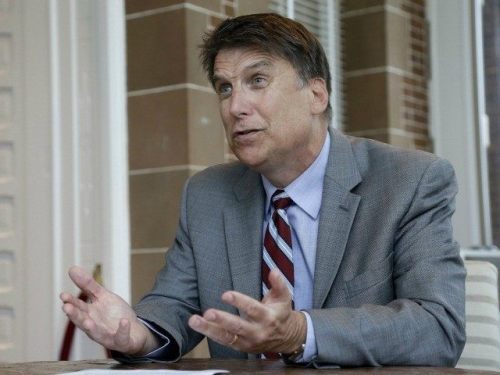
Pat McCrory, embattled governor of North Carolina.

Oligarchy:  Government by the few; a form of government in which the power is confined to a few persons or families; also, the body of persons composing such a government.


American oligarchy. What a strange term it is. In the years immediately following the cold war, it was common to hear about the Russian oligarchs. These were unscrupulous men who were alleged to have acquired great power and wealth after the breakdown of the Soviet Union, and to have done so in a dishonest fashion. But back then, no one ever spoke of an American oligarchy.

But now, more and more it is common to hear people speak of about an American oligarchy. And it would seem they are onto something. Consider:

  • Gay Marriage: In June 2015, a body of nine lawyers on the Supreme Court found that the US Constitution guarantees homosexual couples the right to marry. And this in spite of the fact that 1) the Constitution says nothing about marriage, that 2) large numbers of the American people oppose gay marriage and that 3) many states, including Ohio where I live, had laws prohibiting gay marriage that were put there as a reflection of the will of the people. In the wake of the Supreme Court ruling, any attempt by states to offer some measure of protection to those who oppose the encroachments of the aggressive, unbiblical homosexual lobby are met with the strictest denunciations from oligarchs in both business and culture.
  • Hillary Clinton’s presidential bid: Some politicians come with baggage. Hillary comes with a whole baggage train. That Mrs. Clinton is a felon is almost a certain. For her guilt has nothing to do with the content of the emails she had on her private server. As former CIA officer Scott Uehlinger put it, “The fact that she set up a private server, in and of itself, means she is guilty of a felony right there. Obviously, by having a private server, she was conspiring to evade her signed sworn statements that she would uphold secrecy agreements. The fact that simply established that (private server) regardless of what was on it, she intended to go around and circumvent the law.” Any ordinary American would long ago have found himself rotting in a cell in Leavenworth for committing just a fraction of the violations Hillary almost certainly has committed, and yet not only does she not suffer the legal consequences for her actions, but she is allowed to run for the nation’s highest office with nary a peep from the national press.

(more…)

Read Full Post »

The latest LGBTQ attack on property rights comes to us courtesy of Rose Trevis, a transgender man – i.e. a woman posing as a man – who has filed suit against Hawleywood’s barbershop in Long Beach, California.

The suit was prompted when Trevis was refused service by the barbershop that has a policy of serving men only. “I felt very upset, I guess discriminated against,” Trevis said. Trevis has retained famed attorney Gloria Allred to represent her.

The last few years have seen an explosion of such suits. Florists, bakers, photographers and bed and breakfast owners, all going about their own business, have found themselves the targets of an aggressive, fascist, unbiblical homosexual rights movement that seeks to use the power of the state to force its agenda on everyone.

In many cases, the business owner’s Christian beliefs were the basis of the refusal of service. In others, such as the barbershop in Long Beach, no religious objection was put forth, only company policy was cited.

Some who support a business owner’s decision to refuse service to homosexual or transgender customers attempt to defend this decision on the basis of free speech, while others do so on the basis of religious liberty. Both defenses, well intentioned as they are, fail for the same reason: the issue is not one of free speech or religious liberty. This issue at hand is one of property rights. Does a business owner reserve the right to refuse service for any reason, or may a customer force him to perform a service against his will?

(more…)

Read Full Post »

Obama_Young Leaders .jpg

President Barak Obama addresses the Young Leaders of the Americas Town Hall in Buenos Aires, Argentina, March 23, 2016.   

“So often in the past,” said president Barak Obama to a group of Argentinian youth, “there has been a division between left and right, between capitalists and communists or socialists, and especially in the Americas, that’s been a big debate.” The president continued, “Those are interesting intellectual arguments, but I think for your generation, you should be practical and just choose from what works. You don’t have to worry about whether it really fits into socialist theory or capitalist theory. You should just decide what works.”


Obama’s remarks have drawn a good deal of fire from conservatives, and rightly so. To downplay the division between communism and capitalism betrays a profound ignorance of economics and of history. Capitalism, the economic system of the Bible with its emphasis on private property, has lifted millions out of poverty and produced relatively free and just societies in the nations where it has been practiced; communism, the collectivist economic system of Karl Marx that places ownership of the means production with the state, has produced untold suffering and death for millions.

(more…)

Read Full Post »

« Newer Posts - Older Posts »