Feeds:
Posts
Comments

John RobbinsThe following sermon was preached by John Robbins at Reformation Chapel in Unicoi Tennessee. Last week I featured part one of this sermon.  Today, I present part two. To read part one, please click here. The transcription is my own.

– Steve Matthews

Well, Luke continues in verse five,

Then, as they were afraid and bowed their faces to the earth, they said to them, ‘Why do you seek the living among the dead? He is not here, but is risen! Remember how he spoke to you while he was still in Galilee.’

Well, these women are terrified. These men suddenly appear, and the women are terrified. Luke says they were afraid and bowed their faces to the earth. And the angels speak to them and say, “Why do you seek the living among the dead?”

This reminds you of the opening chapter of Acts, where Luke is telling about the apostles watching Jesus being assumed into heaven. And two men again appear, maybe the same two angels, and speak to the apostles, and they say, “Men of Galilee, why do you stand here staring up into heaven?” They ask them a question again. And here the angels ask the women, “Why do you seek the living among the dead. And then they tell them, “He is not here, but is risen. Remember how he spoke to you.” And this makes it clear about the important of words. See, we’re told in the first chapter of John that the Word preceded the visible creation, that everything that was created was preceded by the Word. The Word comes first, the Logos comes first. And many people get everything backwards, they think events, or history, or creation come first, rather than the Word.

But notice here no one witnesses the resurrection event. And what the women receive are words from the angels. They’re told specifically, “He is not here. He is risen. He is living. He’s not among the dead.” And then the angels remind them of Jesus’ own words that he spoke while he was still with him. Their faith rests on the testimony of Jesus and the testimony of the angels. The women did not see the resurrection event, but they received these words from Christ and from the angels.

Continue Reading »

John Robbins

John W. Robbins

The following sermon was preached by John Robbins at Reformation Chapel in Unicoi Tennessee. Please click here to read part two.  The transcription is my own.

-Steve Matthews

And now Luke moves on in his narrative to the resurrection. Then he begins by saying it happened on the first day of the week. And there’s a Jewish idiom here, it’s the first of the Sabbaths. And it’s a phrase that appears in the Matthew 28:1, Mark 16:1 and Luke 24:1, it’s called the first day of the Sabbaths or the first of the Sabbaths. From now on this will be the important day. This is what John calls the Lord’s Day. This is why we meet on Sunday and not on Saturday, because this has taken on the characteristics of the most important day of the week. This is the day that Jesus rises from the dead.

“Now on the first day of the week, very early in the morning,” Luke says, “they, and certain other women with them, came to the tomb brining the spices which they had prepared. But they found the stone rolled away from the tomb.” Christ had dies on the sixth day of the week, on Friday, he was in paradise that day and the entire next day, and then early in the morning on the first day of the week he rises from the dead.

Luke says these women, and they’re named in the previous chapter, they go very early in the morning. John says in John 20 verse 1 that they leave when it is still dark, yet dark. And some people have, again, tried to make contradictions in the Bible by saying the various evangelists say well it was at dawn, and John says it was while it was still dark, and another Gospel says it was when the sun was rising. Well, these women had to travel. And they left when it was still dark and when they got there the sun had risen. And it’s very easy. If people would just think about what’s going on in these narratives, all these so-called contradictions and problems would disappear. The women can’t transport themselves like they do on Star Trek from one place to another instantaneously. It takes a while for them to travel, to get together, to pack up their spices and to arrive at the tomb. And so you would expect a variation between the time they leave to the time they arrive there. Which is what the four narratives say.

Continue Reading »

Joseph StoreyFormer Supreme Court justice John Paul Stevens has written a most remarkable editorial in today’s New York Times. I hope to do a video on his piece later this week, but for now I’d like to share with you this pearl of wisdom from Stevens. He wrote, “For over 200 years after the adoption of the Second Amendment, it was uniformly understood as not placing any limit on either federal or state authority to enact gun control legislation” (emphasis mine).

Well, I’m certainly no legal eagle. I’ve never so much as been to law school, let alone sat as judge on the highest court in the land. But for all that, I do understand the English language and I beg to different with Justice Stevens.

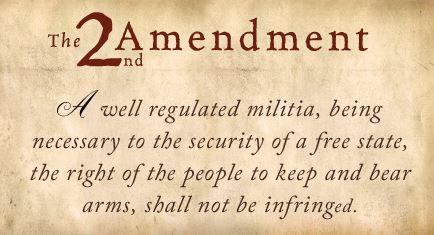
You see, there’s this little thing called the Second Amendment, and it reads

A well regulated militia being necessary to the security of a free state, the right of the people to keep and bear arms shall not be infringed (emphasis mine).

Now my dictionary gives the following definition of infringe: “Violate, transgress, encroach.” For infringement it gives: “an encroaching or trespass on a right or privilege.”

To put in another way, the Second Amendment prohibits the Federal Government from violating, transgressing, encroaching, or limiting the right of the American people to keep and bear arms. Just what part of “shall not be infringed” does this addled former Justice not understand?

Continue Reading »

MFOL_Hogg

Student leader David Hogg speaks at the March For Our Lives rally in Washington D.C., March 24, 2018.

They came, the saw, they marched. On Saturday, March 24 2018 approximately 200,000 people filled the streets of Washington D.C. to call on Congress to pass anti-gun legislation which the marchers claim is the only solution to solving the problem of school shootings / mass shootings in the US.

On their website, the marchers list three demands: 1) A ban on the sale of assault weapons, 2) A prohibition on the sale of high-capacity magazines, and 3) Requiring background checks to ensure dangerous people can’t buy guns. Let’s look at them.

According to March For Our Lives (MFOL), “Our elected officials MUST ACT by,” in the first place, “Passing a law to ban the sale of assault weapons like the ones used in Las Vegas, Orlando, Sutherland Springs, Aurora, Sandy Hook and, most recently, to kill 17 innocent people and injure more than a dozen others at Marjory Stoneman Douglas High School.” We are told that “No civilian should be able to access these weapons or war.”

This statement is propaganda. The problem is its central term, “assault rifle,” is never defined, yet we’re told they are “weapons of war” to which civilians should not have access.

But the rifles that were used in the various mass shooting are not “weapons of war.” That is to say, they are not machine guns or the sort used by soldiers in combat. Here, I’m talking about guns such as the Vietnam era M16 or the more recent M4. These are fully automatic rifles, what are often referred to as “machine guns,” which are designed to fire multiple rounds with a single trigger pull.

The AR-15s used in the mass shootings listed on the MFOL website were semi-automatic rifles, not fully automatic. This is not to say that the AR-15 – and just to be clear the “AR” in AR-15 does not stand for “assault rifle,” it stands for Armalite Rifle, the name of the company that developed the particular style of rifle in the 1950s – but they are not “weapons of war” as the MFOL website claims. By calling the AR-15 a “weapon of war,” MFOL is attempting to confuse the public to advance their political agenda. In other words, they’re propagandists.

Continue Reading »


For since the creation of the world His invisible attributes are clearly seen, being understood by the things that are made.

Romans 1:20

John Robbins

If you’ve ever read a book or heard a lecture on Christian apologetics, there’s a good chance Romans 1:19-20 were brought up. Perhaps these verses were cited as proof that all men know God, so that no one could claim ignorance of God on judgment day. That, of course, is true. Responsibility is based on knowledge, and since God has revealed himself to all men, all men are accountable to him.

Bible commentators, as well as the authors of the Westminster Confession, have identified two ways in which God reveals himself to men: general revelation and special revelation.

Special revelation is identical with the 66 books of the Bible. The Scriptures are God’s written, propositional revelation, which principally teach us, “What man is to believe concerning God, and what duty God requires of man,” in the words of the Shorter Catechism.

But what about general revelation? Just what is it that is meant by this term? The most common answer is that general revelation is identical with nature. We are told that when men look to the heavens and see the stars, or cast their eyes upon the majestic mountains they behold God’s attributes and, to that extent, know him and are therefore rightfully held responsible by him, even if they have never so much as heard the name of Jesus Christ.

Here’s one example of this line of reasoning.

Paul stresses the reality and universality of divine revelation, which is perpetual (“since the creation,” v.20) and perspicuous (“clearly seen,” v.20). Divine invisibility, eternity, and power are all expressed in and through the created order…The invisible God is revealed through the visible medium of creation. This revelation is manifest; it is not obscured but clearly seen (New Geneva Study Bible).

The commentators manifestly argue that one can reason from visible creation to an invisible God, but does this really make sense? On one hand, such an argument is appealing to Christians. We believe in God and rightfully want others to share that belief. But simply because we like the conclusion of an argument does not mean that it is a good argument. This is the case even if the conclusion of argument – that there is an immortal, invisible all wise God who created and sustains the world – is true.

Continue Reading »

#13 March Madness

Second Amendment

“I know and am convinced by the Lord Jesus that there is nothing unclean of itself,” wrote the Apostle Paul to the Romans. The context of these words from Romans 14:14 was a treatment about the proper Christian attitude toward, and use of, food. In particular, it centered around the controversial topic of food sacrificed to idols. Some Christians had no problem with eating it. For others, it was a major stumbling block.

Paul’s point was that meat, even if it had been sacrificed to idols, was simply meat. A Christian could eat of it and be blameless. But not all Christians saw it that way. Some believers saw eating such meat as sinful. Concerning these individuals, Paul wrote, “but to him who considers anything to be unclean, to him it is unclean. That is to say, if a Christian was convinced that the act of eating meat sacrificed to idols was a sin, then it would be a sin for him to do so.

This passage is one of the clearest proof texts in Scripture showing that things in themselves are neither good nor evil – “there is nothing unclean of itself,” but rather that good and evil reside in the heart of the man.

Jesus made this same point when answering his disciples about a question they had about one of his parables. He said to them, “Are you thus without understanding also? Do you not perceive that whatever enters a man from outside cannot defile him, because it does not enter his heart but his stomach, and is eliminated, thus purifying all foods?…What comes out of a man, that defiles a man. For from within, out of the heart of men, proceed evil thoughts, adulteries, fornications, murders, thefts, covetousness, wickedness, deceit, lewdness, an evil eye, blasphemy, pride, foolishness. All these evil things come from within and defile a man” (Mark 7:18-23).

Because some people misuse food does not make food bad in itself. Sex is not inherently evil because some men are fornicators and adulterers, nor is language itself wicked because some men are deceivers and blasphemers. Scripture does not seek to ban any of these things. What it does do is to define what constitutes the lawful and the unlawful use of them.

What is true of food, sex and language is also true of guns: They are neither good nor evil in themselves; rather, it is the thoughts and intents of the heart that make their use right or wrong.

One man uses a gun to defend his family and property from a home invader; another uses it to rob a bank or to shoot up a school. Those who seek to ban private citizens from owing and using guns argue, contra Jesus and Paul, that the problem lies with the thing itself, not with the evil thoughts of evil men.

It’s an old saying, but one that holds true, guns don’t kill people, people do.