Posts Tagged ‘Gordon Clark’
Radio Lux Lucet: Episode 1 – Introduction
Posted in Radio Lux Lucet, tagged Gordon Clark, John Robbins, Scripturalism on July 15, 2016| 4 Comments »
Biblical Economics: Study Resources
Posted in Economics, Scripturalism, tagged Economics, Gordon Clark, Investing, John Robbins, Philosophy, Pope Francis, The Fed on July 10, 2016| 2 Comments »
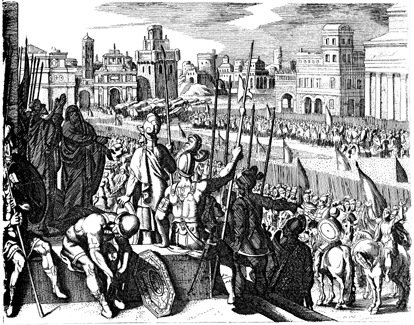
Elisha Prophesies the End of Samaria’s Siege by Nicolas Fontaine, 1625-1709.
When beginning the Siege of Samaria series on Biblical economics, I never intended it to go on for more than two or perhaps three posts. Due to an embarrassment of material and positive response from the readers of this blog, the series stretched into five posts. In no small part the success of this series has been due to the generous support of Sean Gerety over at the God’s Hammer blog, who has been kind enough to republish my posts.
It’s certainly been an encouragement to me to see so many people interested in what the Bible has to teach us about economics. Most of the economic talk one hears in the mainstream media is misleading, and, I suspect, it’s designed to be that way. After all, if too many folks were to get wise to the economic evil troika of central banking, fiat currency and demand-side Keynesian economics, it would be a lot harder for the financial masters of the universe to loot the poor and middle class of the world for their benefit.
The lies of the statists enslave, but the truth of God’s Word makes men free. And it is to the end of furthering this truth that I have presented the series on Biblical economics.
And because Biblical economics is both a fascinating and worthwhile study, it seemed good to me to take this opportunity to share with others the intellectual ammunition I’ve found helpful in developing my understanding of the subject. Below is a list of resources along with my comments.
Three Theologians on Monetary Debasement
Posted in Economics, Uncategorized, tagged Gordon Clark, Investing, John Calvin, Martin Luther, Money and Banking, The Fed on June 16, 2016| Leave a Comment »
 Today we may apply the Apostle’s words first to those (rulers) who without cogent cause inflict exorbitant taxes upon the people, or by changing and devaluating the currency, rob them, while at the same time they accuse their subjects of being greedy and avaricious.
– Martin Luther, Commentary on Romans 2:2, 3
Now, if the laws of buying and selling are corrupted, human society is in a manner dissolved; so that he who cheats by false weights and measures, differs little from him who utters false coin.
– John Calvin, Commentary on Leviticus 19:35
But if life is an equal value to all, there is something strange, when war comes and large military expenditures are necessary, in requiring the person who has saved for a life insurance policy to lose half its buying power by inflation, while the spendthrift loses nothing and enjoys high wages to boot.
– Gordon H. Clark, A Christian View of Men and Things, pp. 101-102
What’s an Evangelical?
Posted in Scripturalism, Theology, tagged Gordon Clark on May 1, 2016| 2 Comments »
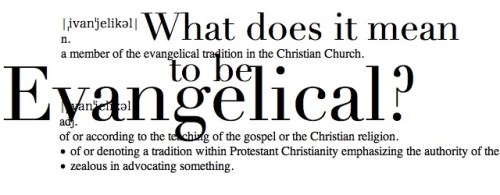 So what is an evangelical anyway? It’s common term, and not just in church circles either. Now that the US presidential elections are well underway, one often hears the word evangelical in connection with politics, as in such and such a candidate is attempting to garner the evangelical vote. But who are these people whose votes the politicians want?
From stories that appear in the media, one gets the distinct sense that evangelical has come to anyone who’s a non-Roman Catholic, non- mainline liberal Protestant church goer. The popular image of which could be described as a mega-church attending, TBN watching, pre-trib rapture awaiting Christian Zionist.
In his 2007 study concerning who qualifies as an Evangelical, George Barna found that 38% of the US population described themselves as such.
As part of the same survey, Barna used a nine-point definition of Evangelical to identify individuals who belonged to this group. Judged by Barna’s criteria, only about 8% of the US population can be described as Evangelical.
Historically speaking, the definition of Evangelical has encompassed two criteria: justification by faith alone (JBFA) and the authority of Scripture alone. Gordon Clark makes this point in Chapter 4 of God’s Hammer, writing, “The term evangelical, an inheritance from the Reformation, reminds us of the so-called material principle of the origin of Protestantism. Justification by faith alone was the material principle…”
Clark continues, “[T]he so-called formal principle of the Reformation [is] the Scripture itself. No one can rightly appropriate the term evangelical who rejects the one or the other.”
Belief in the twin towers of the Reformation, Scripture alone and Justification by Faith alone, is required of anyone who wishes to be considered an evangelical, at least in the historical sense of the term.
Book Review: The Atonement
Posted in Book Review, Scripturalism, Theology, tagged Gordon Clark, John Robbins on March 27, 2016| Leave a Comment »
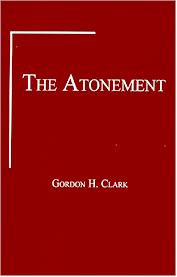 The Atonement by Gordon H. Clark (Jefferson, MD: The Trinity Foundation, 1987, 163 pages), $8.95.
Chapters Include: Introduction on Method; The Doctrine in its Simplicity; The Covenant of Redemption; The Covenant of Grace; The Incarnation; The Virgin Birth; The Human Nature of Christ; The Purpose of the Incarnation; Active Obedience; The Covenant of Works; The Vicarious Sacrifice; Expiation; Propitiation; Satisfaction; Federal Headship; Absolute Necessity; Traducianism; The Sovereignty of God; The Extent of the Atonement.
A few years back, American Express ran a television advertisement that featured the story of a man who visited Norway thinking he was going to see the land of his ancestors only to find upon arrival that he actually was of Swedish descent. Or perhaps it was the other way around. At any rate, he wasn’t who he thought he was.
I had a similar experience when I first began to study theology. As I worked through a book on systematic theology with a very generous and learned reformed Baptist pastor, I found, much to my surprise, I was an Arminian. This was particularly shocking to me, as I had never so much as heard the word before, let alone realized I was one. In truth, my experience wasn’t so unusual. Such is the dominance of Arminian theology in American Evangelical churches that Arminians generally are unaware of their Arminianism. It’s taken for granted that Christ died for all men, and little or no serious thought is given to an alternative. When the doctrines of grace, what we would call Calvinism, are discussed, many folks raised in the broad evangelical church are shocked and offended that someone actually could believe that God does not love all men, that some are in fact reprobate and fitted for destruction, and that this is the historic teaching of the Reformation.
Noah: History’s Preeminent Prepper, Part 3
Posted in Prepper, tagged Apologetics, Gordon Clark, History on February 7, 2016| 5 Comments »
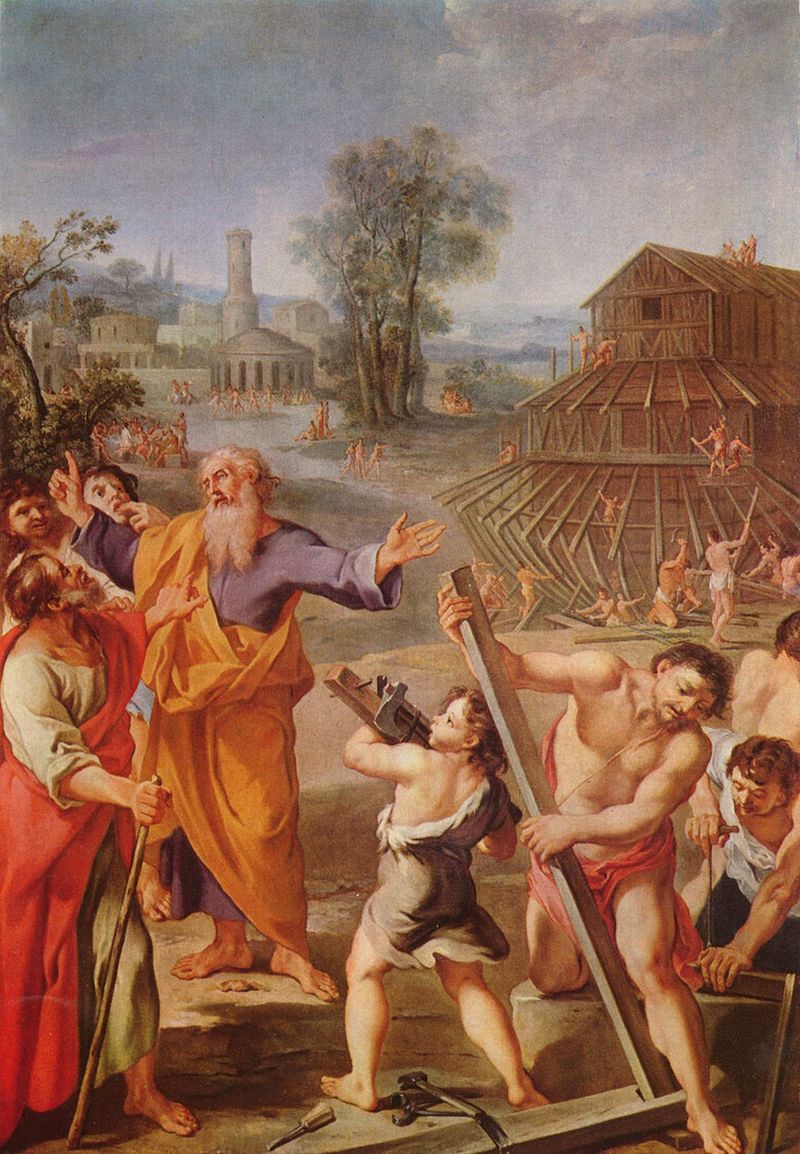
The prudent man foresees evil and hides himself, but the simple pass on an are punished
- Proverbs 22:3
In the first two parts of this series, it has been my goal to set forth a few basic ideas. First, Western Civilization, our civilization, is in an advanced state of decay and likely to suffer significant financial and political shocks in the not too distant future. Western Civilization began with the Reformation in the 16th century and was built by the widespread preaching of and belief in the Gospel of Jesus Christ. But the West has largely turned its back on Christ, and there is no reason to suppose that the Lord will spare it any more than he has spared other civilizations that have done likewise.
Second, I have argued that the coming difficulties, when they occur, should not come as a surprise to Christians. We have the Word of God at our disposal, and a wise application of its teaching to the world around us should open our eyes to the precarious state of our civilization. When disaster strikes, if we are just as surprised and confused as everyone else, this will reflect poorly on us, showing we do not take the Word of God seriously.
Third, not only is it prudent for Christians to prepare to survive what in my opinion are unavoidable and serious economic and political troubles, but that doing so honors God and puts us in a position to serve as a witness to his grace and goodness to those who badly need to hear the Gospel of Jesus Christ.
Fourth, it has been my contention that Noah provides for us an ideal model prepping. Typical of God’s goodness is that he not only lets us know in clear terms what is right and what is wrong, but he also provides for us many examples of what happens to those who heed his Word, as well as those who do not. In Noah’s case, we how God acted through one believing individual to preserve the human race from complete destruction.
Noah: History’s Preeminent Prepper Part 2
Posted in Prepper, Uncategorized, tagged Economics, Foreign Policy, Gay Marriage, Gordon Clark on January 31, 2016| 3 Comments »

A decimated ash tree in my backyard, courtesy of Hurricane Ike. September, 2008.
“For this afternoon, a high wind warning is in effect,” said the radio announcer. “Whatever,” I thought to myself and soon forgot the comment as I drove to church that Sunday morning. The date was September 14, 2008, and I was about to get a lesson in preparedness that I have not forgotten in over seven years since that time.
Driving home, it was a pretty typical late summer/early fall day in Cincinnati. I seem to recall that it was partly sunny and generally fairly pleasant outside. When I arrived home, my family and I ate lunch. And then things got interesting. Seemingly out of nowhere, strong winds began gusting from the south. As the gusts turned into sustained high winds and the tops of the trees in my back yard bent over so as to almost touch the ground, I remembered the high wind warning on the radio from that morning. Whatever indeed. After several minutes of this, the winds vanished just as rapidly as they had appeared. It was as if a hurricane had just blown through the area, which, as I later found out, is pretty much what actually what happened.
Now if you know anything about where Cincinnati is located – we’re about 550 miles inland from the Atlantic coast – you’d know that folks in this part of the country don’t really expect to see hurricanes. Ever. And yet the sustained winds that came through the area that day were over 70 miles an hour, meeting the definition of a hurricane. As it turned out, the high winds were the remnants of Hurricane Ike, a category 4 hurricane, which had struck the gulf coast of Texas a day before. After making landfall, the remnants of the storm headed northeast. Aided by what the meteorologists call a “shortwave trough,” the winds intensified, once again reaching hurricane levels as they roared through the Ohio Valley, causing massive damage to many major metropolitan areas in the region.
At my house, the winds knocked out power almost immediately. Power outages themselves aren’t uncommon as a result of storms. But this outage was to last four days, they longest by far such outage I’ve personally experienced. A large Ash tree in our back yard was snapped in two and had to be taken down. Just up the street, a neighbor was severely injured when a tree fell on her. I drove around in my car to see what things looked like, and was shocked to find out that the power was out for miles in every direction. Much to the surprise of everyone, all of greater Cincinnati was effectively was shut down by this one windstorm.
I realize that compared to natural disasters some people have endured, my story doesn’t rank as particularly noteworthy. The house didn’t sustain any damage. And the biggest inconvenience was having to stumble around at night by the dim light of a kerosene lamp. That, and the food in the freezer going bad. But all this it did get me to thinking. I came to realize that many of the things that I took for granted – the so-called “grid,” items such as electric power, phone service, running water, readily available food and fuel – could disappear in a moment.
At the same time and about 600 miles to the east, another disaster was unfolding. The 2008 financial crisis was in full swing that fall. I remember it quite well as at the time I was working as a telephone representative for a large, nationally known financial services company. Every day I’d get panicked calls from 401(k) investors asking about their balances. I’ll never forget one call. After quoting an account balance to a lady, I was greeted with stunned silence. Finally she said, “I just lost $30,000.” Tough times those.
That fall was quite a wake-up call to me. Almost simultaneously I had witnessed the failure of both the “grid” and the financial system. Perhaps my latent assumptions that things would always work the way they were supposed to were not really warranted.
Book Review: God and Evil: The Problem Solved
Posted in Book Review, Scripturalism, Theology, tagged Apologetics, Gordon Clark, John Robbins on January 10, 2016| 5 Comments »
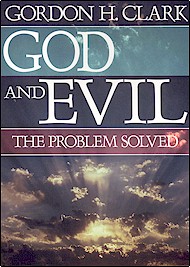
God and Evil: The Problem Solved by Gordon H. Clark (Unicoi, Tennessee: The Trinity Foundation, 91 pages, 2004) $5.00.
Responding to president Bush’s proposal to allow public schools to teach intelligent design along with Darwinism, veteran political commentator Daniel Schorr remarked, “[Bush] might well have reflected that, if this [Hurricane Katrina] was the result of intelligent design, then the designer has something to answer for.” From a Christian perspective, this comment is a bit off the mark. For Christians do no not, or at least ought not, argue for intelligent design. Creationism – the doctrine that God created all things of nothing, by the Word or his power, in the space of six literal days, and all very good – is the proper Biblical stance. Nevertheless, Schorr’s statement certainly does apply to creationism. In fact, Schorr’s argument is really more of a problem of the creationist than it is for the proponent of intelligent design.
Writing in his 2006 book Letter to a Christian Nation, atheist evangelist Sam Harris was even more pointed in his criticism of Christians than was Schorr.
Examples of God’s failure to protect humanity are everywhere to be seen. The city of New Orleans, for instance, was recently destroyed by a hurricane. More than a thousand people dies; tens of thousands lost all their earthly possessions; and nearly a million were displaced. It is safe to say that almost every person living in New Orleans at the moment Hurricane Katrina struck shared your belief in an omnipotent, omniscient, and compassionate God. But what was God doing while Katrina laid waste to their city? Surely He heard the prayers of those elderly men and women who fled the rising waters for the safety of their attics, only to be slowly drowned there. These were people of faith. These were good men and women who had prayed throughout their lives. Do you have the courage to admit the obvious? These poor people died talking to an imaginary friend (52).
From the start, Christians have found themselves confronted with arguments similar to those above and have handled them with various degrees of success. Far too often they have come off as the proverbial fellow who made the mistake of brining a knife to a gun fight. They are unprepared and overmatched. In the opinion of this reviewer, a Christian who and understands and believes Clark’s argument in God and Evil: The Problem Solved (hereafter God and Evil)
will find himself in the happier position of the man who brought a gun to a knife fight. The opposition won’t have a chance.
Book Review: The Incarnation
Posted in Book Review, Scripturalism, Theology, tagged Gordon Clark, John Robbins on December 6, 2015| 3 Comments »
The Incarnation by Gordon H. Clark (Jefferson, Maryland: The Trinity Foundation, 91 pages, 1988), $8.95.
For several reasons, The Incarnation
is a noteworthy book. First, it is Gordon Clark’s final publication, written at the very end of his life and published posthumously. Second, it is a masterpiece of logical reasoning and clear writing. As if to prove correct the psalmist’s comment about the righteous, that they “still shall bear fruit in old age,” Clark’s thinking is just as acute in this book as at any time in his long and distinguished career. Third, it is brief. At 91 pages, it makes for a short it can be read in a single sitting. and yet for all its brevity, it is also quite profound. Fourth, it is perhaps Clark’s most controversial writing, in which he weighs the Creed of Chalcedon in the balance and finds it, if not entirely wanting, certainly in dire need of renovation.
 Although Gordon Clark (1902-1985) died before completing The Incarnation, he left it in a state such that, practically speaking, it was a complete work at the time of his decease. As John Robbins commented in the book’s Foreward,
At the time he [Clark] was stricken mortally ill in February 1985, he was writing the present volume, which he titled Concerning the Incarnation. He did not quite finish the book, intending to add a few more paragraphs summarizing his hundred pages of analysis and argumentation, so he asked this writer to complete it for him…I have added only two paragraphs to his words (ix).
The additional summary paragraphs written by Robbins fall at the very end of the book and are clearly marked.
As for the book’s analysis and argumentation, it is first rate start to finish. Clark brings a logician’s eye to the Creed of Chalcedon and finds much that is lacking. This likely comes as a surprise to many readers. For since its formulation in A.D. 451, Chalcedon has been held up as the final word on the incarnation. But Clark makes a compelling case that the Creed, although helpful in some places, also is beset with serious shortcomings, chief among them being the lack of clear definitions for its principle terms.
Book Review – God’s Hammer: The Bible and its Critics
Posted in Book Review, Philosophy, Scripturalism, Theology, tagged God's Hammer, Gordon Clark on November 16, 2015| Leave a Comment »
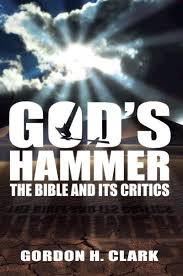 God’s Hammer: The Bible and its Critics by Gordon H. Clark (Unicoi, Tennessee: The Trinity Foundation, 304 pages, 4th Ed., 2011), $5.18. Also available in E-Book format.
Chapters include: How May I Know the Bible is Inspired?; The Bible as Truth; Verbal Inspiration: Yesterday and Today; The Evangelical Theological Society Tomorrow; Special Divine Revelation as Rational; Revealed Religion; Holy Scripture; The Concept of Biblical Authority; Hamilton’s Theory of Language and Inspiration; What is Truth?; The Reformed Faith and the Westminster Confession.
According to the back cover of the fourth edition, “God’s Hammer is a collection of essays on the inspiration, authority, and infallibility of the Bible by one of the greatest defenders of the Christian faith in modern times.” These words, in the opinion of this reviewer, are an accurate summary of the book.
The title God’s Hammer comes from Jeremiah 23:29, “Is not My word like a fire?” says the LORD, “and like a hammer that breaks the rock in pieces?,” Here, Jeremiah contrasts the lying words of the false prophets of Judah with those of the Lord delivered through his true prophets. And what was true for the words spoken by God through Jeremiah are true for those set forth in the rest of Scripture
It may come as a surprise to some, the doctrine of Scripture is the most important of all Christian
doctrines. For the 66 books of the Bible are the very word of God and the only means by which man can come to a saving knowledge of Jesus Christ. Apart from God’s gracious written revelation, we would have no knowledge of creation, the fall, or the atonement. We could never deduce the Trinity or man’s ultimate destination in heaven or hell from our own experiences or by using logic alone.
Radio Lux Lucet
Radio Lux Lucet

A Scripturalist (Clarkian) podcast about Christian theology, politics and economics.
- Follow Lux Lucet on WordPress.com
Archives
- January 2026
- December 2025
- November 2025
- September 2025
- July 2025
- May 2025
- April 2025
- February 2025
- January 2025
- December 2024
- November 2024
- October 2024
- September 2024
- August 2024
- July 2024
- June 2024
- May 2024
- April 2024
- March 2024
- February 2024
- January 2024
- December 2023
- November 2023
- October 2023
- September 2023
- August 2023
- July 2023
- June 2023
- May 2023
- April 2023
- March 2023
- February 2023
- January 2023
- December 2022
- November 2022
- October 2022
- September 2022
- August 2022
- July 2022
- June 2022
- May 2022
- April 2022
- March 2022
- February 2022
- January 2022
- December 2021
- November 2021
- October 2021
- September 2021
- August 2021
- July 2021
- June 2021
- May 2021
- April 2021
- March 2021
- February 2021
- January 2021
- December 2020
- November 2020
- October 2020
- September 2020
- August 2020
- July 2020
- June 2020
- May 2020
- April 2020
- March 2020
- February 2020
- January 2020
- December 2019
- November 2019
- October 2019
- September 2019
- August 2019
- July 2019
- June 2019
- May 2019
- April 2019
- March 2019
- February 2019
- January 2019
- December 2018
- November 2018
- October 2018
- September 2018
- August 2018
- July 2018
- June 2018
- May 2018
- April 2018
- March 2018
- February 2018
- January 2018
- December 2017
- November 2017
- October 2017
- September 2017
- August 2017
- July 2017
- June 2017
- May 2017
- April 2017
- March 2017
- February 2017
- January 2017
- December 2016
- November 2016
- October 2016
- September 2016
- August 2016
- July 2016
- June 2016
- May 2016
- April 2016
- March 2016
- February 2016
- January 2016
- December 2015
- November 2015
- October 2015
- September 2015
- August 2015
- July 2015
- June 2015
- May 2015
- April 2015
- March 2015
- February 2015
- January 2015
- December 2014
- November 2014
- August 2014
- June 2014
- March 2014
- February 2014
- January 2014
- December 2013
- November 2013
- September 2013
- August 2013
- July 2013
- March 2012
- February 2012
- January 2012
- December 2011
- November 2011
- October 2011
- September 2011
- July 2011
- June 2011
- April 2011
- February 2011
- January 2011
- December 2010
- November 2010
- June 2010
- May 2010
- April 2010
- March 2010
- December 2009
- November 2009
- October 2009
- September 2009
- August 2009
- July 2009
- May 2009
- April 2009
- March 2009
Categories
- A Christian View of Men and Things
- Abortion
- Antichrist
- Antichrist
- Book Review
- Central Banking
- Collapse of the West
- Covid
- Creationism
- Critical Race Theory
- Culture
- Donald Trump
- Economics
- Environmentalism
- Eschatology
- Fed Watch
- Feminism
- Financial Markets
- Financial News
- Foreign Policy
- General Commentary
- Globalism
- Health
- Immigration
- Israel
- Jesuits
- Jesus Christ
- Knox Seminary
- Leo XIV
- LGBT
- New Perspective/Federal Vision
- Philosophy
- Politics
- Prepper
- Presidential Campaign 2020
- Presidential Campaign 2024
- Radio Lux Lucet
- Reformation, The
- Roman Catholic Social Teaching
- Roman Catholicism
- Romanism and Politics
- Rome and Immigration
- Rome Watch
- Rum Romanism and Rebellion
- Russian-Ukrainian War
- Scripturalism
- Scripturalist Short Takes
- Social Media
- Socialism
- The Reformation
- The Week In Review
- Theology
- This 'n That
- Uncategorized
- Videos
- Woke
- World Government
- Zionism
 Lux Lucet