Feeds:
Posts
Comments

Posts Tagged ‘Feminism’

To promote a woman to bear rule, superiority, dominion or empire above any realm, nation or city is repugnant to nature, contumely to God, a thin most contrarious to His revealed will and approved ordinance, and finally it is the subversion of good order, of all equity and justice.

John Knox, The First Blast of the Trumpet Against the Monstrous Regiment of Women

Carly Fiorina

Carly Fiorina

Last week we looked a World Magazine
survey of “evangelical insiders” conducted to determine their views on the Republican presidential candidates for the upcoming 2016 election. Of the 91 respondents, the first place winner was Florida Senator Marco Rubio. Carly Fiorina polled well, coming in, “as the most popular second-choice candidate.” Given the ecumenical world-view that has come to dominate much of the American Evangelical church, it is unsurprising, but still disappointing, to see so many Evangelicals approve candidates no Christian should support

In the case of Marco Rubio, the issue is his Roman Catholicism. Because the Constitution requires a that president swear to, “preserve, protect and defend the Constitution of the United States,” and because this oath conflicts with the obligation a Roman Catholic has to obey the pope, it is improper for an Evangelical – for that matter, it is improper for anyone who holds dear the Constitution – to support a Romanist for president. And yet steeped as they are in several decades of neo-evangelicalism, these “evangelical insiders” see no problem with promoting a son of Rome, who openly admits, “I craved, literally, the Most Blessed Sacrament, Holy Communion, the sacramental point of contact between the Catholic and the liturgy of heaven.” Rubio, as have many Roman Catholic candidates over the years, has stated that he follows the pope on matters of faith and morals but not on political or economic issues. He may well be sincere in what he says, but Rome offers its teaching as a packaged deal. Roman Catholics are not free to follow the Church’s teaching on faith and morals while rejecting what it says on economics and politics. That the popes currently allow Roman Catholic politicians the freedom to stray from the Church’s teaching should be seen as the Church’s concession to the fact that its power is not at this time absolute as is was in the middle ages. Should Rome again attain to the position of power it held prior to the Reformation – and this is, in fact, its long-term goal – you can be assured that when the pope says “jump,” Roman Catholic magistrates will have but one response: how high?

(more…)

Read Full Post »

Jeffrey Tayler does not like religion in general or Christianity in particular. He makes his stance quite clear. Writing

2016 US presidential candidates.  From left to right:  Ted Cruz, Rand Paul, Hillary Clinton, Marco Rubio, and Jeb Bush. REUTERS/Kevin Lamarque.

2016 US presidential candidates. From left to right: Ted Cruz, Rand Paul, Hillary Clinton, Marco Rubio, and Jeb Bush.
REUTERS/Kevin Lamarque.

in an article in Salon.com, the contributing editor at The Atlantic made manifest his intense dislike for Christianity and its adherents when he wrote,

Aspirants to the White House, both Democratic and Republican, have, as we all know, begun “announcing,” thus initiating from a rationalists point of view, a media carnival featuring on both sides, an array of supposedly God-fearing clowns and faith-mongering nitwits groveling before Evangelicals and nattering on about their belief in the Almighty and their certainty that if we just looked, we could find answers to many of our ills in the Good Book (Marco Rubio’s deranged religion, Ted Cruz’s bizarre faith: Our would-be presidents are God-fearing clowns).

Tayler, who we learn from the article is both a rationalist and, apparently, an atheist, is all kinds of upset at even the slightest suggestion that God may have something to do with politics. Tayler’s fulmination continues,

The candidates will cloak their true agenda – serving the Lords of Wall Street far more zealously than Our Father who art (or really, art not) in heaven – in pious patter about “values,” about the need to “restore America” and return us to the state of divinely granted exceptionalism President Obama has so gravely squandered. This Season of Unreason will end with the elections of November 2016, but its consequences – validation of the idea taht belief without evidence is a virtue, that religion, and especially Christianity, deserves a place in our politics, our Constitutionally enshrined secularism notwithstanding – will live on an damage the progressive cause…

Professing belief in a fictitious celestial deity says a lot about the content of a person’s character…

With the dapper Florida Sen. Marco Rubio we move into the more disturbing category of Republicans we might charitably diagnose as “faith-deranged” – in other words, as likely to do fine among the unwashed “crazies” in the red-state primaries, but whose religious beliefs would (or should) render them unfit for civilized company anywhere else…

Among the faith-deranged, Rubio stands out. He briefly dumped on magic book [apparently the Bible] for another, converting from Roman Catholicism to Mormonism and then back again…

Yet even as a re-minted Catholic, Rubio cheats on the Pope with a megachurch in Miami called Christ Fellowship. As religion and politics blogger Bruce Wilson points out, Christ Fellowship is a hotbed of “demonology and exorcism, Young Earth creationism and denial of evolution,” as is so intolerant it demands its prospective employees certify they are not “practicing homosexuals” and don’t cheat on their spouses…

It’s a safe bet, in fact, that most scientists have a better grasp on the vital verities than anyone rummaging around in Rubio’s beloved “sacred” tome [again, apparently a reference to the Bible] of far-fetched fiction and foolish figments. Yet of the Republicans, the most flagrant irrationalist is clearly Texas junior Sen. Ted Cruz. For starters, Cruz pandered fulsomely to the faith-deranged by choosing to announce at Liberty University, that bastion of darkness located in Lynchburg, Virginia. Once administered by the late Jerry Falwell, Liberty promises a “World Class Christian education: and boasts that it has been “training champions for Christ since 1971” – grounds enough, in my view, to revoke the institution’s charter and subject it to immediate quarantine until sanity breaks out.

Tayler goes on to suggest that reporters should challenge the religious beliefs of the candidates, rightly asserting that, “After all, they [religious convictions] are essentially wide-ranging assertion about the nature of reality and supernatural phenomena.” He then proceeds to propose a line of questioning that, at least in his mind, will catch Christian candidates on the horns of an unanswerable dilemma.

We will examine Tayler’s questions in a moment. But before doing so, a couple of clarifications are in order. First, many of those attacked by Tayler for their Christianity are themselves likely not Christian, and it is not my intention to defend them as though they were. Marco Rubio, for example, is a practicing Roman Catholic, and thus part of an organization that, not only expressly denies the essential Biblical doctrines of sola scriptura and justification by belief alone, but whose head is the great papal Antichrist of Revelation. Of course, one cannot be too hard on the atheist Tayler for confusing Roman Catholicism with Biblical Christianity. Most professing Evangelicals in the US, and this goes double prominent Evangelical leaders, don’t know the difference either. If Evangelicals can’t get their own story straight, it’s unreasonable to expect an atheist outsider to know perceive there’s a difference. That Rubio suffers no intellectual qualms about combining his Catholicism with attendance at an Evangelical megachurch simply underscores this point.

Second, because Tayler uses the term “Christian” in his article to refer generally to anyone who names the name of Christ, I shall follow him in this. To distinguish Bible believing Christians from those who name the name of Christ, I shall use the terms Evangelical, Bible believers, and Protestants.  In like fashion, I shall distinguish Christianity generally from the religion as taught in the Word of God by referring to the latter as Biblical Christianity.

Third, many of the proposals put forth by presidential candidates under the aegis of Christianity in fact have nothing to do with it. Rather, by their very nature they are actually anti-Christian. The “compassionate conservatism” and “faith-based initiatives” advanced by George W. Bush during the 2000 presidential election cycle are good cases in point. Evangelicals and atheists – some atheists inconsistently hold to the Evangelical principle of limited government – can both denounce such ideas for the fascist claptrap that they are.

That said, let’s look at Tayler’s supposedly unanswerable line of questioning.

(more…)

Read Full Post »

From the sole of the foot even to the head, there is no soundness in it.

Isaiah 1:6

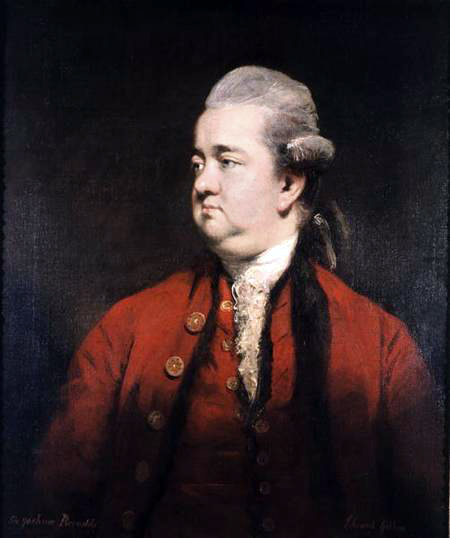
If people think at all about civilizational collapse, they tend to think of the fall of the Roman Empire. Famously chronicled by English historian Edward Gibbon, the fall of the Western Roman Empire in 476 B.C. is considered a red letter date in history. Those who have not read Gibbon may reasonably suppose he stopped his account at that point. But such is not the case. Gibbon was just getting warmed up. From the fall of Rome, he want on the chronicle the rise of Islam in the 6th century and its conflict with, and eventual conquest of, the Eastern Roman Empire. He ended his history with the fall of Constantinople to the Turks in A.D. 1453.

But as impressive as it is, Gibbon’s The
History of the
Decline and Fall of the Roman Empire is not the first or the best account of civilizational collapse. That honor would have to fall to Old Testament, much of which chronicles of The Decline and Fall of the Hebrew Republic. Established in Canaan under Joshua, the Hebrew Republic devolved into a monarchy under

BBC206171 Portrait of Edward Gibbon (1737-94) c.1779 (oil on canvas) by Reynolds, Sir Joshua (1723-92) oil on canvas 73.6x62.2 Private Collection English, out of copyright

Portrait of Edward Gibbon (1737-94) c.1779 (oil on canvas) by Sir Joshua Reynolds (1723-92)

Saul in 1050 B.C., reached the height of its wealth and power under Solomon between the years 970 and 930 B.C., then split into a Northern and a Southern Kingdom under Solomon’s son Rehoboam. From there, the fortunes of the two kingdoms trended downward over the course of several centuries until the fall of the Northern Kingdom to Assyria in 722 B.C. and the final conquest of the Southern Kingdom by Babylon in 586 B.C.

The history of the Decline and Fall of the Hebrew Republic is exceptionally well documented, for it is given to us in the form of God’s inspired, infallible, inerrant Word. As such, we have a perfect record, not only of what took place, but God’s own interpretation of why it took place. One of the problems of secular history is getting the facts straight. But even if a historian were to be given perfect documentation of the period they were studying, there still would remain the issue of interpreting the events. Events do not interpret themselves. Events must themselves be explained. Those problems do not exist with the Old Testament. God has graciously provided to us both the facts and their correct interpretation.

Though many people do not seem to recognize it, we who are alive at the beginning of the 21th century are living through a civilizational collapse, one that has much in common with that experienced by the ancient Israelites and recorded in I and II Kings, I and II Chronicles, and in the prophets. Many of the same ills that beset us in the 21st century are the same as those experienced by the Hebrews in the centuries leading up to the collapse of that nation. But not only are the symptoms the same – moral decline, economic decline, disastrous foreign policy, internal strife – the cause is the same as well. In both cases, the people turned their backs on God and his Word. And just as the Israelites learned that a godly heritage without actual godliness is no protection against disaster, so too are we in the West being taught that that same hard lesson

(more…)

Read Full Post »

For by your words you will be justified, and by your words you will be condemned (Matt.12:37).

Pronouns.  They don’t look like much.  Small words, one or two syllables.  In general, they’re not very noticeable.  Most of us don’t think twice about the pronouns we use.  And yet despite their generally unimpressive appearance, the pronouns we use are freighted with meaning.

Take one example from the New Testament.  In the Greek text, the masculine pronoun “he” is consistently used to refer to the Holy Spirit.  This is surprising, for in Greek, the word for spirit, “pneuma, ” is grammatically neuter.  This would lead us to expect the Greek to use a neuter pronoun when referring to spirit.  But the fact that the New Testament writers never refer to the Holy Spirit as an “it” but always as a “he” is strong evidence that the Holy Spirit is a person, not a force.

A more modern example is the current battle over the third person English pronoun.  Historically, English has used “he” to refer to a generic individual in the third person.  But in recent times this has changed.

Take for instance the following sentence found in a training manual I’m reading for work,

In a 401(k) arrangement, an employees election to defer compensation into the plan has a direct effect on his or her current compensation:  the employee is giving up a right to receive a portion of his or her current cash compensation in exchange for a plan contribution to be made for his or her benefit in the form of an elective deferral (emphasis added).

The manual from which this quote is taken is has about 800 pages, and nearly every single one of them contains a clunker of a sentence like the one above.  Every single time the text requires a singular generic pronoun, the author and editor have elected to use him or her.  It is painful to read.

(more…)

Read Full Post »

« Newer Posts