Feeds:
Posts
Comments

Posts Tagged ‘Ecumenism’

The Jesuit “mafia” and fog, both literal and figurative, in the churches. These were some of the discussion points brought up by Dr. Paul Elliott in his talks on Day 2 of The Trinity Foundation’s Reformation conference. Dr. Elliott gave two presentations on Saturday 10/28, both of which I would strongly encourage you to listen to when the recordings become available.

The Reformation Is Not a Return to Pre-Reformation Positions

By way of introduction to his opening talk on Saturday, Dr. Elliott mentioned that he is working on a tree volume set on the subject of the corruption of the text of the new testament. As part of his research, Dr. Elliott noted, more often than not, he found that the hand responsible for corrupting the Greek text of the New Testament used in modern translations is, more often than not, that of the Jesuits. He also included a comment by a friend of his warning that his work exposing the Jesuit efforts would not go unnoticed and that it was “dangerous territory.” Dr. Elliott did not use the word “mafia,” but the implication of his words is that there exists something like a Jesuit mafia that seeks to silence the opposition, and do so by violence if necessary.

Dr. Elliott contends that there are forces in the Evangelical movement that are seeking to give Protestantism an “extreme makeover” of the sort one sees on various TV shows, and that the effect of this makeover is that, “the vast majority of the nominally Evangelical church today is rapidly returning to the pre-Reformation position.” Dr. Elliott identified four things that characterized the pre-Reformation church.

First, there was Biblical illiteracy. In the middle ages, Christians did not have access to Bibles in their native language. Today, the problem is that, while “Bibles” are readily available, so-called modern translations such as The Message are corrupt paraphrases, not translations at all. Because they do not faithfully translate the original Hebrew and Greek manuscripts, they leave people without the Word of God in much the same way as medieval church goers whose only Bible was in Latin, a language that most of them did not understand.

Second, Dr. Elliott identified the problem of Church as an Experience. The Reformation has always emphasized the primacy of preaching, the expositing of the Word of God in understandable, clear language. On the other hand, the Roman Church-State has always made an appeal to the senses with its “smells and bells.”

And just as the pre-Reformation and current Roman Catholic Church emphasized experience over doctrine, so too do neo-evangelicals in the emerging church movement. Dr. Elliott noted that as an observer he attended a trade show dedicated to the “worship market” which, “is now a multi-billion-dollar business.”

Dr. Elliott noted that, “The most popular product in this big exhibit hall was fog machines!,” which allowed churches to generate “different colors of fog” to set the right mood. As Dr. Elliott wryly commented, “Those fog machines were a metaphor for the entire so-called worship conference.”

Third, Dr. Elliott took up the problem of pluralism. By way of example, he cited Timothy Keller saying there may be some “back door way to Heaven” apart from Jesus.

More subtle is the case of John Piper, whom Elliott quotes as saying that we are made right with God by faith but enter heaven by our works.

Finally, Dr. Elliott speaks of the current emphasis on Deeds Instead of Doctrine. As Rick Warren has said, “You know, 500 years ago, the first Reformation with Luther and then Calvin, was about creeds…[the new reformation that we’re bringing about through the Purpose-Driven church] will be about deeds…The first one was about what the church believes…This one will be about what the church does.”

How is the different from what Rome teaches? In truth, not much, if at all. That being the case, it should come as no surprise that Warren is also hard at work trying to re-united Protestants and Romanists. Dr. Elliott reported that Warren was the keynote speaker at Pope Francis final Sunday service when he was in Philadelphia in 2015. Warren, a Southern Baptist, referred to the assembled cardinals, bishops and priests and the pope himself as “brothers.”

Dr. Elliott closed his talk with an encouragement for Christians not to be conformed to this world, but to be transformed. We are to be outwardly what we are inwardly. This requires that Christians, “Never be afraid to admit it when you find yourself, or the church, deviating from Scripture in even the smallest point.”

(more…)

Read Full Post »


Lutheran_RCCS Declaration

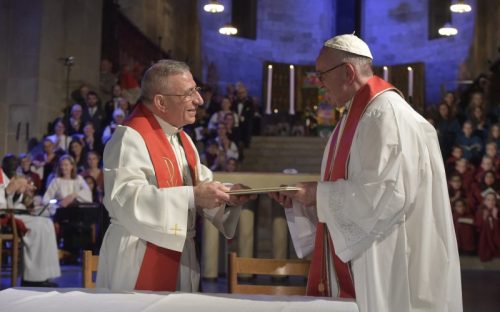
President of the Lutheran World Federation Bishop Munib Younan, left, conspires with Pope Francis, right, to overthrow the Reformation at a service in Lund Lutheran cathedral , October 31, 2016 (L’Osservatore Romano/AP)


You say you want a Reformation? Well, according to a recently released Pew Research Center survey of Western Europe and the US, many Protestants answer “Not so much.” Here are a few key findings:

  • About half of U.S. Protestants (52%) say both good deeds and faith in God are needed to get into heaven, a historically Catholic position. The other half (42%) say that faith alone is needed to attain salvation.
  • U.S. Protestants also are split on another issue that played a key role in the Reformation: 46% say the Bible provides all the religious guidance Christians need, a traditionally Protestant belief known as sola scriptura. But 52% say Christians should look for guidance from church teachings and traditions as well as from the Bible, the position held by the Catholic Church.
  • Just 30% of all U.S. Protestants affirm both sola fide and sola scriptura.
  • In nearly all of the European countries surveyed, majorities or pluralities of both Catholics and Protestants adhere to the traditionally Catholic view that both faith and good works are necessary to attain salvation. In fact, in every country except Norway (where 51% of Protestants say salvation comes through faith alone), belief in sola fide is a minority view even among Protestants.

The results of this survey, though disappointing, are hardly surprising. The Fundamentalist-Modernist controversy among Presbyterians in first half of the 20th century ended with the liberal social gospelers seizing control of the mainline Presbyterian church and the subsequent purging of those who believed the Bible. Other Protestant denominations experienced upheavals. As a result, where Protestant churches once spoke with one voice on the critical issues of the source of authority in the church (scripture alone) and the means of justification (justification is by faith alone), Protestant witness has become greatly confused.

(more…)

Read Full Post »

epic-failNow that convention season is upon us and the thoughts of many are tuned politics, specifically to the party conventions in Cleveland and Philadelphia, it seemed good to discuss the relationship between Evangelical Christians and the political process.


For some time now, really since the end of WWII and the rise of the neo-evangelicalism, American Evangelicals have worked assiduously to influence the culture, oftentimes through the political process.

Growing up, I recall the rise of the Christian right during the 1970’s. Led by such figures as the Moral Majority’s Jerry Falwell and Phyllis Schlafly of the Eagle Forum, the Christian right promised to push back on the radical cultural changes that had rocked the nation during the 1960’s.

And now after several decades of Evangelical politicking by these and other groups, it’s fair to ask, Just what have they accomplished? Is our nation more moral, or better still, is America more Christian than it was forty years ago? Is there greater respect in 2016 for the rule of law, for private property, for public morality than before the rise of the Christian right?

The answer to these questions is, I believe, obviously no. In fact, it seems to me, that not only has the religious right failed to reverse the tide of national decline – and make no mistake about it, the US and the entirety of Western Civilization is in the midst of what appears to be terminal decline – but that things actually are far worse now than they were before the term “religious right” entered the mainstream of public discourse.

(more…)

Read Full Post »

Harambe

Harambe the gorilla with the four year old boy who fell into the gorilla exhibit at the Cincinnati Zoo, 5/28/16. 

Stories of interest for scripturalists can pop up anywhere. They can be on the other side of the world, or right in our backyard. And it just so happens that this week there were two noteworthy items right here in river city. Let’s kick off this week’s This ‘n That with…


The Shot Heard ‘Round the World

Unless you spent this whole last week in a cave or out protesting Donald Trump, you’ve probably heard a little bit about the shooting of Harambe the gorilla at the Cincinnati Zoo.

Just to recap, last Saturday a four year old boy climbed into the Zoo’s gorilla exhibit, fell ten feet into a moat, and quickly found himself a person of interest to Harambe, the Zoo’s 450 pound, alpha-male lowland gorilla.

While the boy’s mother frantically watched, the animal grabbed the boy and dragged him about. When things appeared to become life-threatening, the Zoo have the go-ahead for a sharpshooter to put an end to the standoff.

The episode ended with a dead gorilla and a living boy.

Only it really didn’t end there.

As news spread, it didn’t take long for the animal rights crowd to start up with an irrational two minutes hate directed at the Zoo and the mother of the boy. Check these sample tweets from the compassionate man-haters on Twitter,

It didn’t take me long to find these, so doubtless there’s plenty more nonsense out there. And from these comments it is abundantly clear that not a few members of my own species lack the discernment to understand the vast difference in value between a brute beast and a person made in the image of God.

The Scriptures tell us that God made man a little lower than the angels and set him over the works of his hands. It was God himself who gave man dominion over the earth.

We could wish that things had turned out better for the gorilla. But when it comes to the life of a person or the life of an animal, it’s the animal that goes every time.

The Bible tells us that no man yet ever hated his own flesh. With that in mind, I can’t help but wonder how the social media shriekers would react if it were their lives that were on the line and not that of another. Not that I can prove it, but I rather suspect they’d be singing a different tune.

(more…)

Read Full Post »

2015 year in reviewAnother year of blogging has come and gone. And since New Year’s Day represents a convenient opportunity to reflect on the year past as well as look forward to the one ahead, it seemed good to me to summarize 2015’s postings as well as consider where this blog may be headed in 2016.

But before I get to that, thanks are in order. In the first place, I would like to thank the Lord my God. I have written Lux Lucet since 2009, but it has only been since November 2014 that I committed to a regular weekly writing schedule. Writing takes work. And in truth, I wasn’t sure that I would be able to maintain the frequency and quality of writing that I had in mind. But God has been gracious. He has provided me an abundance of interesting and relevant topics to discuss, the necessary time to research and write, and the stamina to make it happen. If there be anything about this blog at all praiseworthy, truly I must say with the reformers, Soli Deo Gloria.

Second, I would like to that the late Dr. John W. Robbins of the Trinity Foundation. It was eight years ago this month that John proposed to me a writing project that would eventually turn into a book titled Imagining A Vain Thing: The Decline and Fall of Knox Seminary. Up until that time, the biggest writing projects I had undertaken were high school and college term papers. But thanks to John’s help as well as the help of current Trinity Foundation president Tom Juodaitis, I was able to see the project through to its completion. This blog is an outgrowth of my experience working with John. You might even say it’s an extended thank you to him, the man whose work has done so much to inspire me.

Third, I would be remiss if I did not extend a sincere thank you to my readers for their support. Were you to ask me why I blog, habitual joker that I am, I’d probably tell you I’m in it for the money. It has always been my prayer that this blog would be used by God to edify his church. But the nature of blogging is such that it can be quite lonely. You sit at your computer and write and publish, but the question remains, What good is any of this doing? In light of that, it is tremendously encouraging to see that my posts are read. Please know that your clicks, comments and likes are greatly appreciated.

(more…)

Read Full Post »

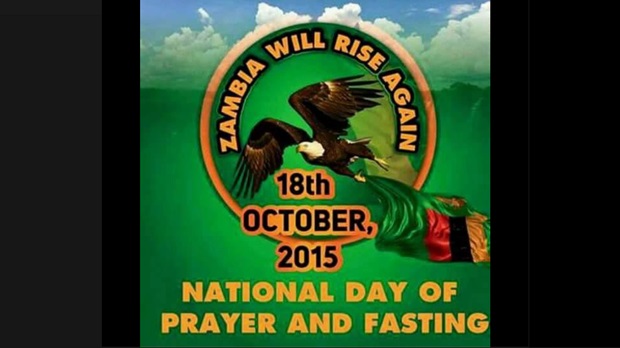
ZambiaGod have mercy on the currency,” read the headline. Curious, I followed the link to an article about the president of Zambia calling for a national day of prayer and fasting to address country’s currency crisis. It turns out that Zambia’s national currency, the Kwacha, has fallen by 45% against the US dollar in 2015, causing Zambians a host of economic difficulty. It is eminently Christian and sensible to call on the Lord in times of trouble The Bible is filled with promises that God will deliver his people if they call upon his name. Typical is Ps. 50:15 which reads, “Call upon Me in the day of trouble; I will deliver you, and you shall glorify Me. And because it is eminently Christian and sensible to call on the Lord in times of trouble, no Western president or prime minister would ever think of doing it. “We’ve got this,” they say, “no divine help needed.”

Such was not always the case. During the American Civil War, Abraham Lincoln called for a national day of prayer and fasting. But that sort of thing doesn’t fly anymore. In the aftermath of the greatest national disaster of my lifetime – I’m speaking here about the 9/11/2001 terrorist attacks on New York and Washington D.C. – George Bush encouraged Americans to go to Disney World. What’s worse, he participated in a blasphemous ecumenical prayer service at the National Cathedral in Washington which featured, among others, a female Episcopal bishop, a Rabbi, a Muslim cleric and a Cardinal of the Roman Catholic Church-State. Far from being an example of turning to God, this service was a double-minded affront to the Lord Christ Jesus. And because it was double-minded, those who participated had no reason to think they would receive God’s blessing or assistance. The failure of the Global War on Terror stands as a stark testimony to this principle.

(more…)

Read Full Post »

To promote a woman to bear rule, superiority, dominion or empire above any realm, nation or city is repugnant to nature, contumely to God, a thin most contrarious to His revealed will and approved ordinance, and finally it is the subversion of good order, of all equity and justice.

John Knox, The First Blast of the Trumpet Against the Monstrous Regiment of Women

Carly Fiorina

Carly Fiorina

Last week we looked a World Magazine
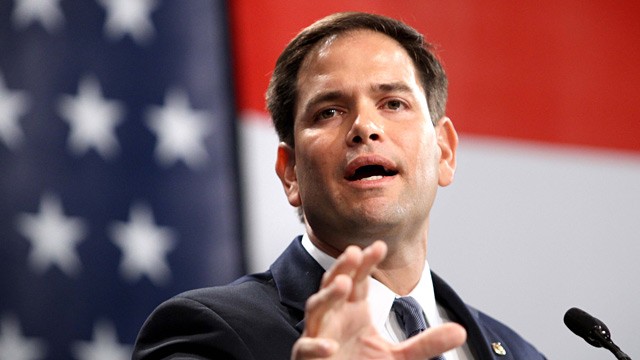
survey of “evangelical insiders” conducted to determine their views on the Republican presidential candidates for the upcoming 2016 election. Of the 91 respondents, the first place winner was Florida Senator Marco Rubio. Carly Fiorina polled well, coming in, “as the most popular second-choice candidate.” Given the ecumenical world-view that has come to dominate much of the American Evangelical church, it is unsurprising, but still disappointing, to see so many Evangelicals approve candidates no Christian should support

In the case of Marco Rubio, the issue is his Roman Catholicism. Because the Constitution requires a that president swear to, “preserve, protect and defend the Constitution of the United States,” and because this oath conflicts with the obligation a Roman Catholic has to obey the pope, it is improper for an Evangelical – for that matter, it is improper for anyone who holds dear the Constitution – to support a Romanist for president. And yet steeped as they are in several decades of neo-evangelicalism, these “evangelical insiders” see no problem with promoting a son of Rome, who openly admits, “I craved, literally, the Most Blessed Sacrament, Holy Communion, the sacramental point of contact between the Catholic and the liturgy of heaven.” Rubio, as have many Roman Catholic candidates over the years, has stated that he follows the pope on matters of faith and morals but not on political or economic issues. He may well be sincere in what he says, but Rome offers its teaching as a packaged deal. Roman Catholics are not free to follow the Church’s teaching on faith and morals while rejecting what it says on economics and politics. That the popes currently allow Roman Catholic politicians the freedom to stray from the Church’s teaching should be seen as the Church’s concession to the fact that its power is not at this time absolute as is was in the middle ages. Should Rome again attain to the position of power it held prior to the Reformation – and this is, in fact, its long-term goal – you can be assured that when the pope says “jump,” Roman Catholic magistrates will have but one response: how high?

(more…)

Read Full Post »

Marco Rubio, neo-evangelical favorite.

Marco Rubio, neo-evangelical favorite.

Have you ever noticed this strange phenomenon, that those at the forefront of a movement or discipline generally are the ones doing the most to undermine it? Take, for example, the legal profession. Among lawyers, there is no more prestigious assignment than to be named to the US Supreme Court. And yet these high-powered legal minds – supposedly the best and brightest the profession has to offer – routinely made a hash of the Constitution, the very document on which they claim expertise. Economists are in the same boat, the majority of whom are intellectual thralls to the economy destroying nonsense taught by John Maynard Keynes. Business leaders are anti-business, favoring programs of crony capitalist government bail-outs over the free market that allowed them to prosper in the first place.

To this list you can add another category of prominent individuals doing their best to undermine the very cause for which they claim to stand: evangelical insiders. According to a poll released by World Magazine, the favorite 2016 presidential candidates of these anointed insiders – World does not tell us what criteria it uses to select these insiders, describing them only as “well-connected evangelicals” – are, drum roll please…Marco Rubio and Carly Fiorina. Somehow, I’m not surprised by this. In fact, given the long-standing Romeward and feminist drift of the neo-evangelical movement. it was almost inevitable that the poll would turn out as it did.

But are these evangelical insiders thinking Biblically? Even posing this question may come as a surprise to some. What may be even more surprising to them is to hear that there are sound arguments against Christians supporting either one for president.

(more…)

Read Full Post »

And then shall that Wicked be revealed, whom the Lord shall consume with the spirit of his mouth, and shall destroy with the brightness of his coming: Even
him, whose coming is after the working of Satan with all power and signs and lying wonders.

2 Thessalonians 2:8, 9

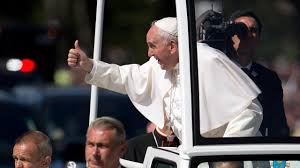
Pope Francis on parade in Washington D.C., 9/23/15.

Pope Francis on parade in Washington D.C., 9/23/15.

“I have no idea who Antichrist is,” said the veteran Presbyterian missionary to the congregation. His words, at once disappointing and unsurprising, could easily be those of nearly the entire Evangelical church at the beginning of the 21st century. No one, it seems, knows who Antichrist is. The dispensationalist Left Behind crowd thinks it’s Nicolae Carpathia. The preterists see Antichrist as some figure from the distant past. Both are dupes of the Jesuits. And neither camp, because of their poor eschatology, is able recognize Antichrist and his works, even while watching him quite literally parade around our nation’s capital on their high definition flat screens. So much for seeing is believing.

(more…)

Read Full Post »

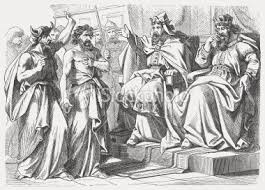
Ahab and Jehoshaphat listen to Michiah.

Ahab and Jehoshaphat listen to Michiah.

“Should you help the wicked,” asked the prophet of the defeated and humiliated king upon his return to Jerusalem, “and love those who hate the LORD?” The prophet was Jehu.  The king was Jehoshaphat.  The occasion was the aftermath of a crushing defeat inflicted by the Syrians on the allied armies of Israel and Judah.

Jehoshaphat was a godly man; one of the few good kings Judah ever had.  But in spite of this, he made a major spiritual and strategic mistake in seeking alliance with Ahab, the evil king of Israel.  I Kings 22 and 2 Chron. 18 provide the details of the alliance.  Jehoshaphat went on a state visit to see Ahab in Samaria, the capital of the northern kingdom.  During the visit, Ahab persuaded Jehoshaphat to join him in a grand alliance of Israel and Judah and to make war against the Syrians, all for the purpose of recapturing for Israel territory that had been lost to Syria earlier.  In other words, it was an Old Testament version of a crusade against the infidel.

Jehoshaphat made several errors that led to his defeat.  The first of which was that he, apparently, did not consult  the Lord before traveling to Israel to meet with Ahab.  The Scriptural record shows no evidence of Jehoshaphat ever seeking the Lord’s counsel as to whether he should go to Samaria.  It appears that he did this on his own.

Jehoshaphat’s second mistake was not heeding the voice of the Lord when it became clear that the military alliance would end in disaster.  The prophet Michiah plainly told Ahab in  Jehoshaphat’s hearing that the offensive against Syria would fail miserably.  His words were, “I saw all Israel scattered on the mountains, as sheep that have no shepherd” (I Kings 22:17).  Jehoshaphat heard all of this, and yet followed Ahab into battle anyway.

In all this, Jehoshaphat also managed to serve as Ahab’s dupe.  Ahab reacted angrily to Michiah’s prophesy of defeat at the hands of Syria, but he had the good sense to hedge his bets.  When Ahab and Jehoshaphat went into battle, Ahab disguised himself, but told Jehoshaphat to wear his royal robes.  Jehoshaphat did so, and nearly lost his life when the Syrians mistook him for the king of Israel, against whom they had been ordered to fight.

(more…)

Read Full Post »

« Newer Posts - Older Posts »