Feeds:
Posts
Comments
Angry Voter

The angry voter.

The angry 2016 voter. Anyone who’s followed presidential politics even a little this year has heard all about it. The establishment seems puzzled by it. Jeb Bush, the early odds on favorite to win the Republican nomination, never connected with voters. His campaign is over, an object lesson that all the money in the world cannot buy public support. Hillary Clinton began the campaign with an aura of inevitability about her. Everyone knew the White House was hers for the taking. Instead she finds herself in a political dogfight with an elderly socialist Vermont. And with a possible FBI indictment hanging over her head, her problems on the campaign trail may be the least of her worries.


When it comes to voter anger, my first reaction is wonder what took them so long. Theft, lies and double standards have infected the whole of society, and it is amazing to this author just how much nonsense people have been willing to tolerate from the so-called masters of the universe who rule us. But on second thought, is voter anger really a positive development? The apostle Paul tells us it’s good to be zealous in a good thing always. And anger, if it’s focused on the proper object and seeks redress in the proper way, can be good. But anger can easily be channeled in the wrong direction, scapegoating the wrong party or going about things in such a way as to actually make a bad situation worse.

Ever since Soren Kierkegaard famously praised the pagan for worshipping his false god with infinite passion, men have carried about in their minds the false notion that sincerity is more important than truth. But the Bible knows nothing of this notion. Truth is everything. How one feels about it makes no difference. It was the same apostle Paul who praised zeal when focused on good ends, who rebuked the Jews, his countrymen, for having a zeal for God, but not according to knowledge. Zeal without knowledge is not a good thing. In fact, it is downright dangerous.
Continue Reading »

Rehoboam_The Arrogance of.jpg

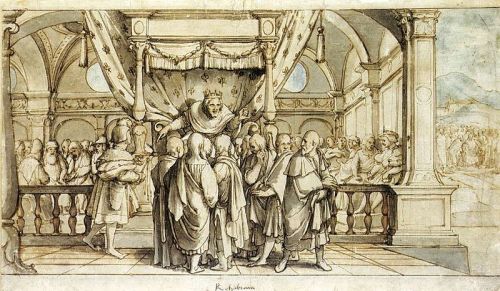
The Arrogance of Rehoboam.

“How shall I answer these people” asked the young king as he looked about the veteran faces of the men who had counseled his father before him. The king, you see, was in a bit of a pickle. He had just been confronted by a group of men angry about his father’s policies of heavy taxation and forced labor. They had demanded a rollback of these unpopular policies, and the new king, wanting to start off his reign on the right foot, had sent them away, asking that they return in three days time for his answer.

The king’s father, a man famous for his wisdom in his own day, was not a lone ranger. He had assembled a group of able men who served as his advisors. Today, we might refer to them as his cabinet. And these cabinet advisors were now faced with a history making question. “How do you advise me to answer these people?” That was what the king wanted to know. Upon their answer, and the king’s response, hung the fate of the nation.

The atmosphere, no doubt, was pregnant with anticipation. What would the counselors say? Perhaps taking a moment to consider their words, the men gave their reply. Their answer was this, “If you will be a servant to these people today, and serve them, and answer them, and speak good words to them, then they will be your servants forever.” Good words, these. The nation was at the breaking point. My way or the highway was not going to work, and they knew it. What was needed was wisdom, prudence and a gentle spirit.

Continue Reading »

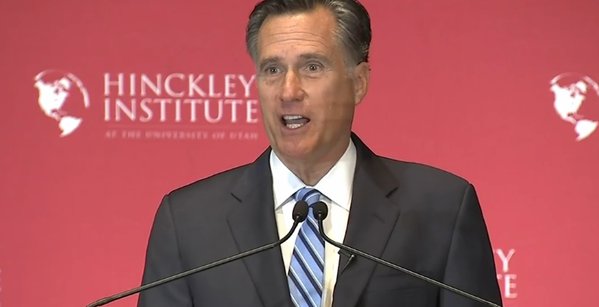
Mitt Romney

Mitt Romney speaks out against Donald Trump in Salt Lake City, March 3, 2016.

They’re only making it worse…for themselves that is. I’m speaking about the GOP establishment and it’s lame orchestrated attacks on Donald Trump. Trump, it would seem, is their worst nightmare come true. He’s the raging bull trashing their finely cultivated china shop. And, needless to say, they’re not about to take it lying down. Only given how transparent and ineffective their shots at Trump have been, lying down just might be their best option.


Take for example the missive released by CNBC on the morning of March 2, the day after Trump’s decisive Super Tuesday victories. In the article, titled Why Trump can’t be president,
author Julissa Acre calls Trump a sexist, a racist and a bigot. And not content with that, she smears his supporters with the same.

Now far be it from me to defend the Donald’s many outrageous statements or his desire to erect the Great Wall of the Rio Grande. But is Trump really so much worse than putative Democratic nominee Hillary Clinton that he warrants such an attack? It seems to me, no. If fact, if presidential politics were a high school yearbook, Clinton would be a shoe in to win the coveted most-likely-to-be-indicted award. There hasn’t been more guilty looking public figure than Hillary Clinton since, well, Bill Clinton. But CNBC didn’t see fit to run a hit piece titled Why Clinton can’t be president. No, they reserved that honor for Trump.

Continue Reading »

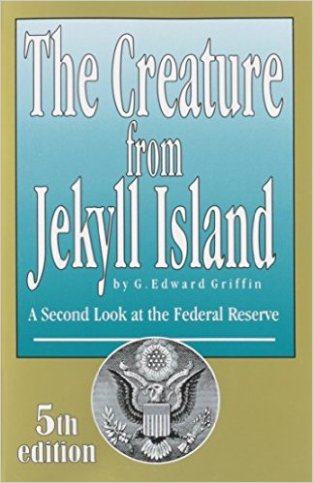
Creature from JekyllThe Creature from Jekyll Island: A Second Look at the Federal Reserve, 5th Edition by G. Edward Griffin (Westlake Village, California, 608 pages, 2010), $19.44.
“The most boring question in the world,” announced the accounting professor to my B-School class, “is whether the government should have bailed out the financial system in 2008.” In his eyes, the answer was an obvious yes. End of story. But that struck me as a rather odd stance. For the question, to bailout, or not to bailout? seemed to me to be among the most fascinating topics imaginable in the field of finance and accounting. And in truth, any answer one could give would have to go well beyond finance and accounting, touching upon the basic philosophical disciplines of politics, ethics, and ultimately epistemology. Further, any answer given would go a long way to telling you something about the man himself. So no, it was not a boring question at all. That is, unless you’re interest is in perpetuating the status quo, in which case you would prefer that it not be asked at all.

I have elected to introduce my review of G. Edward Griffin’s The Creature from Jekyll Island [hereafter, the Creature] by way of this personal account, because it illustrates perfectly the sort of close-minded contempt that emanates from the financial mainstream toward anyone who dares question its reigning orthodoxies. Examples of these nostrums are: Central bank issued fiat currency is good, but the gold standard is a barbarous relic, the money supply cannot be left to the free market, it must be a function of a government appointed central bank; banks are not like other businesses, they must be chartered, regulated, and, if needed, bailed out by the government using taxpayer funds. None of these orthodoxies is true, for none can be supported from Scripture. Yet they are accepted by politicians, academics and ordinary folks alike almost without question.

G. Edward Griffin, on the other hand, is a man who does question these orthodoxies, concluding at the very beginning of his book that the Federal Reserve must be abolished. He provides seven reasons for this, namely:

  • It is incapable of accomplishing its stated objectives.
  • It is a cartel operating against the public interest.
  • It is the supreme instrument of usury.
  • It generates our most unfair tax.
  • It encourages war.
  • It destabilizes the economy.
  • It is an instrument of totalitarianism.

The remainder of the book is used to flesh out why these things are so. In Griffin’s words, the book is a who-dunit, which, in the words of USA Daily, “documents an organized and successful attempt to seize control over the U.S. monetary system by powerful American and European families.”

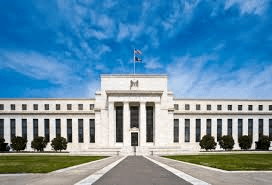
Eccles Building

The Eccles Building, the Washington D.C. headquarters of the Federal Reserve.


At this point one may by asking himself, why is it that Christians should care about the obscure workings of the Federal Reserve System [hereafter, the Fed]? Why not just leave banking to the bankers and get on with more important matters? After all, talking about money doesn’t seem very spiritual. And doesn’t the Bible say that money is the root of all evil? Wouldn’t it be best simply to leave the whole matter alone and focus on the Great Commission instead?

Taking these objections in reverse order, let us consider what Christ commanded in the Great Commission. What did Jesus say to his followers? Go into all the world and teach the five fundamentals? No. Christ called his disciples to go into all the nations and to teach, “them to observe all things that I have commanded you.” The Great Commission includes all of Christ’s teachings. And since there is no field of endeavor not covered by Christ’s teachings,, all statements of all men in all areas of study, including banking, finance, and accounting, must be brought back to Scripture and judged by it. Therefore banking is a proper field of Christian study.

Continue Reading »

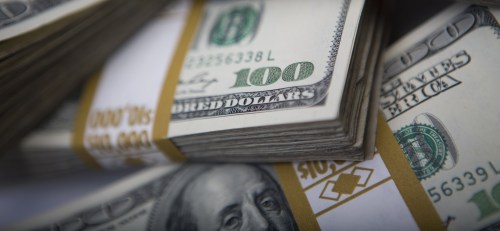
100 dollar bills.jpgWhen Harvard Economics professor and wannbe Fed Chairman Lawrence Summers speaks, it’s usually a good idea to pay him heed. Mind you, not because pearls of wisdom fall from his lips as manna from heaven, but because what he says carries weight. He is among the very elite of the intellectual and financial elite. A true master of the universe, if you will. And if Summers writes in the Washington Post that he wants to grab your cash, you’d best be paying attention. Because if he’s saying it in the mainstream media, you can take it to the bank (bad pun intended) that the rest of the elite is thinking along those same lines.
Of course, he wasn’t so crude as to suggest he was just going to take your money. People of his ilk never do. They’re far too genteel for such talk. No, what they do is make the case for some small, seemingly innocuous move. The sort of thing that, not only seems downright reasonable, but actually appears to be the very essence of patriotism and upright thinking. I’m speaking here of Summers’ recent call to “kill the $100 bill.”

Now why would this economics professor think that killing a perfectly good Federal Reserve Note is so important that he would take the time to write a newspaper column on the subject? The better to fight crime and terrorism, he tells us. Besides, he adds, we don’t need that silly old $100 bill anyway.

Citing Peter Sands, a senior fellow at Harvard’s Mossavar Rahmani Center for Business and Government, whose recent paper on the subject of banning large denomination bills was the inspiration for his article, Summers writes,

The fact that – as Sands points out – in certain circles the 500 euro note is known as the “Bin Laden” confirms the arguments against it.

Cash, you see, means terrorism. But it’s not just terrorism that we can stop by banning large bills. Crime of the more ordinary sort can be reduced as well. Summers continues,

I confess to not being surprised that resistance within the ECB [European Central Bank, the issuer of the euro] is coming out of Luxembourg, with its long and unsavory tradition of giving comfort to tax evaders, money launderers, and other proponents of bank secrecy…

So, banning the big bills helps us catch crooks too. And on top of that, “technology is obviating whatever need there may ever have been for high denomination notes in legal commerce.”

If we take Summers’ at his word, there simply is no legitimate reason for large denomination notes to even exist at all. And if you think otherwise, you must be a terrorist or tax evader. And you wouldn’t want people to think that about you, now would you?

Continue Reading »


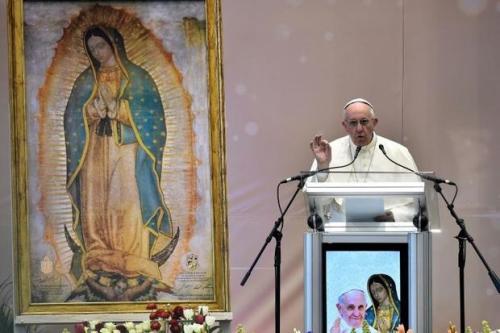
Pope Francis_Juarez

Pope Francis speaks at the Bachilleres College in Ciudad Juarez, Mexico on February 17, 2016. Background image is Our Lady of Guadalupe.  Gabriel Bouys, AFP


“The Romanists have very cleverly built three wall around themselves,” observed Martin Luther in his treatise To the Christian Nobility of the German Nation. “Hitherto,” he continues, “they have protected themselves by these walls in such a way that no one has been able to reform them. As a result, the whole of Christendom has fallen abominably.

In the first place, when pressed by the temporal powers they have made decrees and declared that the temporal power had no jurisdiction over them, but that on the contrary, the spiritual power is above the temporal. In the second place, when the attempt is made to reprove them with the Scriptures, they raise the objection that only the pope may interpret the Scriptures. In the third place, if threatened with a council, their story is that no one may summon a council but the pope.”

In this way they have cunningly stolen our three rods from us, that they may go unpunished. They have ensconced themselves within the safe stronghold of these three walls so that they can practice all the knavery and wickedness which we see today.” Thus Luther.

Continue Reading »

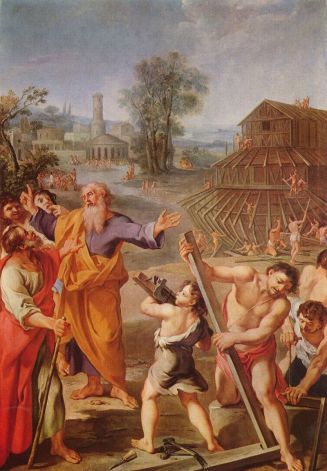
The Building of Noah's Ark_1675

The Building of Noah’s Ark, c. 1675.

Prepping has interested me for several years, but it has been only recently that I felt compelled to write on the subject. Prepping – I would define prepping as, in light of God’s Word, foreseeing possible political, economic and social crises and taking precautions to protect oneself against them – is seen by some as a bit negative, a bit antisocial. After all, if you’re building an ark, you must be rooting for a flood. Because if nothing happens, you’re just going to look foolish.

But while it may be common for people to look down on prepping and those who practice it, preppers actually have a good Biblical basis for doing what they do. As Proverbs tells us, “A prudent man foresees evil and hides himself, but the simple pass on and are punished” (22:3). When one considers the massive and unpayable debts of the Western nations, the geopolitical tensions that seem to be growing all the time, and the spiritual and moral decline seen all around us, it is hard to believe that the current decrepit system can long continue. It has been the position of this author in this series 1) that serious shocks to the West’s political and economic systems are coming in the near future, 2) that most people – and even most Christians – are unprepared materially, physically and spiritually to deal with them, and 3) that the Bible provides an almost embarrassment of riches on the subject of how to get ready for and endure extreme economic, social and political crises.

This series on prepping is not about finding the best type of food to store or how to protect your savings in the event of large scale bank runs. These are important subjects. I do not deny that. But there are other who are better positioned to talk about them. It has been my aim in writing these posts to make the Biblical case for prepping. To show from the pages of Scripture that not only is prepping consistent with the Christian faith, but that it is actually a Biblical imperative.

In particular, this study has looked at the case of Noah, a man faced with a quite literal end-of-the-world-as-he-knew-it scenario. Last week, we looked at the basis of Noah’s salvation from destruction: God’s grace. Noah was not a perfect man. He was a sinner, just like all the others on the earth in his day. But God purposed to save him. Not for anything in Noah or because God was under any obligation to save him, but because the Lord freely, sovereignly elected to do so. This week, I would like to take a closer look at Noah and consider just what sort of man he was.

Continue Reading »

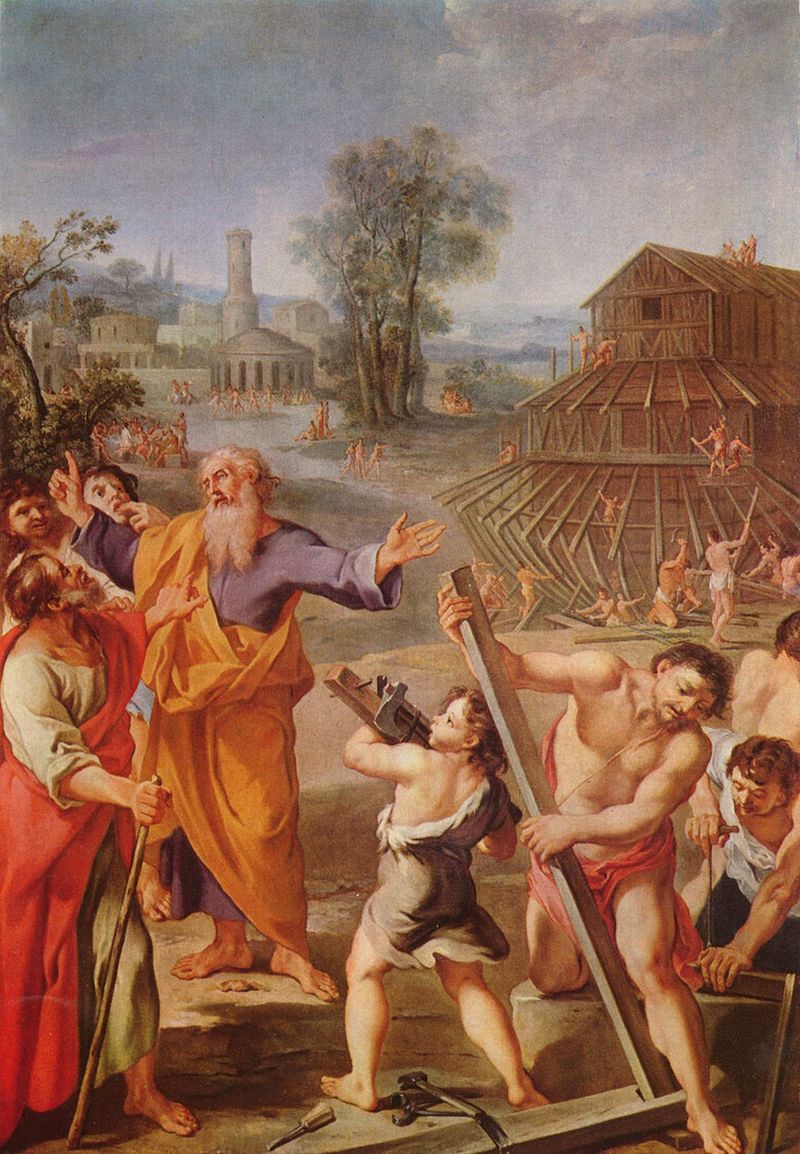
The Building of Noah's Ark_1675.jpg
The Building of Noah’s Ark, c.1675.

The prudent man foresees evil and hides himself, but the simple pass on an are punished

  • Proverbs 22:3

In the first two parts of this series, it has been my goal to set forth a few basic ideas. First, Western Civilization, our civilization, is in an advanced state of decay and likely to suffer significant financial and political shocks in the not too distant future. Western Civilization began with the Reformation in the 16th century and was built by the widespread preaching of and belief in the Gospel of Jesus Christ. But the West has largely turned its back on Christ, and there is no reason to suppose that the Lord will spare it any more than he has spared other civilizations that have done likewise.

Second, I have argued that the coming difficulties, when they occur, should not come as a surprise to Christians. We have the Word of God at our disposal, and a wise application of its teaching to the world around us should open our eyes to the precarious state of our civilization. When disaster strikes, if we are just as surprised and confused as everyone else, this will reflect poorly on us, showing we do not take the Word of God seriously.

Third, not only is it prudent for Christians to prepare to survive what in my opinion are unavoidable and serious economic and political troubles, but that doing so honors God and puts us in a position to serve as a witness to his grace and goodness to those who badly need to hear the Gospel of Jesus Christ.

Fourth, it has been my contention that Noah provides for us an ideal model prepping. Typical of God’s goodness is that he not only lets us know in clear terms what is right and what is wrong, but he also provides for us many examples of what happens to those who heed his Word, as well as those who do not. In Noah’s case, we how God acted through one believing individual to preserve the human race from complete destruction.

Continue Reading »

Obama

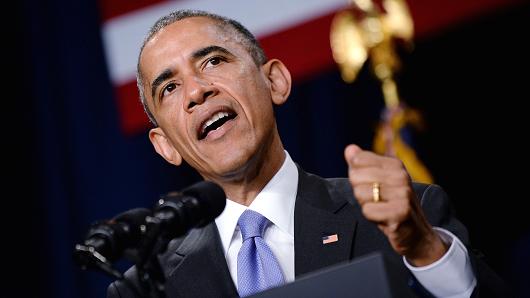
Obama to propose $10-per-barrell fee on oil,” blared the CNBC headline. Surprise, surprise. Obama wants a new tax. The Obama administration claims the funds generated by this proposed energy tax will be used to fund clean transportation research, high-speed railways, autonomous cars and other such like. (Sigh)… Can Obama just leave office already? The economy is teetering on the brink of a recession, and possibly something much worse, and all the president can think to do is gin up more government spending. I guess Nixon was right, we really are all Keynesians now.

It’s fascinating how statists such as Obama try to portray themselves as of the people, by the people, and for the people, but in reality they are anything but. In truth, he is more like of the statists, by the statists and for the statists. There is nothing that he does that is not all about growing government. And that’s what gives the lie to this and to his other proposals. But government is the problem, not the solution. Growing the state does not make us better off. It’s a drain on our wealth. More power in Washington means less freedom for Americans. And yet, almost like a cuckoo clock, out pops Obama to to announce yet another government spending initiative.

Continue Reading »

Hurricane Ike.JPG

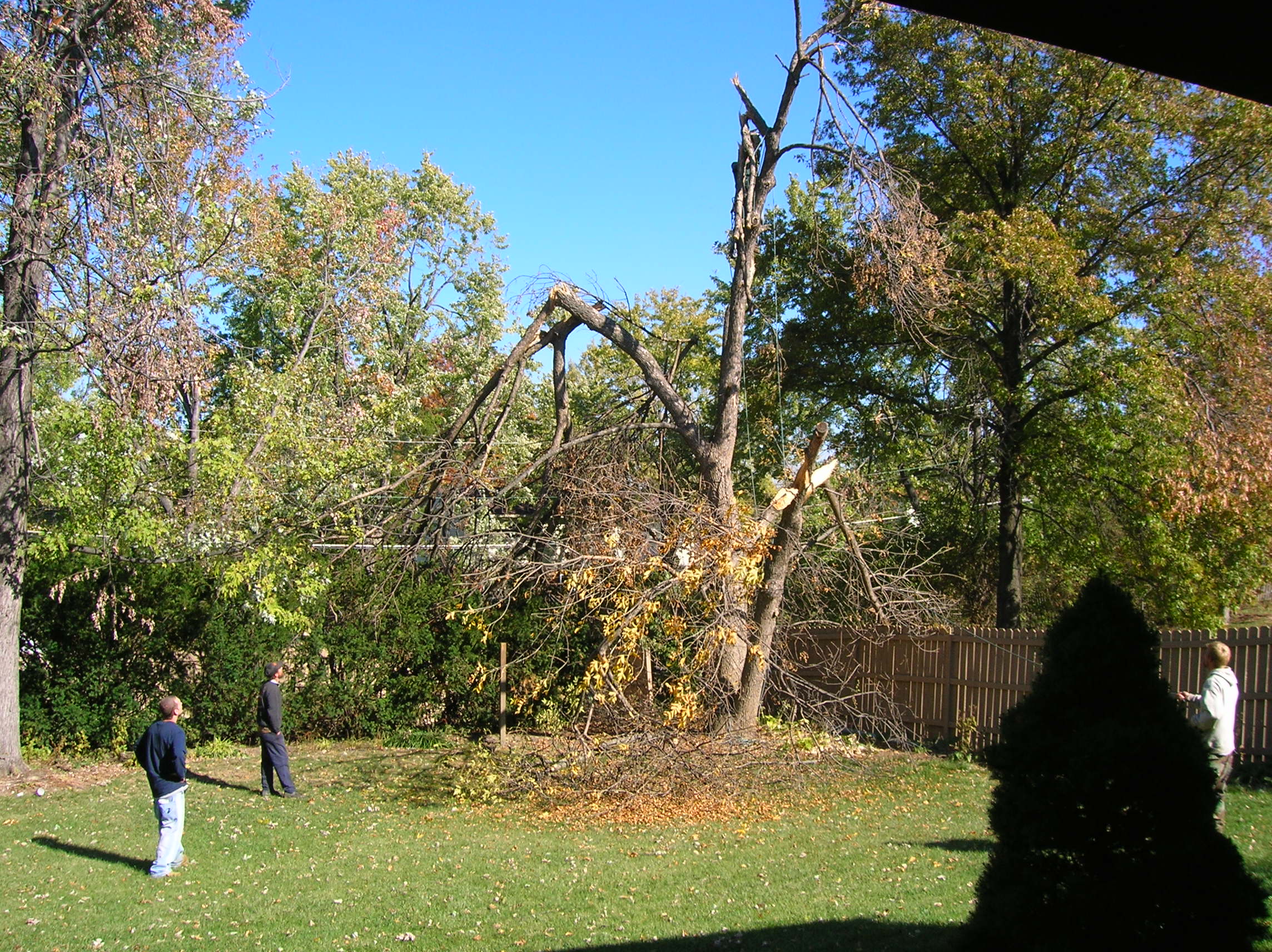
A decimated ash tree in my backyard, courtesy of Hurricane Ike.  September, 2008.


“For this afternoon, a high wind warning is in effect,” said the radio announcer. “Whatever,” I thought to myself and soon forgot the comment as I drove to church that Sunday morning. The date was September 14, 2008, and I was about to get a lesson in preparedness that I have not forgotten in over seven years since that time.

Driving home, it was a pretty typical late summer/early fall day in Cincinnati. I seem to recall that it was partly sunny and generally fairly pleasant outside. When I arrived home, my family and I ate lunch. And then things got interesting. Seemingly out of nowhere, strong winds began gusting from the south. As the gusts turned into sustained high winds and the tops of the trees in my back yard bent over so as to almost touch the ground, I remembered the high wind warning on the radio from that morning. Whatever indeed. After several minutes of this, the winds vanished just as rapidly as they had appeared. It was as if a hurricane had just blown through the area, which, as I later found out, is pretty much what actually what happened.

Now if you know anything about where Cincinnati is located – we’re about 550 miles inland from the Atlantic coast – you’d know that folks in this part of the country don’t really expect to see hurricanes. Ever. And yet the sustained winds that came through the area that day were over 70 miles an hour, meeting the definition of a hurricane. As it turned out, the high winds were the remnants of Hurricane Ike, a category 4 hurricane, which had struck the gulf coast of Texas a day before. After making landfall, the remnants of the storm headed northeast. Aided by what the meteorologists call a “shortwave trough,” the winds intensified, once again reaching hurricane levels as they roared through the Ohio Valley, causing massive damage to many major metropolitan areas in the region.

At my house, the winds knocked out power almost immediately. Power outages themselves aren’t uncommon as a result of storms. But this outage was to last four days, they longest by far such outage I’ve personally experienced. A large Ash tree in our back yard was snapped in two and had to be taken down. Just up the street, a neighbor was severely injured when a tree fell on her. I drove around in my car to see what things looked like, and was shocked to find out that the power was out for miles in every direction. Much to the surprise of everyone, all of greater Cincinnati was effectively was shut down by this one windstorm.

I realize that compared to natural disasters some people have endured, my story doesn’t rank as particularly noteworthy. The house didn’t sustain any damage. And the biggest inconvenience was having to stumble around at night by the dim light of a kerosene lamp. That, and the food in the freezer going bad. But all this it did get me to thinking. I came to realize that many of the things that I took for granted – the so-called “grid,” items such as electric power, phone service, running water, readily available food and fuel – could disappear in a moment.

At the same time and about 600 miles to the east, another disaster was unfolding. The 2008 financial crisis was in full swing that fall. I remember it quite well as at the time I was working as a telephone representative for a large, nationally known financial services company. Every day I’d get panicked calls from 401(k) investors asking about their balances. I’ll never forget one call. After quoting an account balance to a lady, I was greeted with stunned silence. Finally she said, “I just lost $30,000.” Tough times those.

That fall was quite a wake-up call to me. Almost simultaneously I had witnessed the failure of both the “grid” and the financial system. Perhaps my latent assumptions that things would always work the way they were supposed to were not really warranted.

Continue Reading »