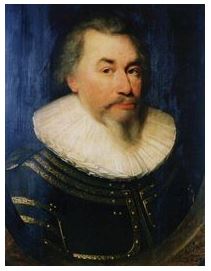
Sir Robert Filmer
“The Prime duties of the second table [of the ten commandments] are conversant about the right of property. But if property be brought in by a human law (as Grotius teacheth), then the moral law depends upon the will of man. There could be no adultery or theft, if women and all things were common.”
– Sir Robert Filmer, Patriarcha
Rome’s teaching on migration, which is the theoretical basis for the ongoing migration crisis in both Europe and the United States, rests on the doctrine of the universal destination of goods.
The universal destination of all goods is the idea, repeated time and again in the official documents of the Roman Church-State, that in the original state of nature, before the fall of man, that God gave the world to mankind collectively. This idea, dating back to the pagan stoics, was picked up by the church fathers, repeated by Thomas Aquinas in his Summa Theologiae, and used by popes and other thinkers in the Roman Church-State as the foundational idea for socialist economic and political thought which characterizes the Social Teaching of the Church.
Since Rome’s teaching on migrants is one facet of the Church’s Social Teaching, it should come as no surprise to find that the universal destination of goods is foundational to the Church’s teaching on immigration, migration and refugee resettlement as well.
A second key point to this series is that the universal destination of goods is unbiblical. Rather than positing the idea that God gave the Earth to man collectively, the Bible teaches that private property was the original economic order of things.
The third key point is that, if it can be demonstrated from the Scriptures that Rome’s doctrine of the universal destination of goods is false, not only is Rome’s socialist migration doctrine likewise refuted, but the entirety of its Social Teaching is overthrown as well.
In this week’s post, we shall continue to examine the arguments against the universal destination of goods and for original capitalism made by 17th century English political philosopher Sir Robert Filmer as discussed in John Robbins’ doctoral dissertation, The Political Thought of Sir Robert Filmer.