Feeds:
Posts
Comments

About ten years ago a friend of mine gave me a copy of Horatius Bonar’s The everlasting Righteousness.  To say this book effected a big change in my life would be an understatement.  In addition to furthering my understanding of justification by faith alone, the central principle of Christianity, it also served as my introduction to Scripturalism, since the edition I read was published by The Trinity Foundation. 

It’s been a few years since I’ve read The Everlasting Righteousness, and reading it again seemed like a good antidote to the NT Wright/Justification by Faith (but not by Faith Alone) nonsense going on at ETS.  So I sat down with the book tonight and didn’t make it far before I found a gem of a paragraph in the book’s preface.  Here it is in full,

The doctrine of another’s righteousness reckoned to us for justification before God is one of the links that knit together the first and the sixteenth centuries, the Apostles and the Reformers.  The creeds of the Reformation overleap fifteen centuries and land us at once in the Epistle to the Romans.  Judicial and moral cleansing was what man needed.  In that epistle we have both the imputed and imparted righteousness – not the one without the other; both together, and inseparable, but each in its own order, the former the root or foundation of the latter.       

The imputed righteousness of another, Jesus Christ, is the only saving hope for fallen sinners.  Of course the world in its “wisdom”  hates and rejects this truth.  But for the believer it is a tree of life.

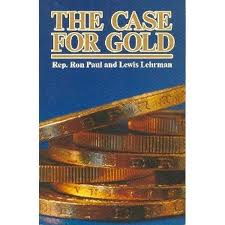
The Case for Gold

“More and more people are asking if a gold standard will end the financial crisis in which we find ourselves.  The question is not so much if  it will help of if we will resort to gold, but when.  All great inflations end with the acceptance of real money – gold – and the rejection of political money – paper.  The state is now set; monetary order is of the utmost importance.  Conditions are deteriorating, and the solutions proposed to date have only made things worse.  Although the solution is readily available to us, powerful forces whose interests area served by continuation of the present system cling tenaciously to a monetary system that no longer has any foundation.  The time at which there will be no other choice but to reject the current system entirely is fast approaching.  Although that moment is unknown to us, the course that we continue to pursue will undoubtedly hurtle us into a monetary abyss that will mandate a major reform.”

     – The Case for Gold

Timley quote, you say?  Indeed it is.  But what’s amazing about the above paragraph is that it was written by Ron Paul way back in 1982.  Those who were alive then recall the early years of the Reagan administration were tought economic times, tough enough to prompt Congress to at least study the possibility of returning the country to the gold standard.  And if people in 1982 were concerned about out of control federal spending, deficits and inflation,  how much more should they be today!

I highly recommend this book.  It’s an outstanding monetary history of the United States and presents a case for sound money that’s consistent with what Scripture teaches on the subject.  Another thing about this book of interest to Scripturalists is this: if you look real close at the Acknowledgments page, you’ll see that a certain John Robbins is given credit for his assistance with the book.  A while back I read somewhere – I want to say it was on Sean Gerety’s God’s Hammer blog – that John had a large hand in writing the book, much larger that the Acknowledgments lets on.         

Logic and Typology

The whole counsel of God concerning all things necessary for His own glory, man’s salvation, faith and life, is either expressly set down in Scripture, or by good and necessary consequence may be deduced from Scripture: unto which nothing at any time is to be added, whether by new revelations of the Spirit or traditions of men.     – Westminster Confession of Faith I.6    

After a recent talk on the subject of the interpretation of Scripture, some one asked me a question about typology.  In essence her question was this:  how do we know a type is a type?  It was a good question.  For if I learned anything during my short stay at Knox Seminary it was that the study of typology can, when undertaken by unlearned and unstable hands, serve as a launching pad for the worst sort of theological nonsense.  Dr. Warren Gage, the current Dean of Faculty at the school, discerned types and antitypes by using what he called “poetic imagination” and “intuition.”  This was his academically respectable way of saying, “I’m making this stuff up as I go along.” “Logic,” he advised us in class one day, “is necessary, but we also need imagination.” This approach to Scripture is not the Biblical, neither is it confessional.  The Biblical and confessional method for determining types is the same method we use to settle all other questions of Christian doctrine:  the application of the laws of logic to Scripture.   

The laws of logic – contradiction, identity, excluded middle – are the principal tools for the interpretation of Scripture.  This was understood by the men who framed the Westminster Confession of Faith (WCF) and is the thought behind the famous quote at the top of this post.  Contrary to the opinion of many contemporary theologians, the laws logic are not something external to Scripture, not something to be curbed, but simply the description of how God thinks.  And man, because he is the image of God, thinks the same way.  The Gospel of John expresses this idea when it notes that Christ, “was the true light which gives light to every man coming into the world.” We think two plus two equals four because God thinks two plus two equals four and he has constructed our minds to be the image of his.          

The WCF recognizes two ways in which the whole counsel of God – and the whole counsel of God includes typology – is communicated in Scripture: 1) express statement, and 2) good and necessary consequence.  An example of an express statement in Scripture can be found in the first verse of the Bible, “In the beginning God created the heavens and the earth.”  This statement tells us several things explicitly.  Creation took place in the beginning, it was an act of God, and it included all things.  But there’s more to this verse that what is stated in explicit terms, there are several necessary consequences or implications in this statement as well.  For instance if creation took place in the beginning, it did not occur at some earlier or later point.  Furthermore this verse implies that the devil or the Big Bang did not perform the work of creation.  Also we can validly conclude that nothing was made that was not made by God. 

If the whole counsel of God is either expressly set down in or necessarily deduced from Scripture, and if typology is part of the whole counsel of God, by good and necessary consequence it follows that any claim that some one or something in the Old Testament is typical of some one or something in the New Testament must be proven by either an express statement or necessary inference from Scripture.  Herbert Marsh expressed this logical, confessional and Biblical approach to typology when he wrote,

Whatever persons or things, therefore, recorded in the Old Testament, were expressly declared by Christ, or by his Apostles, to have been designed as pre-figurations of persons or things relating to the New Testament, such persons or things, so recorded in the former, are types of the persons or things, with which they are compared in the latter.    

This principle, known as Marsh’s dictum, has been the bane of imaginative typologists for nearly 200 years, for it applies directly to typology the same laws of logic that govern all other areas of theology.  Now it’s true that Marsh states that types must be expressly declared, and some might argue that in doing so he has erred by excluding the possibility that types may be implied in Scripture as well as expressly stated.  Very well, I’m open to the argument that there’s such a thing as an implied type, but those who claim this must produce an example.  So far, I’ve yet to see one.  But even if they succeed in doing this, pace Warren Gage and the other addled folks at Knox Seminary, the confessional principle of Biblical interpretation still stands.

I happened to glance at the program for the upcoming 62nd Annual Meeting of the Evangelical Theological Society (ETS) and noticed something interesting.  The theme for this year’s meeting is Justification by Faith.  Not, mind you, Justification by Faith Alone as you would expect from an evangelical organization, but simply Justification by Faith. 

According to the letter from the Program Chairman and President-Elect of ETS, Clinton E. Arnold,

This year’s meeting provides us with the opportunity to give renewed consideration to the meaning and significance of the doctrine of Justification by Faith. Thirty years have now elapsed since “The New Perspective on Paul” emerged and challenged the Lutheran and Reformed understandings of justification and a host of related doctrines.  Some have argued that the newer views have compromised the integrity of the gospel.  Advocates of the New Perspective, however, claim that their views more accurately reflect the teaching of the Bible and,specifically, Paul’s teaching on justification.  The rich variety of papers devoted to this year’s theme will no doubt help us all to better understand the issues and help us think through the richness of this important doctrine.

This is a disgrace.  The Apostle Paul refused “to yield submission even for an hour” to false brethren who taught a false gospel of faith and works.  He hurled anathemas at them.  He said of them they, “want to pervert the gospel of Christ.” But the folks at ETS are too gentlemanly for such language.  No, instead they invite wolf, false brother and perverter of the gospel N.T. Wright (he’s one of the plenary speakers at the conference) to spread his heresy at the ETS annual conference, and all this without a hint of rebuke.  Even the title of the conference “Justification by Faith” is a concession to Wright’s false teaching.  The Reformation was all about justification by faith ALONE, but ETS can’t seem to bring itself to say the word.  It seems to me that since the Roman Catholics also believe in justification by faith – it’s the “alone” part they choke on – ETS may as well extend a conference invite to Benedict XVI.  I’m sure he’d feel right at home.

Clark on Inflation

Monetary inflation, the increase in the supply of money, tends over time to lead to price inflation.  The relation between the two is not clear to the general public, and so when price inflation does hit, merchants often are blamed for increasing prices rather than the real culprits, the special interests, politicians and central bankers who lobby for and practice debasing the currency through monetary inflation.  Currency debasement is, of course, immoral and nothing short of institutionalized theft.  Both those who practice it and those who support it with intellectual arguments are guilty of breaking the eighth commandment, you shall not steal.   

Inflation transfers wealth from savers to debtors.  Gordon Clark understood this when he wrote,

But if life is an equal value to all, there is something strange, when war comes and large military expenditures are necessary, in requiring the person who has saved for a life insurance policy to lose half its buying power by inflation, while the spendthrift loses nothing and enjoys high wages to boot. 

 – A Christian View of Men and Things, pp. 101-102

Unlike Gordon Clark, those who set monetary policy in our country demonstrate utter contempt for savers while bailing out their friends among the too-big -to-fails.  The Fed’s announcement Wednesday of the ex nihilo creation of 600 billion dollars, while good for the politically connected, is a frightening and naked abuse of power that bodes ill for the value of our savings, our retirement and our paychecks.    


Manic Martin

I know, I know, I’m a little late for Reformation Day, but I just found this video and it’s really good. Enjoy.

Let There Be Cash

Then Ben said, “Let there be cash”; and there was cash.  And Ben saw the cash, that it was good; and Ben divided the cash for his mandate.  Ben used some to inflate and the rest to stimulate.  So in the evening and the morning there was QE2.   

  – The Keynesian Bible, Revised Federal Reserve Version

Today the Federal Reserve Bank publicly announced the long-awaited fraud popularly known as QE2.  “QE” being short for Quantitative Easing – a euphemism for monetary inflation, which in more honest language is called theft – and “2” indicating that it’s the second round of this Keynesian nonsense.  You see, the intellectual and political leadership in our country is so corrupt, so foolish, so arrogant that those in charge think, or at least want you to think, that by fiat they can create money out of nothing and cure all that ails us.  

Now I don’t intend to take the time to debunk QE2 or the Keynesian economics that serves as the theoretical basis for this action.  You can find good articles to this effect all over the web.  But I want to point out one thing that is often overlooked when it comes to the Federal Reserve and its acts of money creation:  it’s a form of idolatry.  The God of Abraham, Isaac and Jacob created all things of nothing by the word of his power.  In the English Bible, the first spoken words are, “Let there be light,”  which in the Latin Vulgate translation reads, “fiat lux.”  Fiat is simply Latin for “let there be.” And this word “fiat” is the same word is used to describe our current monetary system.  Our dollars have monetary value, not because they are backed by something valued by the free market such as gold or silver, but because the government says they have value.  And when the Federal Reserve Bank, an agency of the federal government, decides the problem with our economy is that there’s simply not enough money in circulation, it creates more by fiat, in effect saying “let there be cash.” This certainly seems very impressive.  But unlike God’s act of creation, the Fed’s act of money creation is a fraud.  For while the Fed can create hundreds of billions of new dollars, it can do nothing to make us wealthier.  In fact, the more money the Fed creates, the less value of our savings and paychecks have. 

God and God alone creates out of nothing.  His creation alone is good. And when mere men at the Federal Reserve claim that they can create money by fiat and that this is a good thing, they put themselves in the place of God and act, not as ministers come to serve, but as idols to be worshipped.

I do not want to live in a country where any time a citizen or corporation does anything legitimately wrong, is subject to some sort of political pressure that is, again in my words, amount to a shakedown. – Rep. Joe Barton

When Joe Barton rather inarticulately apologized to BP CEO Tony Hayward for the lawless treatment the company had received at the hands of the Obama White House, he set off a firestorm.  His comments were widely seen as a gaffe (which is best defined as a public figure accidently telling the truth), and his own party threatened to remove him from the energy committee unless he issued an apology.  Of course Barton played the politician and quickly retracted his statement.   

Thomas Sowell, on the other hand, has never been one to apologize for his controversial but true statements, and his recent piece on the $20 Billion shakedown of BP is right on target.  Due process, it seems, is not an option for the politically unpopular.  

Disclosure:  the author is a BP stockholder.


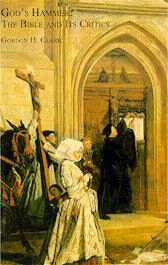
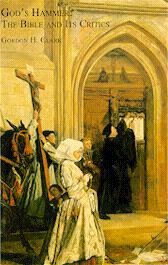
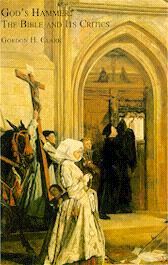
This is the second in a series of posts commenting on the book God’s Hammer by Gordon Clark.

Bible critics, who at sundry times and divers manners attacked the inspiration and truth of the Bible, have in these last days continued to press their case.  This, of course, makes a defense of these ideas most necessary.  In this chapter, however, Clark addresses the issue of inspiration only, reserving a discussion of truth for later chapters.  Clark writes,

The question of this chapter concerns the inspiration of the Bible.  It must be clearly distinguished from another question with which it might be confused:  How may I know that the Bible is true?  These two questions are indeed related, but they are not the same question.  They have even been answered in opposite ways.  A contemporary movement in theology called Neo-orthodoxy claims that the Bible is inspired, but also asserts that it is not completely true.  And obviously some other book, such as Churchill’s The Gathering Storm, could possible be entirely true without being inspired.  Such a book might even be called infallible.  Truth and inspiration therefore must be distinguished. 

Many authors, Christian or not, fail to distinguish and define their terms.  Clark does not make this mistake, and this lends power and clarity to his writing.  He continues,

The two ideas, however, are closely related, especially in the case of the Bible.  The Neo-orthodox writers can hold to an inspired but mistaken Bible only because they have changed the meaning of inspiration.  When the Biblical definition of inspiration is used, there can be no inspiration without truth, even though there often is truth without inspiration.  For the Christian, therefore, the question of truth is a prior question, and unless the Bible is true, there is not much use in discussing inspiration.

A glaring problem with much of the theology written over the past one hundred years is that its  language is fundamentally dishonest. Those who rejected Christ, wanting to cloak their unbelief behind a veil of Biblical vocabulary, deliberately used historic Christian terms while attaching new meanings to them.  The Neo-orthodox theologians – of which we will have more to say later – were one such group.  These men in the same breath could claim that the Bible was indeed inspired by God and that it was full of errors.  They had a different definition of inspired than Gordon Clark.  So then, whose definition was correct?  Was Clark right or the Neo-orthodox?  What does the Bible claim for itself?  Does it assert its own inspiration? How does it define inspiration?  Is the Bible even the place to look to answer these questions, or is it circular reasoning to defend the Scriptures by appealing to the Scriptures?

Leon Trotsky…might be paraphrased, “In a country where the sole physician is the State, opposition means death by health care rationing.  The old principle, who does not work shall not eat, has been replaced by a new one:  Who does not cooperate shall not recover.” – John Robbins

In his must-read 1994 lecture on Hillary Care, John Robbins noted the logical and historical connection between national healthcare and dictatorship, an opinion shared by his former boss, Congressman Ron Paul from Texas.  As a physician, Ron Paul understands the importance of quality, affordable healthcare.  As a congressman and advocate of personal liberty, he understands it can be delivered only through the agency of the free market, not government bureaucracies and onerous mandates.  For this reason, he has introduced legislation that would repeal the worst feature of the recent healthcare reform bill:  the requirement that every American purchase health insurance or face IRS penalties.        

Paul writes,

The administration’s terrible healthcare reform bill is now law, but the debate over how– and whether– the federal government should be involved in providing healthcare services is not over.  It is not too late for America to correct its course and stop the march toward a government-run, “single payer” healthcare system.

Polls show that a large majority of Americans don’t want Obamacare.  Congress should seize the opportunity to repeal the very worst aspect of this new legislation, namely the mandate that forces every American either to purchase health insurance or face an IRS penalty.  This mandate represents nothing more than an unconstitutional, historically unprecedented gift to the insurance industry.  I introduced the “End the Mandate Act” (HR 4995) expressly to prevent the administration from ever putting this provision into effect.

Read the rest of the article