Feeds:
Posts
Comments

Archive for the ‘Theology’ Category

John RobbinsThe following sermon was preached by John Robbins at Reformation Chapel in Unicoi Tennessee. Last week I featured part one of this sermon.  Today, I present part two. To read part one, please click here. The transcription is my own.

– Steve Matthews

Well, Luke continues in verse five,

Then, as they were afraid and bowed their faces to the earth, they said to them, ‘Why do you seek the living among the dead? He is not here, but is risen! Remember how he spoke to you while he was still in Galilee.’

Well, these women are terrified. These men suddenly appear, and the women are terrified. Luke says they were afraid and bowed their faces to the earth. And the angels speak to them and say, “Why do you seek the living among the dead?”

This reminds you of the opening chapter of Acts, where Luke is telling about the apostles watching Jesus being assumed into heaven. And two men again appear, maybe the same two angels, and speak to the apostles, and they say, “Men of Galilee, why do you stand here staring up into heaven?” They ask them a question again. And here the angels ask the women, “Why do you seek the living among the dead. And then they tell them, “He is not here, but is risen. Remember how he spoke to you.” And this makes it clear about the important of words. See, we’re told in the first chapter of John that the Word preceded the visible creation, that everything that was created was preceded by the Word. The Word comes first, the Logos comes first. And many people get everything backwards, they think events, or history, or creation come first, rather than the Word.

But notice here no one witnesses the resurrection event. And what the women receive are words from the angels. They’re told specifically, “He is not here. He is risen. He is living. He’s not among the dead.” And then the angels remind them of Jesus’ own words that he spoke while he was still with him. Their faith rests on the testimony of Jesus and the testimony of the angels. The women did not see the resurrection event, but they received these words from Christ and from the angels.

(more…)

Read Full Post »

John Robbins

John W. Robbins

The following sermon was preached by John Robbins at Reformation Chapel in Unicoi Tennessee. Please click here to read part two.  The transcription is my own.

-Steve Matthews

And now Luke moves on in his narrative to the resurrection. Then he begins by saying it happened on the first day of the week. And there’s a Jewish idiom here, it’s the first of the Sabbaths. And it’s a phrase that appears in the Matthew 28:1, Mark 16:1 and Luke 24:1, it’s called the first day of the Sabbaths or the first of the Sabbaths. From now on this will be the important day. This is what John calls the Lord’s Day. This is why we meet on Sunday and not on Saturday, because this has taken on the characteristics of the most important day of the week. This is the day that Jesus rises from the dead.

“Now on the first day of the week, very early in the morning,” Luke says, “they, and certain other women with them, came to the tomb brining the spices which they had prepared. But they found the stone rolled away from the tomb.” Christ had dies on the sixth day of the week, on Friday, he was in paradise that day and the entire next day, and then early in the morning on the first day of the week he rises from the dead.

Luke says these women, and they’re named in the previous chapter, they go very early in the morning. John says in John 20 verse 1 that they leave when it is still dark, yet dark. And some people have, again, tried to make contradictions in the Bible by saying the various evangelists say well it was at dawn, and John says it was while it was still dark, and another Gospel says it was when the sun was rising. Well, these women had to travel. And they left when it was still dark and when they got there the sun had risen. And it’s very easy. If people would just think about what’s going on in these narratives, all these so-called contradictions and problems would disappear. The women can’t transport themselves like they do on Star Trek from one place to another instantaneously. It takes a while for them to travel, to get together, to pack up their spices and to arrive at the tomb. And so you would expect a variation between the time they leave to the time they arrive there. Which is what the four narratives say.

(more…)

Read Full Post »


For since the creation of the world His invisible attributes are clearly seen, being understood by the things that are made.

Romans 1:20

John Robbins

If you’ve ever read a book or heard a lecture on Christian apologetics, there’s a good chance Romans 1:19-20 were brought up. Perhaps these verses were cited as proof that all men know God, so that no one could claim ignorance of God on judgment day. That, of course, is true. Responsibility is based on knowledge, and since God has revealed himself to all men, all men are accountable to him.

Bible commentators, as well as the authors of the Westminster Confession, have identified two ways in which God reveals himself to men: general revelation and special revelation.

Special revelation is identical with the 66 books of the Bible. The Scriptures are God’s written, propositional revelation, which principally teach us, “What man is to believe concerning God, and what duty God requires of man,” in the words of the Shorter Catechism.

But what about general revelation? Just what is it that is meant by this term? The most common answer is that general revelation is identical with nature. We are told that when men look to the heavens and see the stars, or cast their eyes upon the majestic mountains they behold God’s attributes and, to that extent, know him and are therefore rightfully held responsible by him, even if they have never so much as heard the name of Jesus Christ.

Here’s one example of this line of reasoning.

Paul stresses the reality and universality of divine revelation, which is perpetual (“since the creation,” v.20) and perspicuous (“clearly seen,” v.20). Divine invisibility, eternity, and power are all expressed in and through the created order…The invisible God is revealed through the visible medium of creation. This revelation is manifest; it is not obscured but clearly seen (New Geneva Study Bible).

The commentators manifestly argue that one can reason from visible creation to an invisible God, but does this really make sense? On one hand, such an argument is appealing to Christians. We believe in God and rightfully want others to share that belief. But simply because we like the conclusion of an argument does not mean that it is a good argument. This is the case even if the conclusion of argument – that there is an immortal, invisible all wise God who created and sustains the world – is true.

(more…)

Read Full Post »

Billy Graham

The body of Rev. Billy Graham, who died February 21 at age 99, lies in the Capitol Rotunda as President Donald Trump, officials and dignitaries pay tribute to America’s most famous evangelist, Wednesday, Feb. 28, 2018, in Washington.  (J. Scott Applewhite / The Associated Press) 

In the second year of Joash the son of Jehoahaz, king of Israel, Amaziah the son of Joash, king of Judah, became king…And he did what was right in the sight of the LORD, yet not like his father David (2 Kings 14:1, 3).

Judge not, lest you be judged! How many times have Christians had that verse flung in their face when discussing some point of doctrine, usually with an unbeliever. This verse, wielded as if some all conquering shut down argument, seems to be the only passage of Scripture that many people know.

Now if Jesus actually meant what these people seem to think he meant – that all judgment of every sort by anyone is always wrong – ironically they also condemn themselves, for by speaking as they do they are judging Christians and telling them they are wrong to find fault with the words or actions of another.

But Jesus did not mean to condemn all judgment. He intended to condemn unrighteous judgment, that is to say, judgment by the wrong standard. This can be seen elsewhere in Scripture where Christ told his followers to “judge with righteous judgment.”

Further, in writing to Timothy the Apostle Paul advised his younger colleague that, “All Scripture is given by inspiration of God, and is profitable for,” among other things, “reproof [and] for correction.” That is to say, Scripture is to be used to judge the actions and the words of men.

(more…)

Read Full Post »


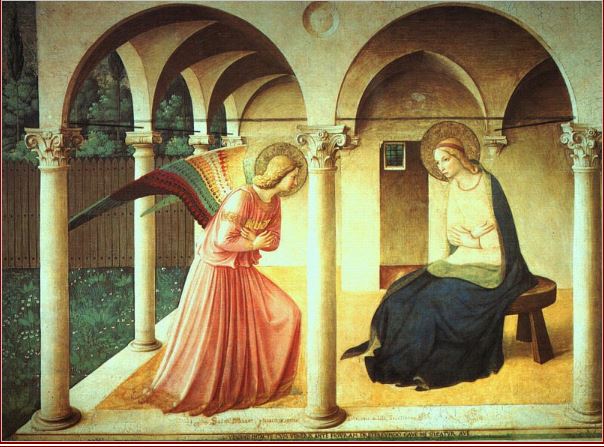
The Annunciation_Fra Angelico_15th c.

The Annunciation, Fra Angelico, 15th cen.


One of the many reasons I have long admired the work of John Robbins was his insistence on holding, and skill at handling, question and answer sessions after his talks.

As brilliant as his lectures were, some of his best recorded comments came in the discussions that he had with audience members after he was finished speaking.

A few years ago, Tom Juodaitis was kind enough to send me recordings of a number of sermons preached by Dr. Robbins at Reformation Chapel in Unicoi, TN.

Among the sermons was a two part series on John 3:1-17. At the end of part 2, there is a discussion among Dr. Robbins, an individual whose identity I don’t know, and Tom Juodaitis concerning the incarnation.

In this discussion, Dr. Robbins explains Gordon Clark’s teaching on the incarnation. Clarks mature thinking on this subject is found in the final book he wrote just before his death in 1985, The Incarnation. Clark’s work was at the time, and continues to be, controversial. For at its heart is the idea that Jesus of Nazareth is not, as is commonly taught, one person in two natures, but two persons in one individual, one a divine person and the other a human person.

This really shouldn’t be controversial. Just recently I heard a preacher say, correctly I would add, that Jesus is 100 percent God and 100 percent man. If this is the case, and it is, then we are logically driven to the same conclusion Clark reached.

Yet many people are offended at Clark’s thought, dismissing it as Nestorianism while ignoring the logical force of his argument.

John Robbins was one theologian was persuaded by Clark’s argument and had no problem saying so. In the discussion below, Dr. Robbins is at his best, brilliantly, simply and persuasively summarizing Clark’s argument.

(more…)

Read Full Post »

The Jesuit “mafia” and fog, both literal and figurative, in the churches. These were some of the discussion points brought up by Dr. Paul Elliott in his talks on Day 2 of The Trinity Foundation’s Reformation conference. Dr. Elliott gave two presentations on Saturday 10/28, both of which I would strongly encourage you to listen to when the recordings become available.

The Reformation Is Not a Return to Pre-Reformation Positions

By way of introduction to his opening talk on Saturday, Dr. Elliott mentioned that he is working on a tree volume set on the subject of the corruption of the text of the new testament. As part of his research, Dr. Elliott noted, more often than not, he found that the hand responsible for corrupting the Greek text of the New Testament used in modern translations is, more often than not, that of the Jesuits. He also included a comment by a friend of his warning that his work exposing the Jesuit efforts would not go unnoticed and that it was “dangerous territory.” Dr. Elliott did not use the word “mafia,” but the implication of his words is that there exists something like a Jesuit mafia that seeks to silence the opposition, and do so by violence if necessary.

Dr. Elliott contends that there are forces in the Evangelical movement that are seeking to give Protestantism an “extreme makeover” of the sort one sees on various TV shows, and that the effect of this makeover is that, “the vast majority of the nominally Evangelical church today is rapidly returning to the pre-Reformation position.” Dr. Elliott identified four things that characterized the pre-Reformation church.

First, there was Biblical illiteracy. In the middle ages, Christians did not have access to Bibles in their native language. Today, the problem is that, while “Bibles” are readily available, so-called modern translations such as The Message are corrupt paraphrases, not translations at all. Because they do not faithfully translate the original Hebrew and Greek manuscripts, they leave people without the Word of God in much the same way as medieval church goers whose only Bible was in Latin, a language that most of them did not understand.

Second, Dr. Elliott identified the problem of Church as an Experience. The Reformation has always emphasized the primacy of preaching, the expositing of the Word of God in understandable, clear language. On the other hand, the Roman Church-State has always made an appeal to the senses with its “smells and bells.”

And just as the pre-Reformation and current Roman Catholic Church emphasized experience over doctrine, so too do neo-evangelicals in the emerging church movement. Dr. Elliott noted that as an observer he attended a trade show dedicated to the “worship market” which, “is now a multi-billion-dollar business.”

Dr. Elliott noted that, “The most popular product in this big exhibit hall was fog machines!,” which allowed churches to generate “different colors of fog” to set the right mood. As Dr. Elliott wryly commented, “Those fog machines were a metaphor for the entire so-called worship conference.”

Third, Dr. Elliott took up the problem of pluralism. By way of example, he cited Timothy Keller saying there may be some “back door way to Heaven” apart from Jesus.

More subtle is the case of John Piper, whom Elliott quotes as saying that we are made right with God by faith but enter heaven by our works.

Finally, Dr. Elliott speaks of the current emphasis on Deeds Instead of Doctrine. As Rick Warren has said, “You know, 500 years ago, the first Reformation with Luther and then Calvin, was about creeds…[the new reformation that we’re bringing about through the Purpose-Driven church] will be about deeds…The first one was about what the church believes…This one will be about what the church does.”

How is the different from what Rome teaches? In truth, not much, if at all. That being the case, it should come as no surprise that Warren is also hard at work trying to re-united Protestants and Romanists. Dr. Elliott reported that Warren was the keynote speaker at Pope Francis final Sunday service when he was in Philadelphia in 2015. Warren, a Southern Baptist, referred to the assembled cardinals, bishops and priests and the pope himself as “brothers.”

Dr. Elliott closed his talk with an encouragement for Christians not to be conformed to this world, but to be transformed. We are to be outwardly what we are inwardly. This requires that Christians, “Never be afraid to admit it when you find yourself, or the church, deviating from Scripture in even the smallest point.”

(more…)

Read Full Post »
Day 2 of The Trinity Foundation’s Reformation conference saw four separate presentations by two men whose work has long been associated with the Foundation.  Mark W. Evans, a minister from Faith Presbytery, the Bible Presbyterian Church presented a single paper in two sessions titled The Reformation:  Past, Present, and Future.

The other speaker of the day was Dr. Paul M. Elliott, president of Teaching the Word Ministries.  Dr. Elliott gave two separate talks, the first titled The Reformation is Not a Return to Pre-Reformation Positions, and the second The Reformation Is Not Co-Belligerence with Unbelievers.

For those interested, all four sessions from Day 2 plus the two sessions from Day 1 were recorded and will be available on the Trinity Foundation website.  The planned date of the posting is not known to this writer.

(more…)

Read Full Post »

Well, I just got back to my hotel room here in Johnson City.  Day 1 of the Trinity Foundation Reformation Conference, the full title of which is The Reformation at 500:  Is It Over or Is It Needed Now More than Ever?, ran a little later than expected, but this attendee isn’t complaining.

Trinity Foundation president Tom Juodaitis gave the opening talk.  In it, he focused on the two key principles of the Reformation – what some call the formal and material principles of the Reformation – Sola Scriptura (by Scripture alone) and Sola Fide (justification by faith alone).

Mr. Juodaitis made the important point that there is a close connection between the spiritual liberty that comes with the preaching of the Gospel and the political and economic liberty that the West has enjoyed over the past 500 years.

(more…)

Read Full Post »

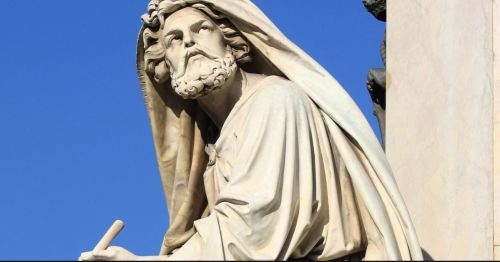
Isaiah_Spanish Square_Rome

The Prophet Isaiah, from a monument in Rome.

“How do you know when a politician’s lying,” runs the set up to an old joke. The answer? “When his lips are moving.”

Ouch.

Now granted, that’s funny joke. But it’s funny only because it highlights vast chasm most of us have seen between most political rhetoric from most political reality.

George H.W. Bush wont the 1988 presidential election in part on his famous promise, “Read my lips, no new taxes.” Not long after his election he conspired with Congress to, wait for it…raise taxes.

More recently, Barak Obama told the nation in no uncertain terms that if you like your doctor, you can keep your doctor.

And this wasn’t the only lie that was told with respect to Obama Care. After the passage of the bill, a video of Jonathan Gruber, MIT economist and one of the chief architects of the Affordable (sic) Care Act, surfaced that made clear that Obama Care always was a hustle, and that those behind the bill knew it all along. Gruber’s words were, “(L)ack of transparency is a huge political advantage and basically, you know, call it the stupidity of the American voter or whatever, but basically, that was really, really critical to getting this thing (Obamacare) to pass.”

(more…)

Read Full Post »

Kaepernick_Takes a Knee

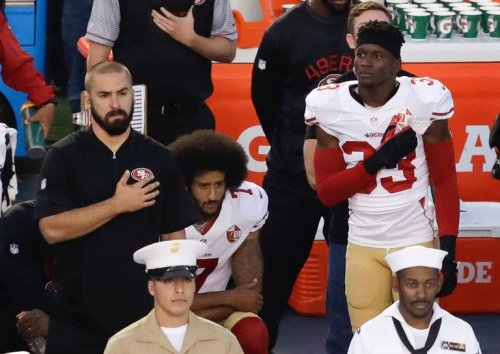
San Francisco 49ers quarterback Colin Kaepernick takes a knee during the pre-game singing of the national anthem. 

It all began quietly enough. The photo that started it all, one tweeted out by Jennifer Lee Chan of Niners Nation, wasn’t even originally about Colin Kaepernick. In fact, you have to look pretty closely at the photo even to see the then San Francisco 49ers quarterback sitting by himself on the bench during the pre-game ceremonies on August, 26, 2016.

After the game in an interview with NFL.com’s Steve Wyche, Kaepernick explained the reasoning behind his protest. He said,

I am not going to stand up to show pride in a flag for a country that oppresses Black people and people of color. To me, this is bigger than football and it would be selfish on my part to look the other way. There are bodies in the street and people getting paid leave and getting away with murder.

According to Mike Garafolo of the NFL network, this was not the first time Kaepernick had protested during the national anthem, it’s just that no one had noticed it before.

On August 28, Kaepernick stated that he would continue his protest until he felt that the flag represented what it was supposed to represent and the country represented people the way it’s supposed to represent them.

From there, it became almost a commonplace to see football players, not just in the NFL but even those on the high school and college level, take a knee during the pre-game singing of the Star-Spangled Banner.

The protest movement, having simmered for over a year, was given new life with Donald Trump’s comments at a rally in Alabama last week, saying players who knelt during the national anthem should be fired.

This prompted angry reactions from many NFL players as well as from players in other sports. Remarkably, the uproar this past week following Trump’s comments has been so loud that it even managed to drive North Korean dictator Kim Jong Un’s threats of nuclear war from the headlines.

Such an explosive story deserves at least some commentary. So here are a few thoughts of my own.

(more…)

Read Full Post »

« Newer Posts - Older Posts »