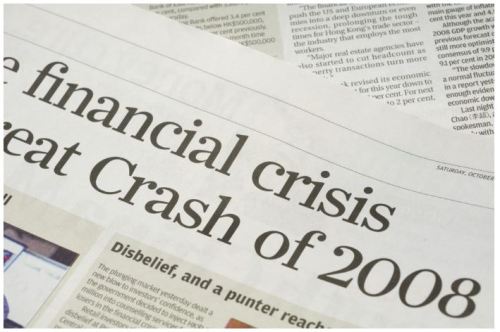
A prudent man foresees evil and hides himself, but the simple pass on and are punished.
Proverbs 22:3
In a recent article titled “The monetary policy endgame,” Rick Rieder argued that central banks have two ways of creating inflation – inflation in this case being defined as rising consumer prices. The first is to create increased consumer demand through demand stimulus (lower interest rates). Secondly, Rieder argues, central banks can engage in monetary debasement. Continuing with his argument, Rieder contends that he believes central banks will turn to monetary debasement to achieve their stated inflation goals.
So what is monetary debasement? As the Investopedia link puts it, “Debasement refers to lowering the value of a currency, particularly one based on a precious metal, by adding metal of inferior value.”
But even though we don’t have a precious metals based monetary system doesn’t mean that governments can’t debase their currencies. As the Investopedia article on debasement goes on to say, “[D]ebasement [in fiat monetary systems] only requires that the government print more money, or since muc hmoney exists only in digital accounts, create more electronically.”
In light of the coming central bank driven currency debasement, Rieder asks the important question, “How should one position for such an endgame?” Rieder’s answer? “[A]ll of this leads one today to consider assets that can participate in an inherent devaluation of the local currency, which is to say, real estate, and even hard assets that have historic value-relevance, such as gold.”
Rieder’s post is remarkable, not just for what he said, but also for who it is that said it. Rieder is not some tin foil hat wearing gold bug, but is a Chief Investment Officer (CIO) at BlackRock, a New York City based investment management firm that is the world’s largest asset manager with $6.84 trillion in assets under management as of June 2019. Put another way, BlackRock is Wall Street royalty. Further, Rieder’s post appeared on BlackRock’s blog, giving his statements the implicit approval of the firm itself.
Given the decades long propaganda campaign of hatred that has been directed at gold and at those who advocate for the return of gold to the financial system, Rieder’s comments are significant indeed.
There’s a lot to unpack in Rieder’s article, more than what can be discussed in this post. Lord willing, I shall return to his post at some point in the future. But I mention in today mainly to let readers know that mainstream financial analysts are quietly warning that the US dollar – and all other fiat currencies – are in trouble and likely to suffer significant devaluation in the not too distant future.
In light of warnings from Rieder and others, the application of Proverbs 22:3 to our current financial circumstances cannot be overstressed. Here we have a highly placed man at a highly respected financial firm going on record to warn us in advance that the Fed is going to debase the dollar. What is more, he provides for us sound advice on strategies savers can use to protect themselves.
In Scripture, we find several examples of men who were given advanced warning by God of coming disasters, and who, in faith, took action to save themselves and others. In last week’s installment, we looked at the case of Noah. This week, we shall continue our look at Biblical case studies in prepping with a review of Lot’s narrow escape from Sodom.
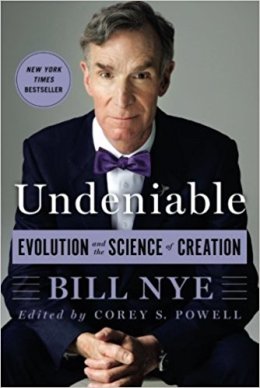 This week’s installment of the series on Bill Nye continues our review of Chapter 2 of Nye’s book Undeniable: Evolution and the Science of Creation.
 In recent years, Bill Nye has become something of an icon with the humanist, progressive, environmentalist, social justice warrior crowd.
 Lux Lucet