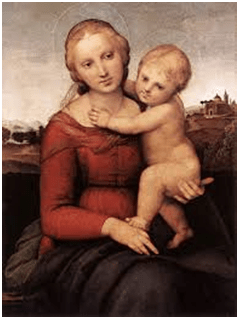
 Teachings about Mary, the so-called Marian doctrines, are prominent dogmas of the Roman Catholic Church-State. Even those not from a Roman Catholic background are aware of this. But even though Evangelicals have a general sense of the importance of Mary in Romanist teaching, most are uncertain about the specifics. As a result, they become easy prey for ecumenists, both of Protestant and Roman Catholic variety, who never cease from their common goal of overthrowing the Reformation.
One such recent example is Rick Warren, who recently has gone on record as saying, “We [Roman Catholics and Protestants] have more in common than what divides us.” If by this statement Warren is referring to Protestant ecumenists such as himself, then his statement undoubtedly is true. As John Robbins once commented, about the only thing today’s Protestants protest is Biblical Christianity. But if by his statement Warren intends to suggest that the historic Protestant faith has a broad base of agreement with Rome, he is merely putting on display his ignorance of both the teachings of Scripture and of the Roman Catholic Church-State.
In light of the efforts of Warren and others of his ilk, it is worth taking a more detailed look at the afore mentioned Marian doctrines. According to Rome, there are four Marian dogmas – 1) Divine Motherhood (Mary is the Mother of God), 2) Perpetual Virginity (Mary remained a virgin her whole life, even after the birth of Christ), 3) Immaculate Conception (Mary was born without original sin), and 4) The Assumption (Mary did not die, but was bodily taken into heaven) – all which are false. The focus of this short essay is on the second of these dogmas, Mary’s perpetual virginity.
For Protestants unfamiliar with Rome’s Marian doctrines, it may seem incredible that anyone could seriously argue that Mary spent her whole life as a virgin. After all, does not Scripture plainly tell us that Jesus had brothers and sisters (Mark 6:1-3, Matt. 13:55)? In Matthew 1:25 we read, “And [Joseph] knew her [Mary] not till she had brought forth her firstborn son: and he called his name Jesus.” But for these and other arguments from Scripture, the Romanists have ready answers. Let’s look at them.

 Lux Lucet