Feeds:
Posts
Comments

Posts Tagged ‘John Robbins’

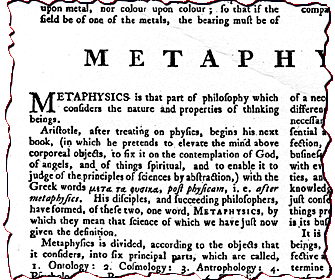
Encyclopaedia Britannica, 1771.

Encyclopaedia Britannica, 1771.

My earlier post In Praise of Karl Marx makes the point that Christians can take one positive lesson from Marx’ work: the power of systematic thought. Marx was a thoroughgoing atheist, and both he and his followers consistently applied atheism to all fields of study, creating a well-developed all-around view of the world. Systematic thought is powerful and impressive. One idea is related to and supports another, in much the same way the flying buttresses support a majestic gothic cathedral. This is true, even if the system itself is badly flawed.

Of all people, Christians should be the most systematic thinkers, for we have the systematic, non contradictory truth of God’s Word revealed to us in the 66 books of the Bible. From the express statements and necessary implications of Scripture, we are able to develop a coherent, complete, systematic worldview. The apostle Paul tells us that the Scriptures make the man of God complete, thoroughly equipping him for every good work. This includes the good work of developing a systematic, Christian view of the world.

(more…)

Read Full Post »

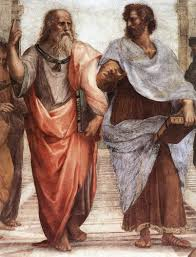
Raphael's The School of Athens, depicting Plato and Aristotle.

Raphael’s The School of Athens, depicting Plato and Aristotle.

Last week I mentioned one positive lesson Christians can take from Karl Marx. That may seem like a strange statement at first blush. After all, Marx was an atheist, a collectivist, and a violent revolutionary. Hardly the sort of fellow a Christian should look to for philosophical guidance. And yet, there is one aspect of his program that does recommend itself to the Christian: he was a systematic thinker. He didn’t randomly throw ideas together, but sought to develop a unified worldview based on certain philosophic principles. Systematic thinking, systematic philosophy, has tremendous power. So much so, that even an evil system of thought such as Marxism can take the world by storm.

Christianity also is a system of thought. But unlike Marxism, or Kantianism, or Objectivism, or any other system developed by man – what the apostle Paul deemed “the wisdom of this world” – Christianity is a revealed system of thought. One could even call it a revealed system of truth. For Christianity reveals the mind of God, the truth that comes from God, in every area of intellectual inquiry.

But even though Bible-believing Christians would be the first to defend the Word of God as inspired, inerrant and infallible, too often their thinking, and thus their practice, betrays a certain amount of inconsistency. The Bible, in the view of many Christians, is good for learning about God, sin, and salvation in Christ. But when it comes to questions of philosophy, well, the Christian will have to go to the experts. This always means the secular philosophers.

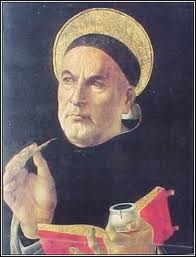
Thomas Aquinas is the ultimate example of this approach. In his case, he attempted to combine revealed ideas from the Bible with the empirical philosophy of the pagan philosopher Aristotle. The resulting system called Thomism is now the official philosophy of the Roman Catholic Church-State. It is also, unfortunately, the philosophical system of many Evangelicals. Well known evangelicals such as R.C. Sproul and Norman Giesler both espouse Thomism. And while Aristotle and Aquinas were brilliant men, neither one’s system of thought was Christian. By following Aquinas, these Evangelicals unknowingly undercut their Christian witness.

In one of his lectures on philosophy, John Robbins made the point that a major weakness of the Reformation was the fact that it never produced a systematic philosopher. That is, no one, at least in any coherent way, ever attempted to apply Scripture to the problems of philosophy. That is, no one until Gordon Clark. With Clark’s work, Christians for the first time were furnished with a Biblical system of thought capable of meeting and defeating all rivals in all fields of intellectual endeavor. In some ways, it is hard to believe that it took so long for this to happen. Yet happen it finally did. And as Christians we can take great delight in this. My goal in this and in the next few posts will be to summarize the basic ideas of Christian philosophy using John Robbins tract What is Christian Philosophy? as my guide.

(more…)

Read Full Post »

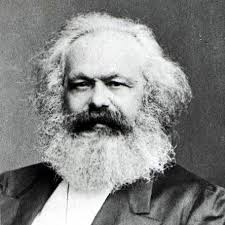
Karl Marx

Karl Marx

Christians can lean lessons in the oddest places, even from the likes of Karl Marx. Marx, of course, was the 19th communist radical whose ideas have proven to be one of the dominant forces in the world over the past 100 years. Now before you think I’ve gone off the deep end, I can assure you I’m not sporting a Che Guevara T-shirt or making plans to visit to Fidel Castro. No, my praise for Marx has nothing to do with his ideology, with which I vehemently disagree. But if not for his ideology, why would I praise him? What would a Christian writer find praiseworthy about a militant atheist whose considerable body of work was radically opposed to Christianity and has proven to be the cause so much misery in the world? The short answer to that question is this, Marx was a systematic thinker.

It was a Christian video series on worldviews that started me thinking about this. Marx was an atheist, and his atheism imbued every aspect of this thinking. Marxist views in the fields of politics, history, economics, sociology, psychology, ethics, etc. all can be traced back to atheist assumptions. Marxist ideas about a particular subject, economics for example, are not divorced from Marxist ideas on other subjects. Marxism is not a random collection of ideas, but a system of things thought out together. This is what gives Marxism much of its appeal. It provides, or at least seems to provide, people with a unified worldview. And this unified worldview is a powerful motivating force.

(more…)

Read Full Post »

Benjamin Netanyahu address Congress, 3/3/15.

Benjamin Netanyahu address Congress, 3/3/15.

Benjamin Netanyahu’s recent speech before Congress, punctuated as it was with over twenty standing ovations, is the latest act in the decades long drama of US involvement in the Middle East. Growing up as I did in the 70s and 80s, America’s presence in the Middle East seemed a lot like the war between Oceania and Eastasia in 1984, we had always been there. The question was never raised whether this was a good idea. The only acceptable debate was over how much and what we should do.

An endless parade of American diplomats, military equipment, and of course, money flowed eastward, all which, we were told, were needed to make the world safe for democracy. But the funny thing was, no matter how much time money and effort was expended, the region never seemed very safe or very democratic. If someone did occasionally suggest, even mildly, that maybe, just maybe, the US should reconsider its activist foreign policy and perhaps at some future date possibly consider option of thinking about reducing our presence in this or that country or region, the poor fellow was immediately denounced and labeled with that most heinous of swear words – what really amounted to a scarlet letter for intellectual sinners. He was called the “I” word. He was dubbed an “isolationist.” And an isolationist was, by definition, someone so unstable, so untrustworthy, so obviously out of touch with reality that no serious person need pay him any attention whatsoever. Except, of course, to make him the butt of jokes.

This same mode of thinking is alive and well today. If anyone had any doubt, Netanyahu’s speech the past Tuesday, and the reaction by Congress, should have dispelled it. But is so-called isolationism really the foolishness the foreign policy establishment, the press, and much of the public say it is? What does the Bible have to say about foreign policy? These are questions worth asking. Some may find the answers surprising.

(more…)

Read Full Post »

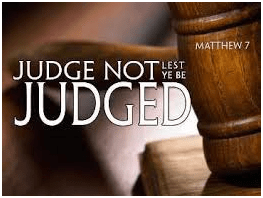
“Judge not lest you be judged,” is a favorite quote of unbelievers. They delight in hurling them at Christians during an argument. And all too often, these words have exactly the effect intended, that is to reduce the Christian is reduced to silence. After all, are not these words not found in Scripture? Were they not spoken by Jesus himself? The answer to these questions is yes and yes. But do these words really mean, as the unbelievers seem to think they do, that Christians have not basis for making moral judgments? The short answer is no.

My Introduction to Irrationalism

As is the case with most who grow up in church, I was not taught to think rigorously. I recall many years ago asking someone at my church about a passage I did not understand. It seemed to me that there was a contradiction in Scripture, so I asked for an explanation and was given the standard quote from Isaiah 55, saying God’s thoughts and God’s ways are higher than ours. This was then interpreted to mean we just have to accept that some things in the Bible do not and cannot make sense to our finite minds. There are mysteries, tensions, and apparent contradictions in the Bible that finite man simply cannot understand with mere human logic.

I didn’t know it at the time, but this was my introduction to irrationalism. The person with whom I spoke provided me the best answer he knew. I have no reason to believe he had any intention of deliberately misleading me. And yet, mislead me he did. And it would be many years before, by the grace of God, I found my way out of that intellectual cul-de-sac.

(more…)

Read Full Post »

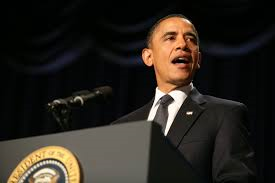
Obama At National Prayer Breafast_Feb 2015

President Obama speaks at the National Prayer Breakfast, 2/5/15.

In his 2/5/15 speech at the National Prayer Breakfast, Barak Obama made a statement that has outraged many Christians.  In his comments, Obama compared current atrocities committed by jihadists to the crusades, the inquisition and slavery.  Obama’s words were,

Unless we get on our high horse and think that this [the commission of atrocities] is unique to some other place, remember that during the Crusades and Inquisition, people committed terrible deeds in the name of Christ.  In our home country, slavery and Jim Crow all too often was (sic) justified in the name of Christ.

This remark was not the whole of his speech, but it’s the portion that has generated the most controversy among conservatives and Evangelicals.  For example, Robert Jeffress, a Southern Baptist pastor from Dallas, went on the Bill O’Reilly show on Friday, 2/6 to denounce Obama’s remarks.  Jeffress’ comments sought to refute the president by offering that the Inquisition killed only 2,200 people over a period of 450 years, whereas the radical Muslims who perpetrated 911 killed far more in a single morning.  Perhaps one could deem this the body count argument. Christians have racked up a lower one than the Muslims, therefore Christianity is the true religion.

(more…)

Read Full Post »

Recently, I was listening to a John Robbins lecture on apologetics and something he said hit me like a ton of bricks.  Robbins was speaking about Rom.1:18-21, and his explanation of a key phrase in the passage radically altered my understanding of the text.  

The most popular method of Christian apologetics today is evidentialism.  And those who use this method argue for the truth of Christianity by appealing to sense experience.  The most famous of all evidentialist apologists is Thomas Aquinas, whose best known defense of Christianity is the cosomological argument.  In this argument, Thomas founded his case for the existence of God on the fact that, “it is certain and evident to our senses, that in the world some things are in motion.” Many of today’s best know Evangelical apologists accept Thomas’ argument, including such respected scholars as Norman Geisler, R.C. Sproul, and John Gerstner.

Evidentialists have long considered Romans chapter 1:18-21 as a primary proof text for their position.  The passage reads

For the wrath of God is revealed from heaven against all ungodliness and unrighteousness of men, who suppress the truth in unrighteousness,  because what may be known of God is manifest in them, for God has shown it to them.  For since the creation of the world His invisible attributes are clearly seen, being understood by the things that are made, even His eternal power and Godhead, so that they are without excuse, because, although they knew God, they did not glorify Him as God, nor were thankful, but became futile in their thoughts, and their foolish hearts were darkened. – NKJV

Evidentialists take the phrase “being understood by the things that are made” to refer to the non-human physical universe.  They understand the passage to say in effect that all men have knowledge of God by seeing, touching, smelling or hearing the physical stuff of this world.  For example the New Geneva Study Bible, of which R.C. Sproul was the general editor, commenting on Rom.1:20, states,

Divine invisibility, eternity, and power are all expressed in and through the created order…The invisible God is revealed through the visible medium of creation.

Evidentialist Charles Hodge states much the same thing when he writes,

This divine revelation has been made apo ktiseos kosmou, from the creation of the world, not by the creation; for ktisis here is the act of creation, and not the thing created; and the means by which the revelation is made, is expressed immediately by the words tois poiemasi, which would then be redundant.  The poiemata tou theou, in this connection, are the things made by God, rather than the things done by him.  – Commentary on Romans

But what if “the things that are made” [tois poiemasi Gk.] refers to something other than non-human creation?  Hodge himself seems not to know what to make of the words “the things that are made” when he calls them “a redundancy.”  But what if the words “the things that are made” are not a redundancy but in fact refer to something new?  What if “the things that are made” is a reference to men?

This is the point Robbins made in his lecture, and it’s the point that I missed the first few times I listened to it.  And although Robbins’ reading of the text may seem like a stretch at first blush, there is good support for it.  For while the most common reading of Romans 1:20 identifies “the things that are made” [poiema]with the non-human physical elements of the world, the only other time poiema is used in the NT, Ephesians 2:10, it clearly functions as the predicate of a human subject. The passage in Ephesians reads,

For we are His workmanship [poiema], created in Christ Jesus for good works, which God prepared beforehand that we should walk in them. 

Here, “we” are the subject of poiema, which is rendered “his workmanship.”  And if poiema can refer to people in Ephesians, is it that much of a stretch to believe that poiema could also refer to people in Romans 1:20?  By understanding poiema in this way, we can render Rom.1:20 as , “For since the creation of the world, His invisible attributes are clearly seen, being understood by the men whom He has created, even His eternal power and Godhead.”  If Robbins is correct, and I believe that he is, Romans 1:20, rather than being an evidentialist stronghold, is in truth a scripturalist citadel.     

 You can hear Robbins’ full lecture here under Collection 5:  Defending the Faith, Level 2 , Lecture 2.  The relevant portion starts at the 34 minute mark.

Read Full Post »
« Newer Posts