Feeds:
Posts
Comments

Posts Tagged ‘Investing’

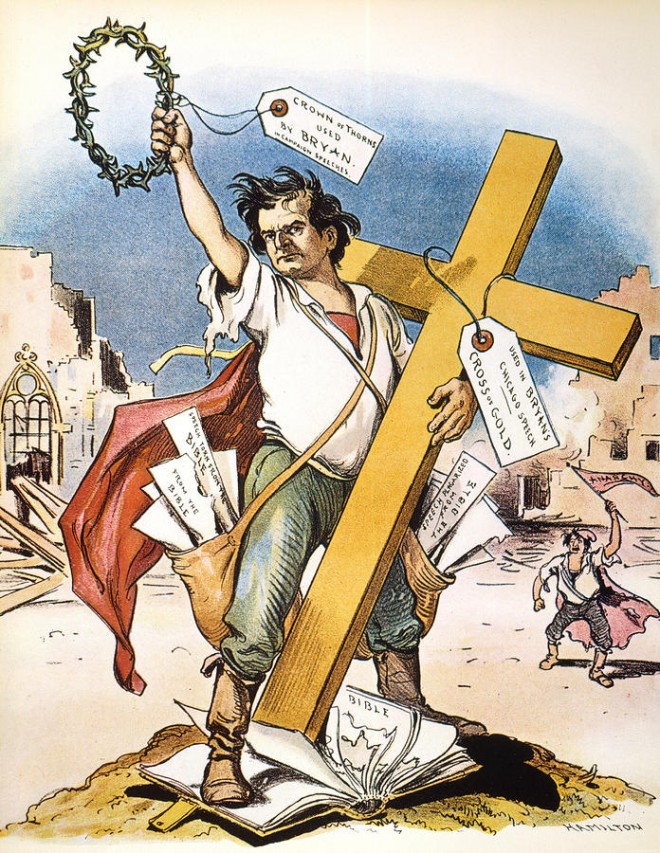
"You shall not crucify mankind upon a cross of gold." - William Jennings Bryan, 1896

“You shall not crucify mankind upon a cross of gold.”
– William Jennings Bryan, 1896

Talk of the US returning to a gold standard, at least according to the anointed wise men of our time, is the province of weirdoes, wackadoos and wingnuts and ought never to be mentioned in polite company by any serious presidential candidate. At least that’s the sense one gets when reading Matt O’Brien’s Washington Post article “Dear Jeb: Gold won’t make America great again.” O’Brien is upset that, when given the opportunity to squash any notion that he might support a gold standard, Jeb Bush waffled in his comments, implying that he may in fact be prepared to crucify mankind upon that dreadful cross of gold.  The horrors.  According to O’Brien, “The right answer would have been that the gold standard was a “barbarous relic” even 80 years ago, and might be the world’s worst idea today.”

O’Brien goes on to chide both Ben Carson and Bush, the former for his positive support of the gold standard, the latter for his failure to live up to his duty as “the candidate of serious policy,” which in O’Brien’s mind means taking a stance of uncompromising devotion to the central bank driven, fiat money status quo. The reason O’Brien gives for this is simple, “We tried it [the gold standard], and it failed.”

But did the gold standard fail as O’Brien thinks it did? O’Brien’s chief beef with the gold standard is that the price of gold is controlled by the Federal Reserve’s [the central bank of the United States] interest rate policy.

[T]he gold standard says that the dollar will always be worth a certain amount of gold. But that alone isn’t enough to make it true. The Federal Reserve has to do that. So, for example, think about what would happen when the price of gold “wanted” to go up. That is, when supply and demand would make its price go up if it were allowed to do so – which it wouldn’t be under the gold standard. In that case, the Fed would have to make the dollar go up instead to keep the relationship between the two the same. And making the dollar go up is just another way of saying that it makes interest rates go higher, since more people will want to hold a currency that pays more interest.

There are at least two fallacies with this argument. First, the gold standard does not require that the Federal Reserve (the Fed) do anything. In fact, the gold standard does not even require the existence of the Fed, as can be seen from the fact that the US was on the gold standard long before the it came into being in 1913. In truth, it was the Fed’s activism that caused both the stock market and real estate boom during the 1920’s and the subsequent 1929 bust that contributed to the depression of the 1930’s. It is the Fed, not gold, that failed during the depression. But as a good statist, O’Brien puts the blame exactly where it does not belong, on gold, while exonerating the Fed which did so much to create the mess. This is an example of calling good evil and evil good.

“Centralization of credit in the hands of the state, by means of a national bank with State capital and an exclusive monopoly” – Karl Marx and Frederich Engels – The Communist Manifesto
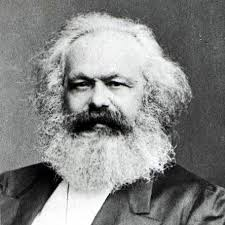
Karl Marx

Karl Marx

Worth noting too, is that central banking of the sort practiced by the Fed, and so admired by O’Brien and his counterparts in the media, academia and government, was actually advanced by Marx and Engles as one of the planks in their Communist Manifesto. It is unsurprising that the communists, favoring as they did government ownership of the means of production, would also insist on government control the monetary system. What is worth noting, however, is that so many in the West seem to be of the opinion that a modern economy cannot function in the absence of a central bank. But far from being a necessity, the central banks of the world are a positive hindrance to economic development. In the 100 years of its existence, the Fed has managed to destroy 96 percent of the dollar’s value, robbed savers with artificially low interest rates to bail out its billionaire banker buddies, and created unprecedented economic distortions, the worst of which have yet to play out. It is the Fed and its unseemly support of Wall Street investment banks that is to blame for the record income inequality in the US. Not, as is commonly assumed, laissez faire capitalism. It is the Fed that helped to bring on the depression of the 1930’s and caused the tech bubble of the 90’s, the real estate bubble of the 00’s and the current stock and bond market bubbles, both of which are set to pop and threaten to send the US and world economies into an economic tailspin such that the Great Depression will seem like a golden age of prosperity by comparison. When it comes to central banks, the best thing to do is to bury them in the same pit as the rubble from the Berlin Wall.

A second problem with O’Brien’s analysis is that he assumes that a gold standard requires the government fix the price of gold at a certain level. According to the Bible, governments have only two legitimate functions: to punish evil doers and praise those who do what is right. Nothing more. Though many people assume that they should, governments have no right to manufacture money. This means that for a gold standard – or any monetary standard – to work properly, it should be the free market, and not the government, that determines what is, and what is not money as well as the market price of money, that is, the free market should set interest rates, not some monetary politburo at the Fed as is currently the case.

Conclusion

Although the Bible does not require a gold standard or a silver standard, it does require that money, in whatever form it takes, be honest. Historically, gold and silver have done the best job in this role. Our current system, in which central banks conjure up capital out of thin air, crediting billions of dollars to the accounts of favored financial institutions with the click of a mouse, is about as far from honest as it can get. In any other context, the normal activities of the Fed would be called counterfeiting. Or to put in another way, lying at the heart of our current financial system is a consistent violation of the Eighth Commandment, Thou shalt not steal.

Contrary to O’Brien, there is nothing serious about advocating the continuance of the current broken, immoral, central bank dominated, debt based, fiat monetary system. But statists look for every excuse under the sun to defend the central banks and their fiat money ponzi schemes, one example of which is O’Brien’s claim that a gold standard cannot be trusted to regulate interest rates. This is simply false. Since the interest rate is simply the price of money, it is regulated in the free market by the laws of supply and demand, just like any other good or service. A gold standard set by the free market is honest money enabling honest commerce conducted apart from the interference of government. It is Biblical. And it works. Seriously.


Read Full Post »

The study of ethics, what we ought to do, is one of the principle fields of philosophic inquiry. And many are they who presume to speak with authority on this subject. But as with all statements of all men, the Christian ought to compare all ethical claims by the standard of Scripture.

And what is the basis of Christian ethics? The law of God. A thing is right, for no other reason that God says it is right. A thing is wring, for no other reason than God condemns it Peter summarized this idea when explaining to the Sanhedrin why he disobeyed their order not to speak in the name of Christ. He told them, “We ought to obey God rather than men” (Acts 5:9). Understanding this one principle greatly simplifies the Christian’s task of judging the ethical merits of any proposed course of action.

For example, during the 2008 financial crisis, the powers that be so frightened Congress and the American people with visions of financial Armageddon, that TARP, a taxpayer financed $700 billion bailout package aimed at saving the so-called too-big-to-fail banks on Wall Street, was passed. It was just obviously the right thing to do. So much so, that one of my business school professors said it was boring even to question the decision.

But was this decision to rescue failing financial firms with taxpayer money self-evidently ethical? Where, for instance, in the Constitution is Congress ever given the authority to bail out anyone? More to the point of this essay, where does the Bible ever grant the civil magistrate the power to take from one person to give to another? The law of God calls this theft, and we are commanded not to do it. In short, the Bible condemns TARP and all those who planned, advocated, voted for, and benefitted from it. Guilty too are those who continue to defend it.


Read Full Post »

Those Wacky Gold Bugs

A gold standard is the creationism of economics. – Larry Summers

Former treasury secretary Larry Summers, it seems, is more right than he knows. The quote above, widely attributed to him on the internet, apparently was his reaction to a question about the viability of a monetary gold standard. Summers, as do nearly all academic economists, considers the gold standard to be the barbarous relic of a bygone era. “Let us mange the currency for you,” say the Keynesians, “we’re so much more reliable than that yellow metal.” In a way they’re right, of course. You can always count on the Keynesians to push monetary policies that result in the debasement of the dollar at your expense. When it comes to robbing people blind, they’re a reliable bunch indeed.

The funny this is, Summer’s statement is actually correct, just not in the way he means it.  By likening the gold standard to creationism, Summers is being sarcastic and intends us to understand he thinks it is worst sort of crack pottery. But just as creationism is God’s revealed truth about the origin of the world, so too does the gold standard reflect God’s revealed truth about money. Money, the Bible tells us, must be honest. That is to say money must be full-bodied. This is the point of the many verses in Scripture on honest weights and measures. When a currency such as the dollar is defined by a certain weight of gold and can be exchanged for it without discount, you have an honest, full-bodied currency. When governments can manufacture money without limit, without convertibility into a commodity such as gold or silver, you have the prescription for the worst sort of monetary abuse. This is the situation throughout the West today: governments robbing their people by debasing their currencies with the printing press.

Yes, Summers is right about the gold standard in a fashion similar to Caiaphas who stated that it was better for one man to die than for the whole nation to perish: he says more than he knows.  The moral blindness evidenced by Larry Summers in his attack on God’s revelation is further evidence of just how far the West has strayed from the Biblical blueprint for government that was established in the West as a result of the Reformation. The “wisdom” of man has supplanted the wisdom of God.  My financial advice to readers? Hold onto your wallets. Buy gold and silver.


Read Full Post »

Financial Outlook 2012

Jim Rogers is one of my financial heroes. Not only is he one of the most successful investors in the world, he’s also that ever so rare highly placed individual who 1) knows what he is talking about, and 2) is honest and brave enough to publically speak the truth. I had heard of him years before the 2008 financial crisis, but only as the events of that fall unfolded did I really pay attention to him. What impressed me so much was that as the whole financial system was coming unglued, Jim Rogers was one of the few calm, sane voices on Wall Street. Unlike the entire financial and political establishment, he denounced at every opportunity and to anyone who would listen the morally indefensible bailouts of Wall Street, Fannie Mae, and Freddie Mac in clear language a normal person could understand. Imagine that! A financial guy who speaks clear English.

Another nice thing about Jim Rogers is that he does a lot of interviews. He is a regular guest on American and foreign financial television shows, and he recently did an interview for an Australian TV network in which he discussed his financial forecast for 2012. I don’t know whether Rogers is a Christian, but his views on monetary policy, taxes and government are certainly consistent with the Bible.

Consider what Rogers says to a question posed by interviewer Lelde Smits regarding his outlook for global economic growth in 2012 ,

“Well Lelde, I’m not too optimistic about what’s going to be happening in the world in the next two or three years, and maybe even longer. We have serious problems in the United States. you know, in 2002 we had an economic slowdown, 2008 was even worse because the debt was so much higher. The next time around the debt is going to be staggeringly higher. So, the problems are going to continue to get worse until somebody solves the basic underlying problem of too much spending and too much debt.”     

This is exactly right. The 2008 financial crisis was brought on as a result of too much spending and debt. To cure this debt and spending problem, our dysfunctional political leaders – with intellectual cover provided by quack academic economists – decided to send the nation further into debt by a combination of money printing and deficit spending. It was Keynesianism on steroids.

The book of 1 Kings records a confrontation between the prophets of Baal and Elijah. When Baal did not heed the cries of the false prophets to consume the sacrifice on the altar, the Baal worshippers doubled down on their foolish leaping, shouting and gashing themselves, somehow desperately believing that Baal would hear them if only they could shout loudly enough. In the end, they just looked ridiculous.

And as is was with the prophets of Baal, so it is with our contemporary high priests of Keynesianism. They demand ever more money printing, government boondoggle spending and debt, hoping against hope that somehow the absurd act of piling more debt on top of an economy already being crushed by too much debt will fix things. But in the end, just like the prophets of Baal, the Keynesian quacks in charge of our monetary and fiscal policies will just end up looking ridiculous. Of course, they may bring the whole economy crashing down around us too, a feat well beyond the power of any mere prophet of Baal.

To read more of Jim Rogers’ cogent economic and investing forecast for the coming year, please click here.

Read Full Post »

The politicians keep on fueling an illusion that you can spend yourself out of the misery, and that by printing money you will improve the economy which is not the case. – Marc Faber

Whatever their nature, all debts must be paid. This is a basic feature of God’s creation and one that reflects his character. We see this in Romans where Paul described God as both just and the justifier of the one who has faith in Jesus. Sin put us in God’s debt, and his justice demands payment, a payment no sinful son of Adam can ever make. God doesn’t wink at our sins, he doesn’t let us file bankruptcy or default. Our sin debt must be paid, either by our eternal condemnation or by the blood of his Son Jesus Christ. This is a simple point, an elementary point, a point that a child can understand. And yet this simple point often causes us to stumble. We want to believe that there really is a free lunch.

This wishful thinking isn’t limited to our sin problem, but shows up in how we think about more mundane areas such as fiscal and monetary policy. The United States, and indeed the whole western world, has incurred an enormous monetary debt because people believe in free lunches, that is, they think that debts do not have to be paid.

One of the few prominent investors who gets the debt issue is Marc Faber. I don’t know whether he’s a Christian, but his understanding about debt is certainly consonant with Scripture. We cannot spend our way out of debt, that’s a Keynesian lie. Our debt, he tells us, must be paid. That’s not the line the folks from Washington, Wall Street or Main Street want to hear, but it is the truth. Check out this video interview with Faber.


Read Full Post »

The central bank?  Abolish the central bank.  Who needs a central bank?  – Jim Rogers

A few years ago when I finally decided to get serious and learn about investing and economics, I had no trouble finding outlets that offered information and advice.  But there was a problem with the supposed helpful hints and trenchant analysis put forth in the mainstream financial media:  it was a perfect cacophony of contradictory nonsense. To wit:  Destroying perfectly good automobiles is good for the economy, but saving money by driving a clunker is un-American.  If consumers go on a spending spree and max out their credit cards, this is good for the economy.  If consumers act responsibly and pay down their debts, it’s the end of the world as we know it.  A strong dollar is bad for America, but devaluing the dollar and thus the cash savings of the American people is good policy. Capitalism is what makes America great.  We must have socialistic bailouts of GM and Wall Street to save capitalism.  Gold and Silver are in a bubble, but municipal bonds issued by nearly bankrupt governments are a great buy.  The nation’s current financial crisis came about because people couldn’t pay their mortgage debt.  In order to solve our current financial crisis, the nation must go further into debt.  When investment bankers make large profits due to their financial acumen, they deserve to earn large bonuses.  When investment bankers suffer massive losses due to their financial incompetence, they deserve to earn large bonuses.  The worst financial scandals in American history have come during the period of greatest government regulation.  If it weren’t for government regulation, the country would be rife with financial fraud. 

I could go on, but I think I’ve made my point:  searching for financial wisdom in the mainstream press is a lot like snipe hunt.  This should come as no surprise, for the minds of those who opine in the financial press are largely governed by the foolish ideas of this world.  That’s what makes it so refreshing to hear someone who speaks clearly with insight and understanding on the subject of investing.  And one of the best at brining clarity to financial matters is Jim Rogers.  I first came to admire his work during the fall of 2008.  At a time when it was all but impossible to find anyone who had anything intelligent to say about the collapse of the equities markets, Jim Rogers was on CNBC and any other outlet that would have him preaching the simple, understandable, ethical gospel of capitalism.  That is not to say that Jim Rogers is a Christian.  I don’t know what he thinks of Christ.  He is, I believe, and Austrian as touching economics.  And while Austrian economics is not Christian economics, the main tenants of Austrian economics are consistent with the Bible.  In addition to being sound in his thinking, Rogers is one of the clearest speakers on investing and economics I have heard.  It’s amazing, but you actually can listen to and understand a Jim Rogers interview without having a graduate degree in finance.

Here’s a blog dedicated to Rogers quotes.  Also, be sure to check out the following Jim Rogers interview.

Read Full Post »

Not so very long ago the thought of buying gold and silver seemed unthinkable.  I didn’t know very much about investing,  and the little I did know came from studying my one and only underperforming, large cap mutual fund.  To me, the bond market seemed like foreign territory, so the thought of investing in precious metals was about as  far off my radar screen as it could be.    

That started to change in 2007, when after becoming convinced of the worsening financial condition of the US and the distinct possibility that the powers that be would try to monetize the government’s debts – by monetize I simply mean create new dollars out of nothing by a process the academic frauds who run our nation’s financial institutions call Quantitative Easing, thus destroying the value of the existing dollars in your checking and savings account  – I finally started to seriously consider investing in gold and silver, and over the past three years I’ve become much more comfortable with the metals.  

Maybe you’re like I was in 2007, intrigued by precious metals but unsure whether it’s a good investment.  Does it make sense to invest in gold and silver?  How would I go about doing it?  What dangers should I be aware of?  If you’re asking these questions, that’s ok.  In fact, if you’re not asking these questions before investing, you’re disrespecting your hard-earned, God-given capital.  So before putting any money into silver and gold, it’s best to learn why and how you should buy. 

The key to this is finding a good mentor.  One of the best I have found in the field of precious metals is James Turk.  He’s a  sober-minded investor with decades of experience in finance and precious metals.  I find his writing clear and easy to understand, even for novice investors, and his forecasts of the price movements of gold and silver have been remarkably accurate.  His 2004 book The Collapse of the Dollar and How to Profit from it is a good place to start for learning about the silver and gold markets.  In the first half of the book, Turk makes his case for why the dollar will collapse: it’s a government fiat currency with an unlimited potential supply.  The second half of focuses on gold and silver investing and provides helpful information on how to purchase both the physical metals and also gold mining stocks.  There’s also a disturbing chapter dealing with the specter of government confiscation of not only gold, but also Americans’ retirement savings.  You can find used copies of The Collapse of the Dollar for a few bucks on Amazon or other internet booksellers.  Think of it as one of the better low-cost investments you’ll make in the new year.

Click here for a recent audio interview with Turk by Eric King of King World News.

Read Full Post »

Anyone who’s followed the financial news over the past two years knows, or at least should know, that we’re in the middle of an ongoing debt crisis caused by too much government spending.  For generations Americans have looked to government – federal, state and local -to supply their needs in everything from baby food to education to retirement.  This is a form of idolatry, statolatry to be exact.  It represents a sinful rejection of God’s providencial care for man within the framework of limited government, the rule of law, private property and free market economics, and seeks to replace these with a false belief in man’s wisdom to work all things together for good.  The creed of the statolatrist runs something like this, “the state shall supply all my needs according to its riches in others’ money.” 

But unfortunately for those who like to live off the dole, the government gravy train is coming to an end, and all the bailouts in the world won’t stop it.  As the saying goes, it’s all over but the screaming.  Politicians love to play kick the can, but our debt burdens are getting to the point where this won’t be possible much longer. 

According to some financial pros, municipal bonds are likely to reach a crisis point sometime in the next year.  And muni bonds are the safe stuff.  The widows and orphans stuff.  The boring to the point that it puts you to sleep stuff.  And if this stuff goes south, which it very well could, interesting times aren’t far off.

Read more here.

Read Full Post »

« Newer Posts