Feeds:
Posts
Comments

Too Big To Fail?

Is anyone too big to fail? Many think so. I heard a professor say that the debate over the 2008 Wall Street bailout was the most boring discussion he had ever heard. “Of course,” he told us, “the bailout was the right thing to do. Without it the financial system would have collapsed.”

As usual, the argument over the doctrine of too-big-to-fail (TBTF) hinges on the definition of the term. If by TBTF one means that the current corrupt system of welfare, warfare, phoney money, and bailouts would be threatened by the collapse of a particular financial organization, then yes, some institutions are too big to fail. Does anyone believe for a minute that crony capitalism could contiue without cronies?

On the other hand, if we define TBTF as meaning that the existence captialism, freedom and the nation itself is threatened unless the government aggressively acts to transfer billions or even trillions of dollars from American taxpayers to incompetent investment banks and dishonest insuance companies that made bad investments and as a result are teetering on edge of bankruptcy, then no, there’s no such thing as TBTF.

Capitalism is a system of private property; a system of profit and loss. Let the folks on Wall Street make as much money as they can. But if things go south, they have no claim on the property of others.

To promote a woman to bear rule, superiority, dominion, or empire above any realm, nation, or city, is repugnant to nature, contumelious to God, a thing most contrary to his revealed will and approved ordinance, and finally it is the subversion of good order, and of all equity and justice.

– John Knox

Evangelicals are nothing if not predictable flip-floppers.

It wasn’t so very long ago that Christians rightly denounced feminism as evil. But let a few decades roll by and – wonder of wonders – yesterday’s ideological foe becomes today’s friend. In keeping with their longstanding tradition of conforming to the world, more and more evangelicals have warmed up to the idea of a woman president – at least as long as she has a credible evangelical pedigree, no Hillary Clintons please – while giving little or no thought to what the Bible has to say on the matter.

According to an article posted on the Aquila Report

A source close to Michele Bachmann’s presidential campaign tells The Brody File that the     candidate met with over 200 evangelical pastors, authors, musicians and other figures Friday    afternoon near Nashville Tennessee.

According to those inside the private meeting that was closed to reporters, it lasted nearly two hours and included pastors praying over Michele Bachmann as well as her talking in very spiritual terms about her love for Jesus Christ.

Sources inside the room tell The Brody File that the meeting began with an introduction by Michele Bachmann’s pastoral counselor, Mac Hammond, senior pastor at Living Word  Christian Center in Minnesota. She then talked to evangelicals for about 45 minutes where she shared her Christian testimony and explained her positions on the issues.

After 15 minutes of questions and answers, a handful of pastors gathered around her on stage and prayed for her. According to some pastors in the room, they specifically prayed that God would do a great work in her and this nation. They also prayed that she would be encouraged and strengthened through this presidential primary process.”

Good grief, these guys are pathetic. Where’s John Knox when we need him?
Nowhere in that bunch. Apparently influence peddling and culture war victories are more important to them than teaching and obeying the whole counsel of God regarding the place of women.

The evangelical church is salt that has largely lost its savor. Things are so bad that even Ayn Rand came closer to stating Biblical truth on the subject of women civil magistrates than most conservative ministers manage to do. At least she had the good sense to refuse to vote for a woman president.

All this is enough to make me wonder if on the last day we’ll be treated to the sight of atheists rising up to condemn evangelicals for their lack of faith.    

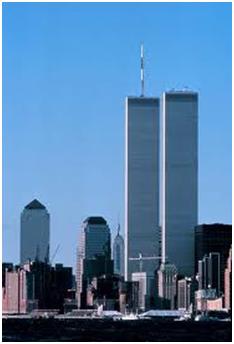
A Meditation for 9/11

If there is calamity in a city, will not the LORD have done it?

– Amos 3:6

God caused 9/11.

God was not caught by surprise, as though the events of that day were something unexpected by him.

God’s intentions were not frustrated, as though he wanted to do one thing but the terrorists forced him to come up with plan B.

God did not permit the destruction in Pennsylvania, Washington D.C and New York, as though he were some cosmic bystander who could have stopped the loss of life but for some reason chose not to.

No.

The sovereign Lord of the universe, the judge of all the earth, caused 9/11.

From all eternity he decreed that awful calamity, for God, “works all things according to the counsel of his will.” (Eph.1:11)

And he deliberately, for his own glory foreordained the destruction of the twin towers.

Nevertheless, he is not responsible for the evil of that sunny September morning.

For to be responsible means to be “liable to give and answer.”

And to whom does God answer?

No one.

For as the Scripture says, “No one can restrain his hand or say to him, ‘What have you done?'” (Dan.4:35)

This is a hard saying. Who can hear it?

God’s people. That’s who.

They praise him for his sovereign mercy and glorify him for his righteous judgment.

This day, may the sovereign Lord of all creation comfort his people who mourn and by his grace call many to repentance.


While it doesn’t explicitly say so, a piece published on the EconocmicPolicyJournal blog indicates that presidential candidate Michelle Bachmann and her husband left their church due to its teaching that the papacy is the Antichrist.

There was a time when understanding this truth was a political asset.  Now, apparently,  it’s an embarrassment.  But then again, so is the sight of a woman running for president.  Baby, we’ve definitely come a long way.

Read the article here.

According to an article posted on CNBC, kids are natural born capitalists. The article quotes the abstract from a psychological study that supports this view. The abstract reads,

Rather than being learned from parents, a concept of property rights may automatically grow out of 2- to 3-year-olds’ ideas about bodily rights, such as assuming that another person can’t touch or control one’s body for no [sic] reason, Friedman proposed…

Friedman’s team presented a simple quandary to 40 preschoolers, ages 4 and 5, and to 44 adults. Participants saw an image of a cartoon boy holding a crayon who appeared above the word “user” and a cartoon girl who appeared above the word “owner.” After hearing from an experimenter that the girl wanted her crayon back, volunteers were asked to rule on which cartoon child should get the prized object.

About 75 percent of 4- and 5-year-olds decided in favor of the owner, versus about 20 percent of adults.

Hmmm…I hate to admit this, but it appears Hillary Clinton may have been partially right: it takes a village – not to mention expensive, long-term indoctrination in “institutions of learning”- to raise a socialist.

As Scripturalists (those Christians who hold that the Bible has a monopoly on truth), we look on studies of this sort with a certain amusement. On one hand, the study does nothing to prove that the children are right and the adults wrong. Moral principles are never established by scientific experimentation. But while science – whether psychology or any other science – does not establish truth, it can at times present its largely atheist devotees with a well-deserved poke in the eye. At the very least, it has to be galling to all the central planners out there who recoil at the thought that someone, somewhere, in some way is using his property in a manner not regulated or approved by the masters of the universe.

Of course rather than explaining the children’s good sense of right and wrong as originating in their idea of bodily rights (where this idea comes from the abstract does not say), Christians would argue that the children’s moral sense is a result of their being made in the image of God, their minds lighted by Christ, “That was the true light which gives light every man coming into the world” (Jn.1:9). That light tells us negatively that theft is wrong, “You shall not steal,” (Ex.20:15) and positively that an owner has the right to use his property, “Is it not lawful for me to do what I wish with my own things” (Matt. 20:15)?

Yes, I know this is a hard pill for the various and sundry collectivists, fascists, central planners and professional busybodies who run our country and delight in lording their authority over others, but Jesus is a capitalist and the Bible is a capitalist document. And children, it seems, understand the morality of capitalism better than most adults.

Cultural reform efforts are not primarily about religious doctrine but social justice. – Scott Klusendorf, The Case for Life.

Over sixty years of neo-evangelical leaven has had its effect on American Christianity, and nowhere is this more clearly seen than in the pro-life movement. Today it is difficult, if not impossible, to find pro-life authors and organizations that take seriously the Bible’s commands not to yoke in ministry with unbelievers. On the contrary, ecumenism is the default position of the pro-life community, and woe to any pro-life advocate who fails to toe the ecumenical party line.

Scott Klusendorf is one prominent pro-lifer who attempts to defend the ecumenical position, and his arguments are worth examining. In his book The Case for Life, Klusendorf includes a chapter titled “Here We Stand: Co-Belligerence Without Theological Compromise,” in which Klusendorf sets forth the reasons why, in his view, the pro-life movement, “must be broad-based and inclusive,” rather than narrowly evangelical. There are several problems with Klusendorf’s thinking in this chapter, the first of which is the deliberately misleading language of the chapter title. “Here We Stand” is obviously a reference to the brave words spoken by Martin Luther before the Diet of Worms, and by quoting them Klusendorf is attempting to cloak himself in Luther’s mantel. But his use of these words is simply doublespeak, for Luther uttered these words in the context of distinguishing the truth of the Gospel from the errors of Rome, while Klusendorf, on the other hand, perversely parodies the language of Luther, not for the purpose of distinguishing truth from error, but instead to blur the line between them.

Klusendorf starts off the chapter writing,

Evangelical Christians [as opposed to what, Romanist or Orthodox Christians?] committed to sound doctrine must distinguish themselves theologically from people who reject fundamental truths of the Protestant Reformation. These truths must never be discarded so as to achieve greater unity with non-evangelicals.

That raises an important question: Do evangelicals forsake their core beliefs when they unite with Catholics, Jews and other religious groups to address cultural issues?

For Klusendorf the answer is no. But what does Klusendorf think are the core beliefs of evangelicals? The historic meaning of ‘evangelical’ is someone who believes in the authority of the Bible alone and salvation by faith alone. Romanists, Jews and other religious groups deny these tenants. If the answer to Amos’ rhetorical question, “Can two walk together, unless they are agreed?,” is no, and it is, then there is no basis for evangelical co-belligerence with these groups.

Klusendorf continues,

Let me begin with an observation. Cultural reform efforts are not primarily about religious doctrine but social justice. To work they must be broad and inclusive.

Here, Klusendorf shows a shocking ignorance of what pro-life work actually is. For unlike what he and many other confused evangelicals believe, pro-life ministry is not a work of cultural reform, but an extension of the Great Commission, a command given to Christians only. For in addition to his injunctions to make disciples and baptize, Jesus also ordered his disciples to teach, “all things that I have commanded you,” one of which was God’s prohibition of murder.

There are other fallacious arguments in this short chapter, some of which I hope to address later, but for now it is enough to say in short that Klusendorf’s error is that he separates what he should unite, in order that he may unite what he should separate. He separates pro-life work from the command of the Great Commission, seeing it as something that can be pursued with equal effectiveness by both Baptists and Buddhists, so that he can unite Christians and unbelievers the common cause of pursuing “social justice,” a term frequently used by Marxists and Romanists alike when attempting to justify their long-running war on private property.
 

According to the Centers for Disease Control, during 2006 there were 846,181 reported abortions in the US. This worked out to 236 abortions per 1,000 live births among aged 15-44. Or to put it another way, an American child had a 1 in 5 chance of being murdered in his mother’s womb. Now consider this: according to FBI statistics New Orleans had the highest murder rate in the nation in 2009 with 0.52 murders per 1,000 people, meaning that an American mother’s womb is over 45,000% more dangerous than the than the most violent American city.

Now it’s tempting to look at a this statistic and say, “this is a terrible problem, we have to do something,” and proceed to devise a solution without ever asking the more profound question, Why is this happening? What philosophy, what ideas, what worldview has allowed this state of affairs to obtain? In other words, do we treat abortion as an isolated problem, or is it a symptom of something larger?

Here’s how Gordon Clark answered this question. He wrote,

    “A few paragraphs back I made mention of morality. Let us ask, why do so many women murder their own babies, or at least pay a hired     assassin to kill or half-kill the child and throw his quivering body into a garbage can? Why does the cruel vixen kill her own child?     Few people give the basic answer. She kills her baby because she rejects the doctrine of the Trinity. The Ten Commandments forbid the     crime of murder. But why should anyone pay attention to the Ten Commandments? The answer to this why is found in the introduction:     “I am the Lord thy God.” If that statement is not true, then abortion, child abuse, torture, drug addiction, theft, and anything else are     matters only of personal preference. The basic question is not what is right or wrong, though this question has a derivative status.     But the basic question is, What is true?” – Gordon Clark, “The Logos,” The Trinity Review, 2008.

Now that’s insight. Abortion is first a symptom. Having rejected God, we’ve become a nation of Pilates who cynically ask, “what is truth?,” as we calmly go about the business of murdering children. The only solution to this problem is to reconcile God and man, and the only hope of effecting this reconciliation is the widespread preaching of and belief in the Gospel of Jesus Christ.

Of course, this immediately rules out the ecumenical approach so loved by American Neo-Evangelicals: co-belligerence with Rome. Rome has no Gospel, it has no good news. Therefore, it has nothing to offer those who seek to stop abortion. Preaching the Gospel comes first, stopping abortion second. When Christians protest abortion and fail to observe this order, they waste their time and insult Christ.

Way to Go Dr. No

“The United States is in a time of economic crisis, but this is no excuse to abandon the principles that have built this great country and spread its ideals to the darkest recesses of the planet. Rep. Paul has abandoned this mission, abandoned the United States’ citizens, and abandoned the citizens of the world in their quest for their God-given natural rights.” – Jordan Marks, Senior National Director Yang Americans for Freedom

As the saying goes, ROFLOL. There’s nothing, and I mean nothing, funnier than watching establishment conservative types have an aneurism after listening to a Ron Paul speech. The echoes of Rep. Paul’s words to CPAC (Conservative Political Action Conference) had barely died away when the spoon bangers at Young Americans for Freedom decided to give Dr. Paul the left foot of fellowship – pace Sean Gerety – by booting him off the organizations advisory committee.

Check out the speech that garnered Dr. Paul the CPAC straw poll victory and the enmity of Young Neocons for Statism.


Now that’s what I call rockin’ the free world.

The Power of Ideas

Here’s a quote from someone I’m not at all inclined to cite favorably, nevertheless the following is an excellent point,

[T]he ideas of economists and political philosophers, both when they are right and when they are wrong, are more powerful than is commonly understood. Indeed the world is ruled by little else. Practical men, who believe themselves to be quite exempt from any intellectual influences, are usually the slaves of some defunct economist. Madmen in authority, who hear voices in the air, are distilling their frenzy from some academic scribbler of a few years back. – John Maynard Keynes, The General Theory of Employment, Interest, and Money, p.683.

Too often Christians dismiss the intellect and elevate feelings, what they call the heart, to a place of prominence. But the Bible knows nothing about a heart/head dichotomy. In the Bible, the heart and the head, or better, the heart and the mind are the same thing. Paul tells us we have the mind of Christ. John tells us that it is Christ the Logos, or Logic of God who lightens our minds. As Christians, therefore, we ought to have at least as much appreciation for the power of ideas as the pagan Keynes.

“At the same moment that Jesus is being proclaimed king of Israel by the multitudes on Earth, the seventh trumpet is sounding in Heaven by an angel and a multitude of voices cry out, ‘the kingdoms of this world…’ And while there is all this noisy praise that is going on to Jesus Christ in Heaven there is all this noisy praise with the loud hosannas that is occurring at the triumphal entry on Earth. The proclamation in Heaven is accompanied with loud voices and peals of thunder. And it’s here that the heavenly and earthly scenes begin to merge…” – Steve Carpenter comparing the events of John 12 with the events of Revelation 12 during Session 4 of the January 2006 Unlocking Revelation II Conference.

When I was researching my book about Knox Seminary, one of the stranger teachings I discovered in the John-Revelation Project (JRP) – a series of “study papers” apparently co-authored by Knox Adjunct Lecturer Steve Carpenter – was its assertion that both the Gospel of John and Revelation tell the same story but from different perspectives. In other words, the authors of the JRP would have us believe that the events that take place in John are the very same events that take place in Revelation, but that John gives the earthly perspective, and Revelation the heavenly perspective on these events.

The Steve Carpenter citation at the top of this post is from a seminar that was held at Coral Ridge Presbyterian Church in January 2006 and was used as a forum to present material from the JRP to the general public. This, however, is not the only time that the authors of the JRP – whose leader, Warren Gage, is Dean of Faculty at Knox Seminary – have made this assertion. In JRP Study Paper Number One they wrote,

Taken together, the Fourth Gospel and Revelation constitute a literary diptych…the two books of John offer a spatial horizon depicting the creative struggle of Jesus both from the perspective of Earth (John) and of Heaven (Revelation)

The Fourth Gospel’s Joshua typology largely tracks the account of the conquest of Canaan, beginning with the crossing of the Jordan and depicting two campaigns, one in the south (Judea) and one in the north (Galilee). The climactic battle involves the struggle of Jesus as the True Joshua against the confederated enemies of God, led by Jerusalem. This epic struggle occurs, from one perspective, on Earth, depicted in the Gospel of John. Revelation portrays the same struggle from the perspective of Heaven.The Knox Seminary Faculty, JRP Study Paper No. 1, (2006); quoted in Steven T. Matthews, Imagining a Vain Thing, (Trinity Foundation, 2008), 42. Italics added.

This statement suggests that the JRP authors, Steve Carpenter among them, are Full Preterists, those who assert that all eschatological events in Revelation have already been fulfilled. I say this, because, if the authors believe that all the events in the book of John have already taken place, and John and Revelation tell the same story, by good and necessary inference the JRPers must believe that all the events in Revelation already have taken place. But the JRP authors inconsistently reject Full Preterism, claiming that there are certain passages in Revelation that pertain only to the future.

Continue Reading »