Feeds:
Posts
Comments

Archive for the ‘Scripturalism’ Category

Section Summary: Truth, contrary to what contemporary philosophers and theologians tell us, is a unified system. Although the unity of truth does not prove the existence of an omniscient God, it does accord well with Christian belief in such a being. Christianity is the system of truth in the mind of this omniscient God, and there is no room in this system for “truth” derived from any other source. Naturalism and Christianity do not mix. Divine omniscience and the systematic unity of truth do not imply that one must know everything in order to know anything. Partial knowledge is still knowledge.

In the previous section of this chapter titled The Questions of Philosophy, Gordon Clark raised a number of basic philosophical questions: What is the best kind of government? What is the purpose of life? Is there any distinction between right and wrong? As discouraging as it can seem to pose such questions – Clark points to the myriad sources of deception and distortion that make it appear hopeless to ever get a satisfactory answer to any of them – there is a benefit in asking them. Clark notes,

“Discouraged though one may be by this time and paralyzed at the immensity of the task, yet even the asking of these questions results in a gain. Throughout the pages ahead this point will be illustrated constantly so as to develop a detailed understanding of the matter; but the reflective reader must already see what had previously escaped his attention, that these questions are all interrelated. An answer to any one of them affects the answer to every other. And this is an extremely important conclusion.” (CVMT, 22)

For those new to Clark, note well what he says here: Truth is systematic. The questions of philosophy are not intellectual islands wholly unrelated to each other, but rather are linked together with the answer to one bearing on all others. For example, the political question “What type of government is best?” cannot be separated from the epistemological question “How do you know what type of government is best?” But while Clark is absolutely correct in what he says here, nevertheless many philosophers deny his point. One such thinker was William James, who, as Clark notes, stressed the disconnectedness of things. But if James is right, what hope do we have for regaining any stability in our civilization? The answer, it seems to me, is none. Or as Clark points out in rather understated fashion,

“It would be surprising, would it not, if social stability could be based on incoherence, or even large-scale disconnectedness?” (CVMT, 23)

One could make a good argument that the increasing instability of our civilization is due to the fact that the prevailing modern worldview sides with James rather than Clark. This disconnectedness shows up throughout our society. For example, I have long been of the opinion that the contemporary philosophical denial of systematic truth explains much of the decline in Western art over the past century. Modern architecture is unsightly, modern painting unattractive, modern music unlistenable.

In the case of music, I can draw on my own personal experience to provide a case in point. Back in the day when I was a music student, I used to play in the conservatory’s brass choir. One evening when I was approaching the rehearsal hall, I heard the cacophonous sound of a group of musicians warming up. If you have ever been to an orchestra concert, you know the sound. Before the concert starts, the musicians all show up on stage, each one playing by himself with the sound being something like a great roar. As I stepped into the rehearsal hall, I looked up and, much to my surprise, saw the conductor on the podium waiving a baton before an assembled group of musicians. The cacophonous roar that I heard, that was the sound of a piece of music. “Good grief,” I thought to myself, “if I can’t tell the difference between random noise and an actual composition, the art of music is in serious trouble indeed.”

In contrast to dissonant modern philosophical systems that offer us no hope – in art, politics or religion – Clark proposes a system of philosophy based on the idea that an omniscient God has furnished us with systematic truth. Clark writes,

“The discouragement, the reflection, the suspicion of the previous pages do not prove or demonstrate the existence of an omniscient God; but if there is such a God, we may infer that all problems and all solutions fit one another like pieces of a marvelous mosaic…

Instead of a series of disconnected propositions, truth will be a rational system, a logically-ordered series, somewhat like geometry with its theorems and axioms, its implications and presuppositions. Each part will derive its significance from the whole. Christianity therefore has, or, one may even say, Christianity is a comprehensive view of all things: It takes the world, both material and spiritual, to be an ordered system.” (CVMT, 23)

Good Presbyterian that I am, I’m not accustomed to outbursts of enthusiasm. But for all that, it’s hard to read Clark’s comments and not shout “Amen!” at the top of my voice. Seriously. What a blessed relief from the depressing nonsense you usually hear from philosophers. It’s like hearing a Bach sonata suddenly break forth from the midst of some awful 12- tone cacophony or a cool, watery oasis in a scorching, pitiless desert.

Clark continues,

“Consequently, if Christianity is to be defended against the objections of other philosophies, the only adequate method will be comprehensive…This comprehensive apologia is seen all the more clearly to be necessary as the contrasting theories are more carefully considered. The naturalistic philosophy that engulfs the modern mind is not a repudiation of one or two items of the Christian faith leaving the remainder untouched; it is not a philosophy that is satisfied to deny miracles while approving or at least not disapproving of Christian moral standards; on the contrary, both Christianity and naturalism demand all or nothing: Compromise is impossible…Politics, science, and epistemology must all be one or the other.” (CVMT, 23)

In my pre-Clarkian days I suffered from the false idea that while the Bible was authoritative in matters of salvation and morals, truth in politics, economics and science was found by reading real experts like Plato, Locke and Darwin. Nope, says Clark. There can be no compromise between the system of truth found in the Bible and the philosophical systems of the world. The Bible is authoritative in all areas of philosophical inquiry.

Finally, Clark ends this section by making an important point about the possibility of partial knowledge. Clark writes,

“The hypothesis of divine omniscience, the emphasis on the systematic unity of all truths, and the supposition that a particular truth derives its meaning or significance from the system as a whole does not imply that a man must know everything in order to know anything.” (CVMT, 23)

Suffice it for now to say that this statement has some bearing on the Clark-Van Til controversy that has plagued American Presbyterianism for nearly seventy years. Clark claimed that if a man and God held at least one idea in common, it could be said that their knowledge coincides. This is important for the reason that if God’s knowledge and man’s knowledge can be said to coincide at even one point, this makes it is possible for man to possess truth about God. God and man both know two plus two equals four.

Van Til, on the other hand, argued that God’s knowledge and man’s knowledge do not coincide at a single point, because God’s knowledge of a truth is infinite – he knows any given truth, two plus two equals four for example, in relation to all other truths – while man can never have this exhaustive knowledge of even one truth. This means that man can never know a truth as God knows it. But if God knows all truth, and man does not know any truth as God knows it, this implies that God’s knowledge and man’s knowledge do not coincide at a single point. And if God is omniscient, if he possesses all knowledge, this leaves man to wallow in complete ignorance. A depressing state of affairs, that. But then, I’m a Clarkian and not a follower of Van Til, so this is not an issue for me. To paraphrase Machen: I’m so thankful for God’s systematic, knowable truth. No hope without it.


Read Full Post »

Those coming to philosophy for the first time often find it at once interesting and frustrating. Clark likens philosophy to a puzzle that can, on the one hand, delight and amuse, and, on the other, frustrate and bewilder. Some people find it boring, thinking it has no practical value. Others find philosophy intimidating and try to ignore the subject altogether. But love it or hate it, one thing’s for certain: you cannot avoid it. The reason for this is simple, philosophy is the most basic of intellectual disciplines. It’s province is the world of men and things.

Clark provides an interesting quote from Blaise Pascal, a famous 17th century French mathematician and philosopher, in which Pascal states,

Man is but a reed, the weakest thing in nature; but he is a thinking reed. It is not necessary that the entire universe arm itself to crush him. A vapor, a drop of water suffices to kill him. But though the universe should kill him, man would still be nobler than what kills him, because he knows that he dies; and the advantage that the universe has over him, the universe knows nothing of. Thus all our dignity consists in thought.

Pascal, as does Clark, distinguishes between men and things and holds than man is superior the inanimate universe. Anyone who has studied contemporary philosophy probably finds their view rather striking, inasmuch as a great deal of contemporary thought would subordinate man to nature. Several years ago there was a popular bumper sticker – popular at least in some circles – that read, “The earth does not belong to man, Man belongs to the earth.” For some people, this blatant paganism represented the very height of spirituality. Others, who were raised with some knowledge of Christianity and the Bible, perhaps found this statement absurd. But whether or not one agrees or disagrees with the notion put forth on the bumper sticker, that person must answer this question: How do you know?
(more…)

Read Full Post »

Does anyone write a better foreword than John Robbins? Of course, were someone to put that question to me, I would have to respond, “I don’t know, since I have not read every foreword by every author.” On the other hand, were someone to ask me whether I had ever read a better author of forewords than John Robbins, I could answer with confidence, “no.” I’ve been a admirer of Robbins’ work for over ten years now, and it all started with my reading his introduction to The Everlasting Righteousness. His writing was crisp, to the point and forceful. I was hooked at once. When I got to the end, I made a mental note to myself that the author was someone named John Robbins. “I’ve never heard of John Robbins,” I said to myself, “but that was really good; I’ve never read anything like it.”

Robbins was a remarkable scholar. He had an extraordinary ability to present systematic truth in a way that is accurate and understandable. I’m convinced that one could spend years reading through whole libraries of books and come away with less sound teaching than he would get reading one or two essays by Robbins. As a personal testimony, I can say that the Lord has been taught me more truth from his Word through the ministry of John Robbins and The Trinity Foundation than any other source. It’s not even close.

I mention all this as a way of introducing A Christian View of Men and Things (CVMT), because it was John Robbins who wrote the foreword to the book, and I think it wise to start by looking at what Robbins wrote before diving into the text of CVMT proper. Robbins foreword can be summarized thus:

  1. The West is collapsing and many have noticed and commented on this ongoing collapse, but few understand the reason for it;
  2. The West is collapsing, because Christianity, the foundation of Western Civilization, has all but disappeared from the West;
  3. Clark argues in CVMT that if the collapse of the West is to be stopped and reversed, Christian, not secular, philosophy must be used to answer contemporary questions of history, politics, ethics, science, religion, and epistemology;
  4. CVMT is an outline of Clark’s Christian philosophy;
  5. Clark argues that the reason Christianity ought to be believed and other philosophies rejected is because Christianity is true and other systems of thought are not;
  6. Christianity has a systematic monopoly on truth;
  7. Because Christianity has a systematic monopoly on truth, it is impossible to successfully combine the Christian system of thought with any other non-Christian rival;
  8. The collapse of the West can be seen as the collapse of Thomistic philosophy’s attempt to do this very thing – combine Scripture with secular philosophy, in this case the attempt is to combine Scripture and the empiricism of Aristotle – and the West’s choosing of secular philosophy rather than Christ.
    (more…)

Read Full Post »

Atheist Bullies

Christopher Hitchens now believes in God. I can say this with certainty, because the noted journalist and outspoken atheist died this week. News of his passing prompted me to skim through an anthology he put together a few years ago called The
Portable Atheist. And even though I haven’t made it very far, I have a few thoughts on what he wrote.

Hitchens isn’t the first writer of the “new atheist” school whom I have read. A number of years ago I read a book by Richard Dawkins called The Blind Watchmaker, in which Dawkins claimed to have overthrown the Biblical doctrine of creation, or at least intelligent design (they’re not the same thing, but that’s another article). As a Christian, I approached the book with a bit of fear and trembling, concerned that the Oxford scholar would offer some brilliant, irrefutable argument in favor of evolution that would utterly devastate my faith the Bible.

I read and read. I waited and waited.

Nothing.
(more…)

Read Full Post »

Clark on Colossians

Wives, submit to your own husbands, as is fitting in the Lord. Husbands, love your wives and do not be bitter toward them. (Col.3:19)

The Biblical doctrine of marriage is among the most hated teachings of Scripture. It is under constant assault both within and without the walls of the visible church. One of the reasons for this overt hostility, perhaps the main reason, is what the Bible has to say about the relationship between husband and wife. For the Bible does not support the sexual egalitarianism demanded in marriage by feminist theory, but rather Scripture teaches the marital relationship is one of headship and submission.

Of course, some feminists are more radical than others. Emma Goldman, a prominent anarchist from the early 20th century, thought of marriage as a bad insurance policy and longed to see the institution ended altogether. She wrote,
(more…)

Read Full Post »

Beware lest anyone cheat you through philosophy and empty deceit, according to the tradition of men, according to the basic principles of the world, and not according to Christ. (Col 2:8)

Before I came to the Scripturalism of Gordon Clark and John Robbins, my attitude toward philosophy was a mix of indifference, fear. Indifference, because I the little bit that I had been exposed to had left me baffled, fear, because I thought that I would be easy prey for deceptive teaching. So as is the case with many Christians, I labored hard to avoid the subject altogether, and Colossians 2:8 seemed make this avoidance easy to justify. “After all,” I thought to myself, “it tells us right there in Scripture not to be cheated by philosophy. So to ensure that I’m not cheated by it, I won’t study it at all.”

Of course, the verse says nothing about not studying philosophy, it simply enjoins Christians not to be cheated by it, which is a very different thing, so my conclusion really didn’t follow from the verse. But being ignorant of logic, it’s not surprising that I would fall into this common logical blunder.

Years later when I began to study Reformed theology, I met a Presbyterian fellow who intended to study for the ministry. He was in college at the time and studying, of all things, philosophy. This struck me as rather odd, since I had long considered philosophy the province of screaming atheist lunatics, not Christians. But while I was surprised at his major, I was intrigued by the fact that he believed training in philosophy would be helpful to him in his ministry. Not long after that, I was introduced to Gordon Clark’s work.
(more…)

Read Full Post »

Recently, I was listening to a John Robbins lecture on apologetics and something he said hit me like a ton of bricks.  Robbins was speaking about Rom.1:18-21, and his explanation of a key phrase in the passage radically altered my understanding of the text.  

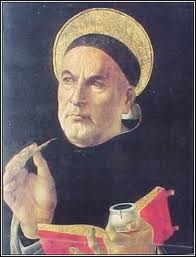
The most popular method of Christian apologetics today is evidentialism.  And those who use this method argue for the truth of Christianity by appealing to sense experience.  The most famous of all evidentialist apologists is Thomas Aquinas, whose best known defense of Christianity is the cosomological argument.  In this argument, Thomas founded his case for the existence of God on the fact that, “it is certain and evident to our senses, that in the world some things are in motion.” Many of today’s best know Evangelical apologists accept Thomas’ argument, including such respected scholars as Norman Geisler, R.C. Sproul, and John Gerstner.

Evidentialists have long considered Romans chapter 1:18-21 as a primary proof text for their position.  The passage reads

For the wrath of God is revealed from heaven against all ungodliness and unrighteousness of men, who suppress the truth in unrighteousness,  because what may be known of God is manifest in them, for God has shown it to them.  For since the creation of the world His invisible attributes are clearly seen, being understood by the things that are made, even His eternal power and Godhead, so that they are without excuse, because, although they knew God, they did not glorify Him as God, nor were thankful, but became futile in their thoughts, and their foolish hearts were darkened. – NKJV

Evidentialists take the phrase “being understood by the things that are made” to refer to the non-human physical universe.  They understand the passage to say in effect that all men have knowledge of God by seeing, touching, smelling or hearing the physical stuff of this world.  For example the New Geneva Study Bible, of which R.C. Sproul was the general editor, commenting on Rom.1:20, states,

Divine invisibility, eternity, and power are all expressed in and through the created order…The invisible God is revealed through the visible medium of creation.

Evidentialist Charles Hodge states much the same thing when he writes,

This divine revelation has been made apo ktiseos kosmou, from the creation of the world, not by the creation; for ktisis here is the act of creation, and not the thing created; and the means by which the revelation is made, is expressed immediately by the words tois poiemasi, which would then be redundant.  The poiemata tou theou, in this connection, are the things made by God, rather than the things done by him.  – Commentary on Romans

But what if “the things that are made” [tois poiemasi Gk.] refers to something other than non-human creation?  Hodge himself seems not to know what to make of the words “the things that are made” when he calls them “a redundancy.”  But what if the words “the things that are made” are not a redundancy but in fact refer to something new?  What if “the things that are made” is a reference to men?

This is the point Robbins made in his lecture, and it’s the point that I missed the first few times I listened to it.  And although Robbins’ reading of the text may seem like a stretch at first blush, there is good support for it.  For while the most common reading of Romans 1:20 identifies “the things that are made” [poiema]with the non-human physical elements of the world, the only other time poiema is used in the NT, Ephesians 2:10, it clearly functions as the predicate of a human subject. The passage in Ephesians reads,

For we are His workmanship [poiema], created in Christ Jesus for good works, which God prepared beforehand that we should walk in them. 

Here, “we” are the subject of poiema, which is rendered “his workmanship.”  And if poiema can refer to people in Ephesians, is it that much of a stretch to believe that poiema could also refer to people in Romans 1:20?  By understanding poiema in this way, we can render Rom.1:20 as , “For since the creation of the world, His invisible attributes are clearly seen, being understood by the men whom He has created, even His eternal power and Godhead.”  If Robbins is correct, and I believe that he is, Romans 1:20, rather than being an evidentialist stronghold, is in truth a scripturalist citadel.     

 You can hear Robbins’ full lecture here under Collection 5:  Defending the Faith, Level 2 , Lecture 2.  The relevant portion starts at the 34 minute mark.

Read Full Post »

The preaching and belief of the Gospel changes not only individuals, but whole societies.  As Christians we understand the former, but often have a poor grasp of the latter.  As a youngster, I was taught nothing by my public schools about the great debt modern civilization owes to Christianity.  Ancient Greece and Rome, I was told, were the basis of modern science, democracy and civlization as a whole.  It’s safe to say no one in my classes, including me, had ever heard of E. C. Wine’s The Hebrew Republic or Max Weber’s The Protestant Ethic and the Spirit of Capitalism.  Our history books, however, did give us one or two paragraphs on a minor event that took place in the 16th century, something called the Protestant Reformation.  

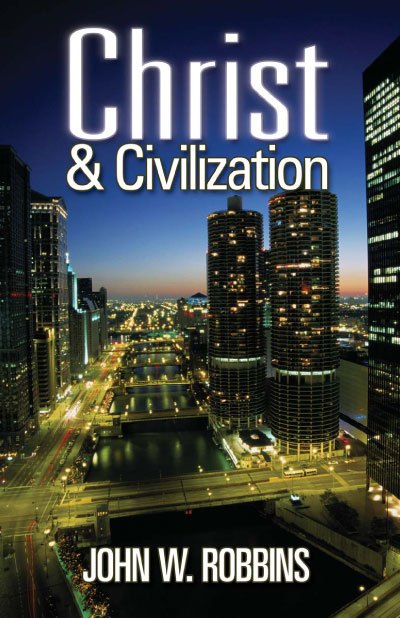
Perhaps the best treatment I have ever read of the contrast between Christian and non-Christian civilization is John Robbins’ book Christ and Civilization.  In it, Robbins paints a stark picture of just how unjust and brutal “glorious” ancient Greek and Roman societies really were.  This should come as no surprise to anyone who has read even a little history.  The enormities of communism and fascism in the 20th century occurred, not in a Christian contex, but in an atheistic one.  Our own nation is rapidly sinking under the weight of similar foolish ideas, and unless Christ grants widespread repentance, we will surely experience the same sort of oppression as did the people of those societies.  Brutality is both the result of and the punishment for the rejection of Christ.  

Without further delay, I give you the opening paragraphs of Robbins’ book.  

Each December 25 and January 7 nearly two billion people celebrate the birth of Jesus Christ.  The celebration is doubly ironic, for the dates are not his birthday, and most celebrants have forgotten – or, more likely, have never learned – the meaning of his birth.  One of the most enthusiastic celebrants of Christmas I have known was an atheist.  She loved the colorful decorations, the intoxicating smells, the cheerful songs, the plentiful food and drink, the smiling faces of children, exchanging gifts, and the feeling of goodwill, however fleeting.  She, like hundreds of millions of others, was a devotee of Christmas, but not a disciple of Christ.

Hundreds of millions of churchgoers, unlike my atheist acquaintance, add religious feelings to their list of things to like about Christmas:  They seek and find feelings of awe and wonder from visiting cathedrals, listening to choirs and oratorios, observing rituals and processions performed by gaudily attired priests; and they think those feelings of transcendence are somehow Christian.  The churchgoers are more deluded than the atheist.

This profound ignorance of Christ – an ignorance that does not even realize it is ignorance – is a tragedy of eternal proportions, for the life of Christ – his birth, life, death, and resurrection – is not only the most important event in the history of mankind, but far more important, the only way to Heaven.  In fact, if Christ were not the only way to Heaven, his earthly life would have no importance at all.  Christ’s life is the point from which we date all of world history, and it is impossible to understand history and Western civilization,  especially the United States, without understanding Christianity.

Read Full Post »

About ten years ago a friend of mine gave me a copy of Horatius Bonar’s The everlasting Righteousness.  To say this book effected a big change in my life would be an understatement.  In addition to furthering my understanding of justification by faith alone, the central principle of Christianity, it also served as my introduction to Scripturalism, since the edition I read was published by The Trinity Foundation. 
It’s been a few years since I’ve read The Everlasting Righteousness, and reading it again seemed like a good antidote to the NT Wright/Justification by Faith (but not by Faith Alone) nonsense going on at ETS.  So I sat down with the book tonight and didn’t make it far before I found a gem of a paragraph in the book’s preface.  Here it is in full,

The doctrine of another’s righteousness reckoned to us for justification before God is one of the links that knit together the first and the sixteenth centuries, the Apostles and the Reformers.  The creeds of the Reformation overleap fifteen centuries and land us at once in the Epistle to the Romans.  Judicial and moral cleansing was what man needed.  In that epistle we have both the imputed and imparted righteousness – not the one without the other; both together, and inseparable, but each in its own order, the former the root or foundation of the latter.       

The imputed righteousness of another, Jesus Christ, is the only saving hope for fallen sinners.  Of course the world in its “wisdom”  hates and rejects this truth.  But for the believer it is a tree of life.

Read Full Post »

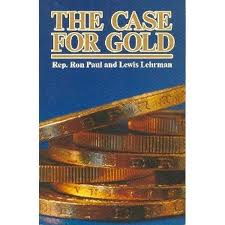
The Case for Gold

“More and more people are asking if a gold standard will end the financial crisis in which we find ourselves.  The question is not so much if  it will help of if we will resort to gold, but when.  All great inflations end with the acceptance of real money – gold – and the rejection of political money – paper.  The state is now set; monetary order is of the utmost importance.  Conditions are deteriorating, and the solutions proposed to date have only made things worse.  Although the solution is readily available to us, powerful forces whose interests area served by continuation of the present system cling tenaciously to a monetary system that no longer has any foundation.  The time at which there will be no other choice but to reject the current system entirely is fast approaching.  Although that moment is unknown to us, the course that we continue to pursue will undoubtedly hurtle us into a monetary abyss that will mandate a major reform.”

     – The Case for Gold

Timley quote, you say?  Indeed it is.  But what’s amazing about the above paragraph is that it was written by Ron Paul way back in 1982.  Those who were alive then recall the early years of the Reagan administration were tought economic times, tough enough to prompt Congress to at least study the possibility of returning the country to the gold standard.  And if people in 1982 were concerned about out of control federal spending, deficits and inflation,  how much more should they be today!

I highly recommend this book.  It’s an outstanding monetary history of the United States and presents a case for sound money that’s consistent with what Scripture teaches on the subject.  Another thing about this book of interest to Scripturalists is this: if you look real close at the Acknowledgments page, you’ll see that a certain John Robbins is given credit for his assistance with the book.  A while back I read somewhere – I want to say it was on Sean Gerety’s God’s Hammer blog – that John had a large hand in writing the book, much larger that the Acknowledgments lets on.         

Read Full Post »

« Newer Posts - Older Posts »