Feeds:
Posts
Comments

Archive for the ‘Roman Catholicism’ Category

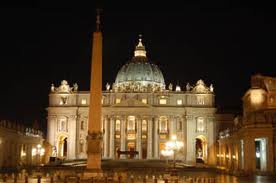
Since the financial crisis began in 2008 – talk of recovery notwithstanding, we are still in the midst of this crisis; the debt situation, which spawned the crisis, is worse today than it was at the time of the original collapse – there has been no shortage articles and websites devoted to the current problems. What this author finds interesting is that despite the intense scrutiny given by many observers to organizations such as the Federal Reserve, the International Monetary Fund (IMF), Goldman Sachs, JP Morgan, almost no one in either the mainstream or alternate media seems to be interested in the activities of the what is probably the largest, the wealthiest, and certainly the most secretive organization in international finance today. I’m speaking on none other than the Roman Catholic Church- State (RCCS).

In a remarkable piece posted on the Berean Beacon website, The Financial Crisis and the Papal Economic Offensive, authors Richard Bennett and Ronald Cooper break the silence. They make the case that not only is the Western financial crisis ongoing, but that the policies of the Vatican, far from making things better, actually make the situation worse. The authors center their attack on the Roman Catholic doctrine of the Universal Destination of Goods (UDG). Although many people don’t seem to realize it, Rome has a very different view of private property than the Bible. In Scripture, private property is just that, it is private, the state has no part in regulating its use and certainly has no business in taking it to give to another. In Romanist economics, your property is yours until, well, someone else needs it. At that point, the needy individual has the right to take what is yours and use it for himself, or get the government to do the taking for him. In other words, Roman Catholic economics is socialist to the core.

(more…)

Read Full Post »

Evangelii Gaudium, the recent papal exhortation by Francis I, has been seen correctly by many as an attack on capitalism. Headlines and stories on the internet speak of the pope denouncing “unfettered capitalism” (see here and here), prompting no less a personage than Rush Limbaugh to weigh in on the matter. In his comments on the pope’s exhortation, Limbaugh stated,

“You know, the pope, Pope Francis — this is astounding — has issued an offical papal proclamation, and it’s sad. It’s actually unbelievable. The pope has written, in part, about the utter evils of capitalism. And I have to tell you, I’ve got parts of it here I can share with you. It’s sad because this pope makes it very clear he doesn’t know what he’s talking about when it comes to capitalism and socialism and so forth.”

Limbaugh’s full statement shows an admirable appreciation for capitalism and its role in producing prosperity. At the same time, he also betrays a profound naivety regarding the nature of the Roman Catholic Church-State. Limbaugh, who states in the article that he is not catholic – according to one source I found, he is a non-practicing Methodist – appears genuinely shocked that the Vatican would issue such a statement, and suggests that the harsh, anti-capitalist tone of the exhortation may be due to a mistranslation by leftists. I was unable to find the original language document for Evangelii Gaudium – I assume it is in Latin – to check it against the English version. But given the papacy’s long standing hatred of laissez-faire economics, there is no good reason to assume the pope’s translators got it wrong, and every reason to think they got it right.

(more…)

Read Full Post »

Pope Francis attacks ‘tyranny’ of unfettered capitalism, ‘idolatory (sic) of money,’ ” blared the CNBC headline. “Really,” I thought to myself, “I bet he’s Catholic too.” The new pontiff has wasted no time in leveling his guns at capitalism. Not that that’s any big surprise. As John Robbins documented in his book Ecclesiastical Megalomania, Popes have explicitly railed against capitalism, the economics of the Bible, for over 100 years.

Even a cursory review of the exhortation shows the Pope has roughly the same view of economics as the Occupy Wall Street crowd: the 1% have enriched themselves at the expense of the 99% and the free market is to blame. Writes the Pope,

“In this context, some people continue to defend trickle-down theories which assume that economic growth, encouraged by a free market, will inevitably succeed in bringing about greater justice and inclusiveness in the world. This opinion, which has never been confirmed by the facts, expresses a crude and naïve trust in the goodness of those wielding economic power and in the sacralized workings of the prevailing economic system.”

Of course as a Scripturalist, I prefer to make my appeals to the Word of God, not to “the facts,” but even at that, the Pope’s words fail the test of history. It was capitalism – an economic system based on the private ownership of the means of production – not the socialism of the Roman Catholic Church State, that brought a previously unknown level of prosperity to common people in the nations touched by the Reformation.

The Pope continues his attack on free markets and free men by linking capitalism to contemporary economic problems.

While the earnings of a minority are growing exponentially, so too is the gap separating the majority from the prosperity enjoyed by those happy few. This imbalance is the result of ideologies which defend the absolute autonomy of the marketplace and financial speculation. Consequently, they reject the right of states, charged with vigilance for the common good, to exercise any form of control. A new tyranny is thus born, invisible and often virtual, which unilaterally and relentlessly imposes its own laws and rules.

Now far be it from me to defend the current financial system. It’s an ongoing disaster chock full of bailouts, Quantitative Easing, theft (but I repeat myself), and market manipulation, all rigged for the benefit of the few at the expense of the many. But what it isn’t is capitalism. The Wall Street folks rescued from bankruptcy n 2008, were saved not by capitalism – capitalism would have seen their assets liquidated and their offices closed – but by massive government intervention in the economy. The very sort of thing the Occupy Wall Streeters, the Pope and other socialists seem to think is the cure for what ails us.

Read Full Post »

While it doesn’t explicitly say so, a piece published on the EconocmicPolicyJournal blog indicates that presidential candidate Michelle Bachmann and her husband left their church due to its teaching that the papacy is the Antichrist.

There was a time when understanding this truth was a political asset.  Now, apparently,  it’s an embarrassment.  But then again, so is the sight of a woman running for president.  Baby, we’ve definitely come a long way.

Read the article here.

Read Full Post »

For a long time now I’ve followed Lewrockwell.com.  It’s a libertarian blog touting Austrian economics and anarcho-libertarian politics.  Now while I don’t count myself a libertarian – libertarianism does not take its ethics, politics or economics from Scripture, the requirement for a Scripturalist – and cannot endorse the anarchism advocated by the site, I do appreciate its stand for individual liberty and against big government.

That being said, I’ve always found it odd that a website dedicated to “anarcho-capitalism” as they like to call it would attempt to defend the principles of anarchy and capitalism by using the philosophy of the Roman Catholic Church-State, for Romanist dogma supports neither.  First, Romanist political theory is certainly not friendly toward libertarian anarchy, or for that matter even sober, Biblical constitutional government.  Rather, Rome’s political doctrine of subsidiarity – “according to which, ‘a community of a higher order should not interfere in the internal life of a community of a lower order, depriving the latter of its functions, but rather should support it in case of need and help co-ordinate itsactivities with the rest of society, always with a view to the common good’ ” – is hierarchical and interventionist in the extreme.  

And while its political theory tends toward fascism, Rome’s economic thought is just as oppressive.  In its 1994 Catechism, Rome rails against capitalism by stating,

She [Rome] has likewise refused to accept, in the practice of “capitalism,” individualism and the absolute primacy of the marketplace over human labor…regulating it [the economy] solely by the law of the marketplace fails social justice, for ‘there are many human needs which cannot be satisfied by the market.’ Reasonable regulation of the marketplace and economic initiatives, in keeping with a just hierarchy of values and a view to the common good, is to be commended.   – Catechism of the Catholic Church, 2425.   

Rome, ignoring Christ’s teaching about private property”is it not lawful for me to do what I wish with my own things?,” posits “reasonable regulation of the marketplace” – reasonable in whose eyes? – as a preferable alternative to the Biblical economic model of laissez-faire capitalism.

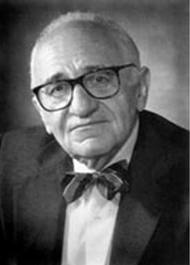
Yet for all this, there are many articles on Lewrockwell.com that attempt to cast Romanism in the role of defender of liberty and Protestantism as its foe.  For example, libertarian stalwart Murray Rothbard, citing Erik von Kuehnelt-Leddihn’s book Liberty or Equality, approvingly sums up Kuehnelt-Leddihn’s argument in an article posted on the website by stating that the book’s,

main gist…is the thesis that Catholicism makes for a libertarian spirit (albeit “anti-democratic”) while Protestantism makes for socialism, totalitarianism, and a collectivist spirit.

Yes of course, we all know how collectivist those Calvinist colonialists were.  Writing in a book review, Rothbard slanders the English Reformation as “The Cultural Revolution in 16th Century England,” and advances the idea that the English Reformers were nothing but a bunch of Protestant bullies who beat up helpless and saintly monks, bishops and cardinals, stripped their altars and stole their lunch money. 

Roman Catholic Thomas Woods regularly advances the idea that Romanism and capitalism are compatible systems and has even written a book on the subject titled The Church and the Market

Now I can have some sympathy for a freedom-minded Roman Catholic scholar who constantly must struggle with the cognitive dissonance arising from the clash of his capitalist principles and the social teaching of the Roman Catholic Church-State.  His is not a fate to be envied. But my sympathy is limited.  For such a man is double minded, refusing to see the screaming contradiction between capitalism and the oppressive economic dogma of Rome.  As James tells us, let not such a man expect that he will receive anything of the Lord.  He is unstable in all his ways.

Read Full Post »
Awhile back, I’m not really sure why, I started getting weekly newsletter emails from a group called InsideCatholic.  And although I don’t recall signing up for their email list, I decided not to unsubscribe since the articles were written for the purpose of explaining and defending Roman Catholic social teaching, an area of particular interest to me.  Not that I agree with the Romanists, mind you.  Far from it.  I find the social and economic teaching of the Roman Catholic Church-State as repellant as its false gospel.  But there’s something to be said for reading the arguments of your opponents. 

The most recent email had an article titled “Does the UCCB [United States Conference of Catholic Bishops] Understand Subsidiarity?”, which turned out to be an interesting conflation of two very different systems of government:  subsidiarity and federalism.  The author, Deal W. Hudson, whose biography states that he’s a Southern Baptist turned Roman Catholic, would have us believe that the US Constitution is compatible with Romanist political philosophy.  Hudson writes,

While the bishops objected vigorously to the presence of abortion funding in the legislation, they seem untroubled by the question of its general constitutionality, one that comports closely with the principle of subsidiarity as articulated in Catholic social teaching. 

It seems that Dr. Hudson is as confused about the Constitution as he is about the Bible, for the principles of the Constitution do not comport with those of subsidiarity.  According to Pope Pius XI, subsidiarity,

is a fundamental principle of social philosophy, unshaken and unchangeable…The state should leave to these smaller groups the settlement of business of minor importance.  It will thus carry out with greater freedom, power, and success the tasks belonging to it, because it alone can effectively accomplish these, directing, watching, stimulating (do these guys sound like good Keynesians or what?) and restraining… – Pius XI, Quadragesimo Anno, 1931, 40-41, in Robbins, Ecclesiastical Megalomania, 152.

(more…)

Read Full Post »

Financial chicanery has been big news in the US the past two years, and now the Vatican, not wanting to miss out on a good thing, has a banking scandal of it own brewing. It seems that the Vatican Bank, also known as the Institute for Works of Religion, is suspected of money laundering.  Currently $30 million of the bank’s money has been impounded by Italian authorities, and Bank’s chairman, Ettore Gotti Tedeschi and director general, Paolo Cipriani, are under investigation.  The Vatican is said to be perplexed and surprised by this turn of events.  For my part,  I’m shocked, shocked!, to hear about scandal in the Roman Catholic Church-State. Really, who would ever suspect such a thing?  

While reading through the various news accounts, one statement from a New York Times article jumped out at me.  The statement read,

In both cases, investigators bypassed the sovereignty of the Holy See by looking into Italian accounts that had received funds from the Vatican Bank.

Notice how the Vatican is said to have “sovereignty.”  How is it that a church can have sovereignty?  Is not that term used primarily – though in error, for God alone is sovereign – of states?  With good reason John Robbins called the Vatican the Roman Catholic Church-State, for it can appear as one or the other depending on what suits its purpose at the time.

For other news accounts of this scandal see here, here, and  here.

Read Full Post »

« Newer Posts