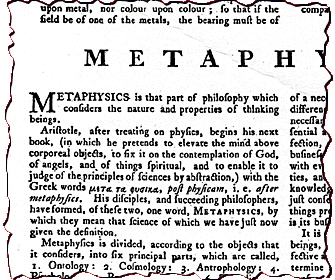
 So far in this series on Christian philosophy, we have looked at three of the four major philosophic disciplines. First was epistemology, the theory of knowledge. It answers the question, How do you know? Second came metaphysics, the theory of reality. For those who have not previously studied philosophy, these terms may seem a bit strange or intimidating. Ethics, the theory of conduct, was third. Ethics is a more familiar term for us. It answers the question, What ought we to do ?
This post will address the disciple on politics. Politics is the theory of government. As you may suppose, there are many different views on government. Men differ on the origin of government – is it a natural institution?; does it arise from the consent of the governed? – the proper scope of government – should government be minimal or involve itself in every area of one’s life? – and what form of government – democracy, republic, or monarchy – is ideal.
The Origin of Government
In his book A Christian View of Men and Things, Gordon Clark raised the question, “How does a government get, not the power, but the right to coerce its people?” This may seem like a strange question to many people. For the most part, folks accept the existence of government in much the same way they accept the fact that the sun rises in the east, or the grass is green, or the sky is blue. But this is an important question. For if government cannot be justified in any form, there is no use in discussing its proper scope or form.
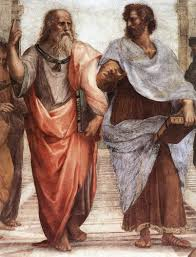
Historically, there have been several answers to Clark’s question. Aristotle, for example, believed that government was a natural institution. In one of his lectures on philosophy, John Robbins described Aristotle’s view thus, “People grow into states the way that acorns grow into oak trees.” Another view is the social compact theory: governments derive their coercive authority form the consent of the governed. Still another view is that government is power. This was the view of historian Oswald Spengler, who held that, “Great statesmen like Caesar or Napoleon act immediately on the basis of a flair for facts. Their action is not sicklied o’er by the pale cast of thought. If indeed ther ar any general principles of politics, they never enter the heads of great men” (Clark, A Christian View of Men and Things, 95). These views of government, diverse as they are, all have one important element in common: God, the God of the Bible, does not matter in any of them.
Christian political theory rejects all these answers to the origin of government. The Bible teaches us, in the words of Gordon Clark, that, “The existence of the state is a partial punishment and cure for sin” (A Christian View of Men and Things, 100). Government bears the power of the sword, the power of coercion, in response to man’s sin. Proof of this can be seen in Genesis 3:24, which reads, “So He drove out the man; and He placed cherubim at the east of the garden of Eden, and a flaming sword which turned every way, to guard the way to the tree of life.”
Civil government was not a natural institution, it was not part of the original created order, it came about after the fall of Adam. Writing in Romans 13 about the civil magistrate, Paul makes this same point where he tells us, “[H]e does not bear the sword in vain; for he is God’s minister, an avenger to execute wrath on him who practices evil.”
(more…)
Read Full Post »




 Lux Lucet