Feeds:
Posts
Comments

Archive for the ‘Economics’ Category

One Hundred Trillion Dollars

One Hundred Trillion dollars. Sound like a fortune, doesn’t it? King Solomon sort of money, no doubt. Well, maybe not so fast. You see, depending on whose dollar you’re talking about, it could be a king’s ransom or it may amount to less than the change in your pocket. Take for instance the Zimbabwe bank note pictured here. I have one just like it on my desk as I write, a 2008 Reserve Bank of Zimbabwe 100 Trillion Dollar bill. I got mine on Amazon for $1.74 plus shipping.

Zimbabwe, you see, experienced a phenomenon known as hyperinflation, which is where a nations currency – whether it’s called a dollar, a drachma or a peso – becomes worthless. The principle reason why inflation, and in extreme cases hyperinflation, occurs is this: : the government creates too much money. Money is not some magical, mystical item. If it has value, it does so for the same reason that all other things have value. It’s not valuable because it’s festooned with pictures of dead politicians, or its ornate engravings, or is signed by the Secretary of the Treasury, or tradition. Money, all money, is valuable because people impute value to it.

(more…)

Read Full Post »

Woe to those who join house to house; they add field to field, till there is no place where they may dwell alone in the midst of the land!.Isaiah 5:8

Isaiah’s thundering indictment of Judah rivets the reader’s attention right from the beginning of the book bearing his name. The accusations fall like hammer blows from the prophets pen. Everything has become twisted, everything perverted: Worship, “I cannot endure iniquity and the sacred meeting” (v13); Civil Society, “righteousness lodged in it, but now murderers” (v21); Business, “Your silver has become dross, your wine mixed with water” (v22); Civil Government, “Your princes [are] rebellious and companions of thieves” (v23); and the Judiciary, “Everyone loves bribes, and follows after rewards. They do not defend the fatherless, nor does the cause of the widow come before them” (v23).

(more…)

Read Full Post »

To see what is in front of one’s nose needs a constant struggle. ― George Orwell

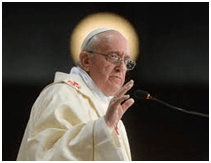
Whether motivated by honest confusion, a sense of embarrassment, or a desire to misrepresent it is hard to say, but much of the public commentary on Evangelii Gaudium (EG), Pope Francis’ recent Apostolic Exhortation, is considerably wide of the mark. By Francis’ own admission, the economic statements in EG line up with the historic economic teaching of the Roman Catholic Church-State, but many commentators today, especially if they happen to be economically conservative Catholics, seem shocked and dismayed by the document’s blatantly anti-capitalist language. “The pope didn’t really mean to attack capitalism, only is abuses,” or, “the pope isn’t talking about the United States,” they are wont to say. But the history of Rome is against them. In fact, given Rome’s long-standing hatred of free markets and free men, it is safe to say that the pope without a doubt intended to attack capitalism and most certainly had in mind the United States when he made his comments. It’s simply a case of Rome being Rome. Unfortunately most Americans, and perhaps most especially most American Evangelicals, are ignorant of both Biblical economics and Rome’s longstanding war against it. And being ignorant of Rome’s doctrines on this subject, they are easy targets for propaganda campaigns designed to mislead them about the principles, history and ultimate intentions of Roman Catholic social teaching.

(more…)

Read Full Post »

Since the financial crisis began in 2008 – talk of recovery notwithstanding, we are still in the midst of this crisis; the debt situation, which spawned the crisis, is worse today than it was at the time of the original collapse – there has been no shortage articles and websites devoted to the current problems. What this author finds interesting is that despite the intense scrutiny given by many observers to organizations such as the Federal Reserve, the International Monetary Fund (IMF), Goldman Sachs, JP Morgan, almost no one in either the mainstream or alternate media seems to be interested in the activities of the what is probably the largest, the wealthiest, and certainly the most secretive organization in international finance today. I’m speaking on none other than the Roman Catholic Church- State (RCCS).

In a remarkable piece posted on the Berean Beacon website, The Financial Crisis and the Papal Economic Offensive, authors Richard Bennett and Ronald Cooper break the silence. They make the case that not only is the Western financial crisis ongoing, but that the policies of the Vatican, far from making things better, actually make the situation worse. The authors center their attack on the Roman Catholic doctrine of the Universal Destination of Goods (UDG). Although many people don’t seem to realize it, Rome has a very different view of private property than the Bible. In Scripture, private property is just that, it is private, the state has no part in regulating its use and certainly has no business in taking it to give to another. In Romanist economics, your property is yours until, well, someone else needs it. At that point, the needy individual has the right to take what is yours and use it for himself, or get the government to do the taking for him. In other words, Roman Catholic economics is socialist to the core.

(more…)

Read Full Post »

Evangelii Gaudium, the recent papal exhortation by Francis I, has been seen correctly by many as an attack on capitalism. Headlines and stories on the internet speak of the pope denouncing “unfettered capitalism” (see here and here), prompting no less a personage than Rush Limbaugh to weigh in on the matter. In his comments on the pope’s exhortation, Limbaugh stated,

“You know, the pope, Pope Francis — this is astounding — has issued an offical papal proclamation, and it’s sad. It’s actually unbelievable. The pope has written, in part, about the utter evils of capitalism. And I have to tell you, I’ve got parts of it here I can share with you. It’s sad because this pope makes it very clear he doesn’t know what he’s talking about when it comes to capitalism and socialism and so forth.”

Limbaugh’s full statement shows an admirable appreciation for capitalism and its role in producing prosperity. At the same time, he also betrays a profound naivety regarding the nature of the Roman Catholic Church-State. Limbaugh, who states in the article that he is not catholic – according to one source I found, he is a non-practicing Methodist – appears genuinely shocked that the Vatican would issue such a statement, and suggests that the harsh, anti-capitalist tone of the exhortation may be due to a mistranslation by leftists. I was unable to find the original language document for Evangelii Gaudium – I assume it is in Latin – to check it against the English version. But given the papacy’s long standing hatred of laissez-faire economics, there is no good reason to assume the pope’s translators got it wrong, and every reason to think they got it right.

(more…)

Read Full Post »

These days, all is not well at the home of the Happy Meal. Against the walkout rumblings among the ranks of fast food workers, President Obama played the populist, announcing his intent to raise the minimum wage from its current $7.25 to $10.10. To my knowledge, Obama’s push for a higher minimum wage hasn’t yet been given a cleaver name. So let me suggest a few. How about the Unaffordable Wage Act of 2013? Or perhaps the Mandatory Unemployment Initiative. The Effective Elimination of Entry Level Employment Effort sports a nice alliterative ring, does it not?

I’m a bit hesitant to opine against hikes in the minimum wage. For in some ways, it’s the more boring things an arm chair economist could do. I mean, who’s going to argue that minimum wage laws don’t result in higher unemployment? I doubt even a good Keynesian like Paul Krugman would take that stand. But while it is widely known that minimum wage laws result in unemployment, what is less well known is origin of such laws. And this makes writing on the subject worthwhile. For while most people are aware of such laws, few realize that this concept was introduced to the US largely through the efforts of the Roman Catholic Church-State.

(more…)

Read Full Post »

Pope Francis attacks ‘tyranny’ of unfettered capitalism, ‘idolatory (sic) of money,’ ” blared the CNBC headline. “Really,” I thought to myself, “I bet he’s Catholic too.” The new pontiff has wasted no time in leveling his guns at capitalism. Not that that’s any big surprise. As John Robbins documented in his book Ecclesiastical Megalomania, Popes have explicitly railed against capitalism, the economics of the Bible, for over 100 years.

Even a cursory review of the exhortation shows the Pope has roughly the same view of economics as the Occupy Wall Street crowd: the 1% have enriched themselves at the expense of the 99% and the free market is to blame. Writes the Pope,

“In this context, some people continue to defend trickle-down theories which assume that economic growth, encouraged by a free market, will inevitably succeed in bringing about greater justice and inclusiveness in the world. This opinion, which has never been confirmed by the facts, expresses a crude and naïve trust in the goodness of those wielding economic power and in the sacralized workings of the prevailing economic system.”

Of course as a Scripturalist, I prefer to make my appeals to the Word of God, not to “the facts,” but even at that, the Pope’s words fail the test of history. It was capitalism – an economic system based on the private ownership of the means of production – not the socialism of the Roman Catholic Church State, that brought a previously unknown level of prosperity to common people in the nations touched by the Reformation.

The Pope continues his attack on free markets and free men by linking capitalism to contemporary economic problems.

While the earnings of a minority are growing exponentially, so too is the gap separating the majority from the prosperity enjoyed by those happy few. This imbalance is the result of ideologies which defend the absolute autonomy of the marketplace and financial speculation. Consequently, they reject the right of states, charged with vigilance for the common good, to exercise any form of control. A new tyranny is thus born, invisible and often virtual, which unilaterally and relentlessly imposes its own laws and rules.

Now far be it from me to defend the current financial system. It’s an ongoing disaster chock full of bailouts, Quantitative Easing, theft (but I repeat myself), and market manipulation, all rigged for the benefit of the few at the expense of the many. But what it isn’t is capitalism. The Wall Street folks rescued from bankruptcy n 2008, were saved not by capitalism – capitalism would have seen their assets liquidated and their offices closed – but by massive government intervention in the economy. The very sort of thing the Occupy Wall Streeters, the Pope and other socialists seem to think is the cure for what ails us.

Read Full Post »

Monetary policy was briefly in the news last week when Federal Reserve chairman Ben Bernanke announced that the much anticipated tapering of the Fed’s $85 billion monthly purchase of Treasuries and Mortgage Backed Securities would, in fact, not take place. For those who aren’t enthralled by monetary policy talk, in layman’s terms the US central bank decided that its policy of counterfeiting – know as Quantitative Easing – at the rate of $1 trillion per year is such a fabulous idea that it couldn’t let the party to stop.

Of course, modern central bankers Ben Bernanke’s and Alan Greenspan’s ilk didn’t invent the art of defrauding people through monetary debasement, they’re just better at it than folks were in the old days. Martin Luther in his commentary on Romans 2:2,3 had this to say about the counterfeiters of his time,

Today we may apply the Apostle’s words first to those (rulers) who without cogent cause inflict exorbitant taxes upon the people, or by changing and devaluating the currency, rob them, while at the same time they accuse their subjects of being greedy and avaricious.

Something tells me Brother Martin wouldn’t have received a warm welcome from the Federal Reserve’s Open Market Committee or, for that matter, the faculty of most any modern economics department.


Read Full Post »

This evening I came across an article on Zero Hedge titled Why Isn’t There A Demonstrably Correct Economic Theory?
Now that’s a good question. Secular thinkers since the time of Aristotle have pondered the problems of economics, and some folks have gotten wise to the fact that they have little in the way of answers.

The post begins,

“My wife has asked me a ‘simple’ question that I cannot answer. After 2000 years, why do we not know which economic theory is correct: Keynesian or Hayek-Friedman? Surely, there is a demonstrably, statistically correct answer.”

Now this is an interesting way of framing the issue. The quote begins with a question asking why we do not know which two economic theories is correct and ends with an expectation that the matter can be decided on the basis of statistical – i.e. empirical – proof.

There are, of course, far more than two schools of thought on matters economic. The mention of Keynesian and Hayek-Friedman economics – Hayek and Friedman are really quite different, Hayek was a rationalist from the Austrian school whereas Friedman was a Chicago school empiricist, they do not represent a single school of thought – is just a small sampling of the universe of secular economic schools of thought. The author himself concedes this by throwing in the name of Karl Marx. That doesn’t complete the list either, but for the sake of space, let’s leave it at that.
(more…)

Read Full Post »

Those Wacky Gold Bugs

A gold standard is the creationism of economics. – Larry Summers

Former treasury secretary Larry Summers, it seems, is more right than he knows. The quote above, widely attributed to him on the internet, apparently was his reaction to a question about the viability of a monetary gold standard. Summers, as do nearly all academic economists, considers the gold standard to be the barbarous relic of a bygone era. “Let us mange the currency for you,” say the Keynesians, “we’re so much more reliable than that yellow metal.” In a way they’re right, of course. You can always count on the Keynesians to push monetary policies that result in the debasement of the dollar at your expense. When it comes to robbing people blind, they’re a reliable bunch indeed.

The funny this is, Summer’s statement is actually correct, just not in the way he means it.  By likening the gold standard to creationism, Summers is being sarcastic and intends us to understand he thinks it is worst sort of crack pottery. But just as creationism is God’s revealed truth about the origin of the world, so too does the gold standard reflect God’s revealed truth about money. Money, the Bible tells us, must be honest. That is to say money must be full-bodied. This is the point of the many verses in Scripture on honest weights and measures. When a currency such as the dollar is defined by a certain weight of gold and can be exchanged for it without discount, you have an honest, full-bodied currency. When governments can manufacture money without limit, without convertibility into a commodity such as gold or silver, you have the prescription for the worst sort of monetary abuse. This is the situation throughout the West today: governments robbing their people by debasing their currencies with the printing press.

Yes, Summers is right about the gold standard in a fashion similar to Caiaphas who stated that it was better for one man to die than for the whole nation to perish: he says more than he knows.  The moral blindness evidenced by Larry Summers in his attack on God’s revelation is further evidence of just how far the West has strayed from the Biblical blueprint for government that was established in the West as a result of the Reformation. The “wisdom” of man has supplanted the wisdom of God.  My financial advice to readers? Hold onto your wallets. Buy gold and silver.


Read Full Post »

« Newer Posts - Older Posts »